UK Could Jail Tech Bosses If Devices Fail to Block Nudity for Minors

Toggle Dark Mode
The UK reportedly plans to enact new laws that will require Apple and Google to protect children from any type of online nudity or have their CEOs put in jail.
The UK’s Online Safety Act and mounting state-level laws in the US have already forced Apple to introduce age verification. However, the country’s government plans to go even further with its protections, according to The Times.
The report says UK ministers will soon announce plans to widen the scope of the country’s online protection rules, adding a requirement for technology firms to come up with a foolproof way to block all nudity, from pornography and sex scenes found in films and television shows to images and videos on social media. Tech firms would also be required to prevent minor children from using their devices to send, receive, view, or share nude images — even privately.

The new law would, for the first time ever, give UK officials the power to jail “technology bosses” if their companies fail to comply with the new act, with sentences that could run as long as five years, similar to what’s already outlined in the Online Safety Act. However, the laws are a bit murky about who would actually be required to take the fall, and it’s hard to imagine the UK trying to extradite Tim Cook or John Ternus to face a trial in London.
While such an escalation in policy has previously been considered, the UK government had never moved forward with such a plan due to fears of damaging the government’s relationships with tech firms. That reluctance to actually enforce such laws led to Home Office safeguarding minister Jess Phillips resigning in May 2026. Phillips resigned specifically because the government had only been willing to “encourage,” not require firms to comply with the rules.
“It has taken me a year to get you to agree to even threaten to legislate in this space,” wrote Phillips to Prime Minister Keir Starmer in her resignation letter. “Not legislate, just threaten.”
“The announcement was meant to be in March, I’m still on a promise this will happen in June, I’ve given up believing it,” she continued. “How many children were left without a safety net in the time we dilly dallied and worried about tech bosses?”
Apple and Google have yet to offer comment on the threatened laws, although civil liberties organizations have not been reluctant to speak up. They say that while laws such as this are well-intended, the technology required to implement them threatens to compromise users’ privacy.
“This will only result in population-wide ID checks for all of us to use our phones, tablets and laptops,” said Silkie Carlo, director of Big Brother Watch. “These plans would replace efforts for meaningful tech and parental responsibility with performative, authoritarian government control that children can easily circumvent by accessing adult-registered devices.”
“Planned restrictions on messaging, streaming and browsing raise the potential of spyware in our pockets that will be exploited for other purposes before long,” she continued.
On the other side of the coin, child protection groups applaud the new regulations.
“It is time for tech bosses to do everything in their power to keep young people safe online and introduce already existing technology on children’s phones to block nude images,” said the National Society for the Prevention of Cruelty to Children’s Rani Govender.
Apple’s Complicated History with Content Filters
As Govender points out, the big tech giants already have parental safety tools built into their ecosystems. For instance, while Apple announced plans to scan for Child Sexual Abuse Materials (CSAM) and protect minors from sending and receiving nude images in the Messages app, the CSAM scanning was scuttled after criticism from civil liberties groups, and the Messages feature — dubbed Communication Safety in Messages — was scaled back to remove parental warnings for kids under 13 out of concerns that this could lead to retaliation from abusive parents.
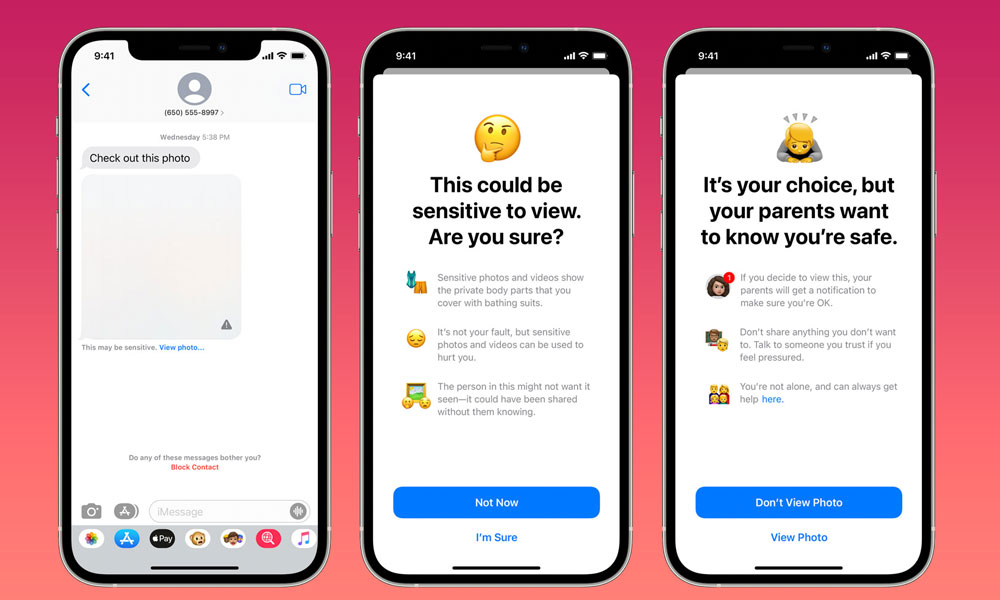
While this technology was never designed to prevent minors from viewing nudes — merely warn them before viewing a blurred image — it wouldn’t be a big step from this to blocking the image entirely.
We won’t know for certain what the new law will require or what penalties will be enforced until the UK publishes the details about its planned legislation.
However, one thing we can be certain of is that minors always seem to find a way to evade such measures, just like I did when I snuck into my parents’ closet to grab a peek at my dad’s lone issue of Playboy (for the articles, of course). For example, after the UK blocked adult sites in 2025, VPNs reportedly saw a huge increase in subscriptions, as citizens (I’m guessing many of them minors) used the technology to restore access to their favorite websites.