Apple Is Drawing a Hard Line on Apple Maps Search Ads
Toggle Dark Mode
In March, Apple quietly announced plans to bring paid advertising into Apple Maps with a note tucked away inside a newsroom announcement about Apple Business.
That service is Apple’s answer to Google Workspace or Microsoft 365, but while pointing out everything it had to offer, Apple also mentioned “a new option coming this summer that will enable businesses in the U.S. and Canada to place local ads in Maps during key search and discovery moments.”
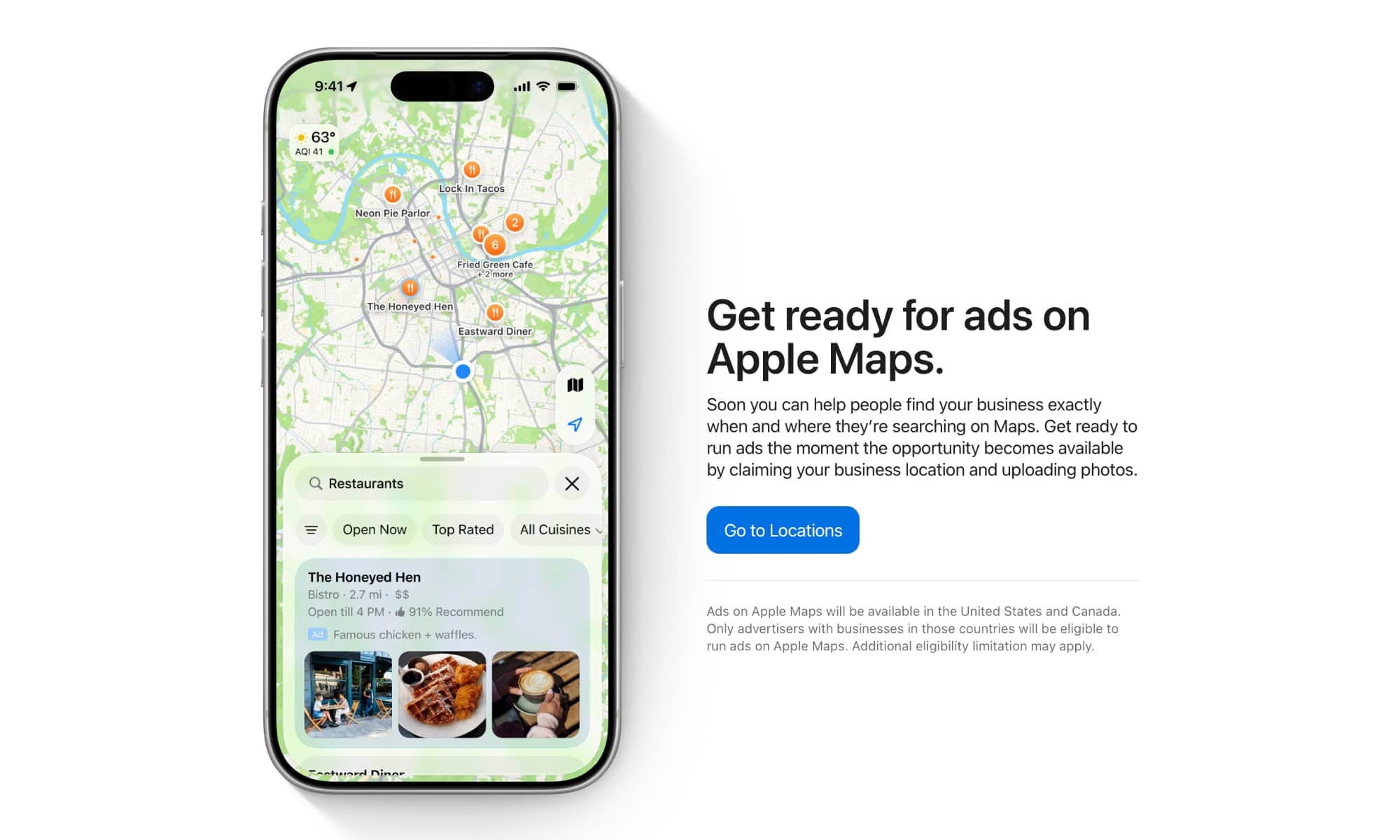
While the details were vague, we’d been hearing rumors of Apple’s new ad initiative since last year, so we already had a hint of how this would work. The March announcement gave local businesses a heads-up that they’d soon have an opportunity to bid for keywords that could place them at the top of search results in Apple Maps, similar to how ads are placed in App Store searches.
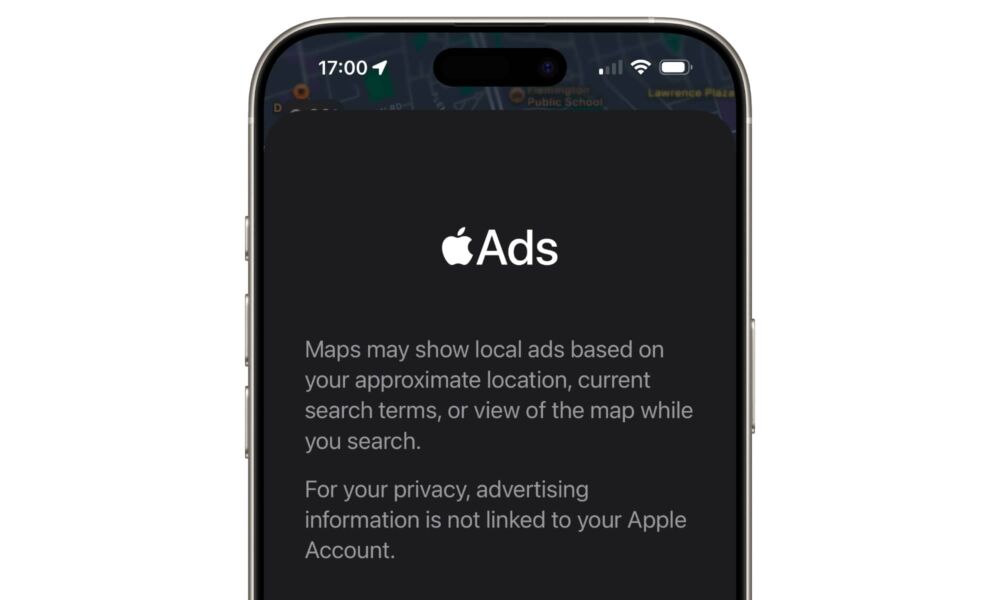
Apple also published a business-focused Ads on Apple Maps website that offered a few other important clues, including Apple’s approach to privacy.
Still, the idea of searching for somewhere to eat and suddenly getting a helping of ads on the side had some users pretty upset, with some even ironically saying that they might as well switch to Google Maps if they’re going to have to look at ads anyway.
Beyond the personal annoyances, folks like John Gruber also made a compelling philosophical argument that Apple is really on a slippery slope when it comes to putting advertising everywhere: that it doesn’t matter how much Apple proclaims its privacy policies when it’s serving up ads that are traditionally associated with invasive tracking.
So let’s just concede that the upcoming ads in Apple Maps are completely private. How many users are going to believe that? Or assume it? I think very few. People see ads and they think “I’m being tracked.” When Apple starts showing ads in Maps, many?—?perhaps most?—?users are going to think they’re being tracked by Apple and their location “is being sold” to advertisers.
John Gruber
You don’t have to spend long looking at the debates on social media to see the validity of Gruber’s point. Apple claims ads are private, but everyday users are skeptical — at best.
Apple Lays Some Ground Rules for Ads in Maps
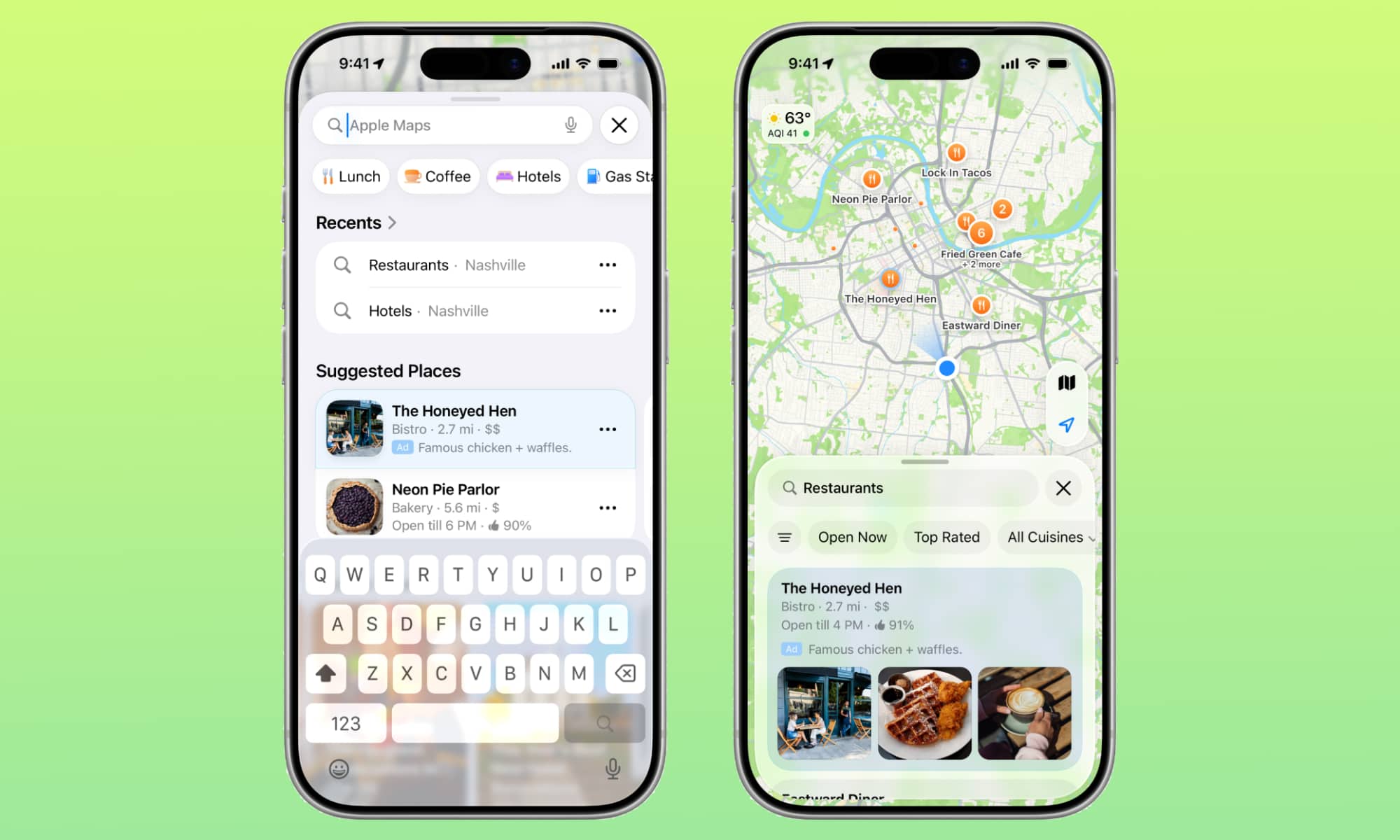
There’s not really any reason to mistrust Apple’s privacy policies here, as it’s not exactly rocket science to match a keyword like “pizza” or “coffee” to a local business that’s paid for that placement. Apple will undoubtedly track metrics so advertisers know how well their ads are performing, but this can be done anonymously. It’s mostly about how many times ads are shown and how many people tap on them.
Personal data isn’t required to facilitate this — especially when we’re talking about physical places. After all, how would your local coffee shop realistically be able to correlate your visit to an ad placement? Sure, we can go down the rabbit hole of really privacy-invasive stuff like location tracking, but that’s a bridge even Google hasn’t crossed.
Still, for many folks Apple’s privacy policies aren’t the point. Ads can still be annoying, especially if they come in every search. Thankfully, Apple has already taken an important step to make sure the experience won’t be anywhere near as irritating as searching for places in Google Maps.
This week, Apple published a new set of Advertising Services policies that now encompass Apple Maps — and the good news is that only businesses with physical locations that customers can visit will be allowed to participate.
The new clause says that “Ad content that contains or directly or indirectly promotes home services — including but not limited to plumbing, electrical, locksmith, HVAC, pest control, roofing, or general contracting services — is prohibited.”
As TechCrunch explains, that’s a huge win over Google Maps, which is rife with ads for these local services. In Google’s world, you’ll often see search results filled with businesses that come to you, which aren’t particularly useful when you’re searching for a place to go.
These also clutter the results, since many companies pay for these largely irrelevant ads city- or region-wide. Apple’s approach to limit ads to brick-and-mortar businesses should at least make them more relevant. Search for where to buy plumbing supplies, and you’ll get an actual store you can walk into, not a dozen plumbers offering to come to your home and fix your drain.
Of course, this may also simply be a pragmatic decision on Apple’s part. Physical businesses are far easier to verify than service providers who may not even have fixed addresses.
Apple’s policies also prohibit bail bonds services and cryptocurrency ATMs, while it notes that ads for medical services “will be evaluated on a case-by-case basis.”
While those rules are specific to Apple Maps, it’s also covered by Apple’s broader advertising policy, which prohibits political ads, deceptive or profane ads, and ads featuring weapons or ammunition, violence, controlled substances, defamatory material, unproven health-related products and services, and more. It’s not entirely clear how these will be applied to ads for local businesses, but the fact that Apple hasn’t made any exceptions in these categories suggests you won’t be seeing ads pop up for your local senator’s campaign office, adult boutiques, or shops selling guns or fireworks.
We’ll have to wait and see what form ads in Apple Maps actually take and how prolific they are, but this restriction on home services gives us some hope that it won’t be a Wild West of ad cards, but rather a more curated list of local businesses that users might actually find useful.