
Happy Fifth Birthday, Apple AirTag!
 Hadrian / Shutterstock
Toggle Dark Mode
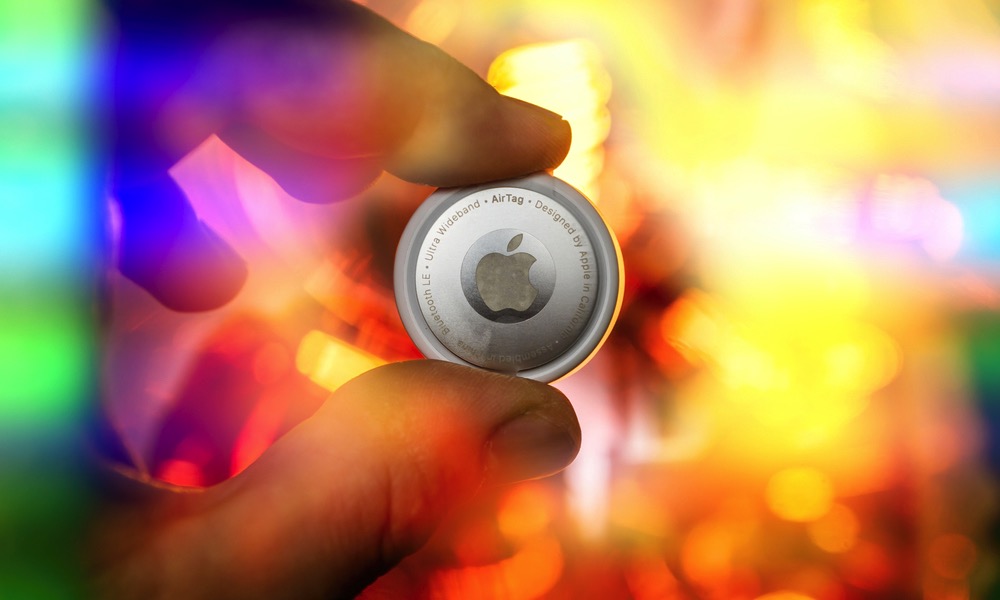
It was five years ago today that Apple’s AirTags debuted in stores, meaning the $29 tracking accessory has been around as long as your child who just enrolled in kindergarten.
While Apple unveiled the AirTag on April 20, 2021 at its “Spring Loaded” event, like most of the company’s product announcements, it was a few days before anyone could get their hands on one. Apple opened pre-orders on April 23 and it officially landed in stores — and the hands of eager customers — on April 30.

Apple’s spring 2021 event also included quite a few other significant updates, including the redesigned 24-inch M1 iMac, the first iPad Pro with an M1 chip, and a new Apple TV 4K that broke four years of silence and introduced a totally new Siri Remote.
Still, the AirTag was the one truly “new” product: a coin-shaped accessory with a polished stainless steel back, a U1 Ultra Wideband chip, and IP67 water resistance.
The U1 Ultra Wideband chip allowed Apple to introduce a Precision Finding feature that offers haptic and visual feedback to find a lost item’s precise location. This requires an iPhone also equipped with the U1 chip; that’s every model since the iPhone 11 except for the budget iPhone 16e and 17e. The Precision Finding feature has also since expanded to help you find your friends in a crowded place, although that requires the newer “U2” chip found in the iPhone 15 and later mainstream models.
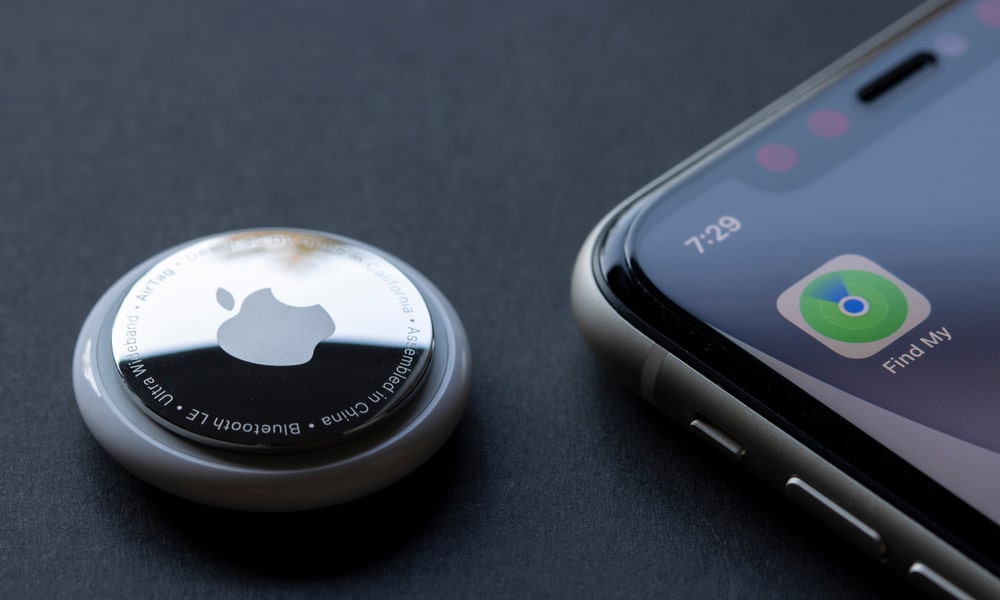
The original AirTag became popular for several reasons, not the least of which was the simplicity of syncing an AirTag to an iPhone. The process involves simply bringing the AirTag close to an iPhone, which causes the tracking tag to appear on the Items tab of the Find My app. Users can then name the tag for easier identification in the Find My network.
Since the AirTag is far too small and low-power to pack in its own GPS or cellular technology, it relies on Bluetooth, anonymously signaling its presence to nearby Apple devices, which in turn relay its location to the Find My network. With over 2 billion iPhones and iPads automatically participating in this global crowd-sourced network, an AirTag can be tracked almost anywhere. That became a huge advantage over rivals like Tile’s tags, which could only report their location to nearby devices if they had the Tile app installed and running.
The AirTag was, and still is, available for $29 per tag or $99 for a four-pack of tags. Apple also offers free engraving.
The Good, The Bad, and The Ugly
Almost immediately, reports began pouring in of AirTags being used for both good and evil. Sadly, for every report of someone being reunited with stolen or lost item, it seemed there was a report of bad actors or ex-spouses abusing the AirTag to track targeted victims or their cars — sometimes even randomly.
One incident saw an Indianapolis woman track her boyfriend to a local nightclub, where she allegedly ran over him multiple times with her vehicle, ending his life. The girlfriend, Gaylyn Morris, used an Apple AirTag to track her boyfriend, Andre Smith, to Tilly’s Pub in Indianapolis where she observed him hanging out with another woman.
She then struck Smith multiple times with her car outside the pub. When emergency medical techs arrived, they discovered him under the vehicle. He was pronounced dead on the scene.
On the flip side of the coin, the AirTag has also proven valuable in tracking lost and stolen items.
While some stories have ended in tragedy, others highlight how the AirTag works well for its intended purpose: recovering stolen property. For instance, one notable case involved a Texas man tracked the jerks that were robbing his uncle’s gravesite at Restwood Memorial Park in Clute, Texas. Each time, the thieves stole a $600 bronze memorial vase marking the grave.
Tony Velazquez said he placed an AirTag inside one of the replacement vases, just in case the thieves repeated the theft. Velazquez wisely did not try to track the bad guys on his own, but instead provided the AirTag information to the authorities, who were able to track the stolen vase to an address about 45 minutes away, where it was recovered with 102 other vases.
Clute Police Chief James Fitch said the two thieves had planned to score a quick buck by selling the vases to a local scrap yard.
As you might expect, We’ve seen at least one lawsuit be filed over the use of AirTags, as a class-action lawsuit filed in California in December 2022 alleged that the tracking tag’s accuracy and affordability made it an attractive tool to be misused by crooks and abusive partners.
Apple has released several updates to improve AirTag safety features, and also worked with Google to allow users on the Android platform to receive unwanted tracking alerts, just like iPhone users.
Controversy aside, Apple says the AirTag remains among its best-selling accessories. It’s often recommended by law enforcement as a means of protecting valuables, and police forces from New York City and Washington, DC, to Arvada, Colorado, have gone so far as to hand out AirTags to help deter car thefts. In late 2024, Apple also partnered with airlines to help its customers more effectively use AirTags to track down lost luggage.
Apple released a second-generation AirTag in January 2026. The new version boasts a second-generation Ultra Wideband chip that offers Precision Finding that works from as much as 50% further away, an upgraded Bluetooth radio chip, and a speaker that is 50% louder than the first AirTag. Pricing remains $29 for a single tag and $99 for a four-pack.






