Waymo Just Bought the Apple Car’s Ghost Town
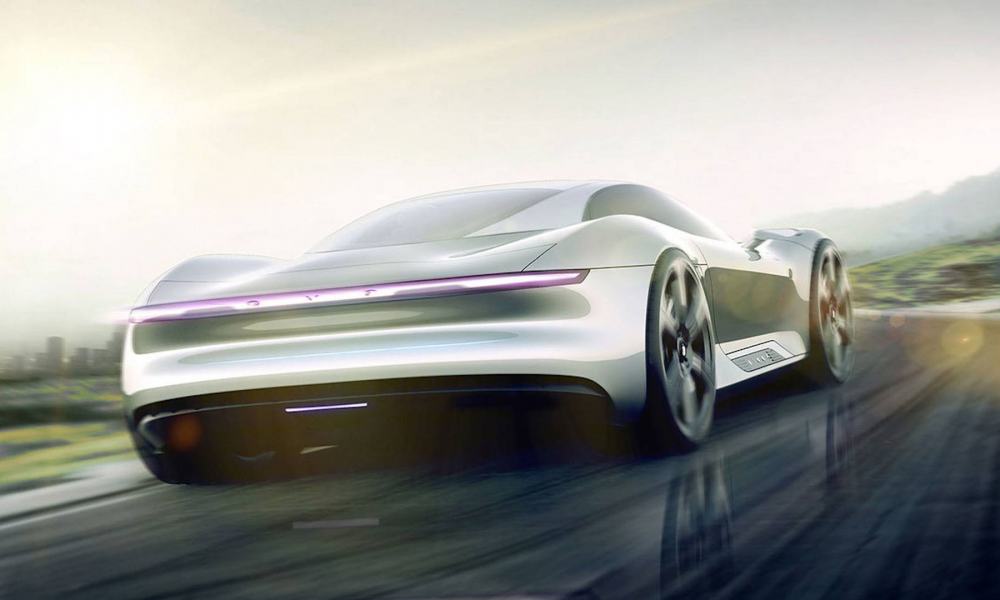 Alex Imnadze / Behance
Toggle Dark Mode
In case you needed one last piece of evidence that Apple has truly abandoned its self-driving car ambitions, it turns out the company has just sold off the Apple Car’s old proving grounds.
As reported by TechCrunch, the Phoenix Business Journal uncovered a filing from June 5 showing that Google’s self-driving sister company Waymo has acquired a 5,500-acre property in Surprise, Arizona — located near the community of Wittmann — which was widely reported as a key Apple Car test site back in the day when we all believed the project was still going to happen.

The land, which was technically owned by Route 14 Investment Partners, LLC — a Delaware shell company associated with Apple — is located in Maricopa County. Though it sits on the border of the unincorporated community of Wittmann, the massive parcel was officially annexed into the city limits of the Phoenix suburb of Surprise back in 2005.
This is almost certainly the same facility where The Information reported in 2020 that Apple held a secret demonstration for senior executives to show that its vehicles could handle a several-mile loop without any problems. The report’s sources declined to identify the test facility, but secondary reports widely pointed to the massive “Project Titan” Arizona facility that Apple had set up a few years earlier.
According to documents filed with Maricopa County, Waymo paid $220 million to acquire the property, and also confirmed the sale with TechCrunch. That’s a cool profit for Apple, which reportedly purchased the property in 2021 for $125 million after renting it for years. Prior to Apple’s involvement, the facility was used by Fiat Chrysler as a hot-weather testing bed for its vehicles, thanks to its different road surfaces, high-speed oval track, and desert conditions.
However, as AppleInsider reports, it actually sat barren for about 20 years, having been purchased by a housing developer in 2005 before being annexed by the City of Surprise and left alone.
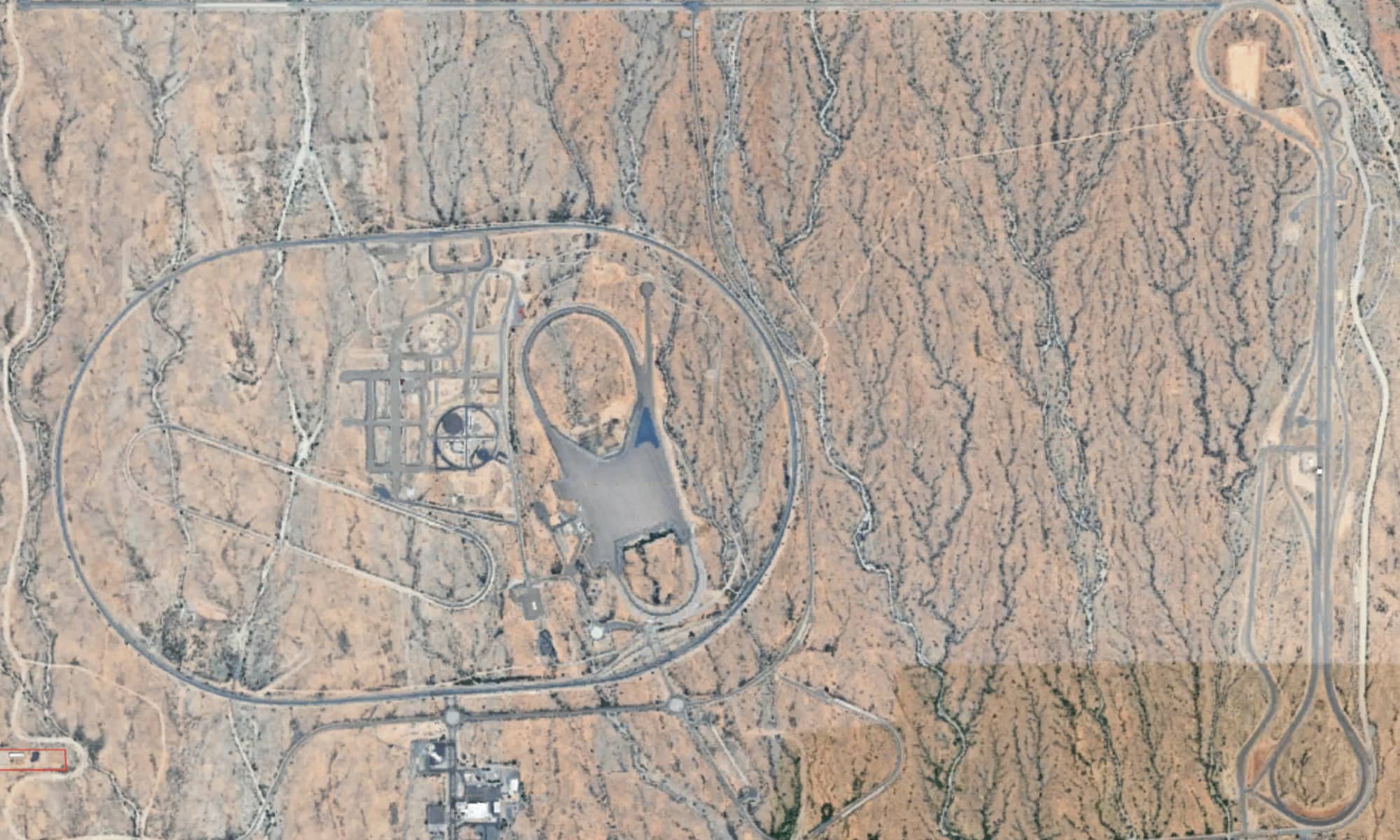
Only a small part of this massive parcel of land is actually used for vehicle testing, with a 115-acre city course, a freeway course, a 35-acre vehicle dynamics area, and a four-mile oval track. However, the other 4,000-plus acres offered a massive enough buffer that Apple was able to enjoy some Area-51-style secrecy for its autonomous vehicle testing.
While the $220 million sale theoretically helps Apple recover some of the money it sunk into Project Titan, it’s really a drop in the bucket compared to the $10 billion it reportedly spent. It’s also pocket change for the multi-trillion-dollar company, which is probably more interested in simply getting the asset off its books than worrying about the profit from it.
For years, the Apple Car was one of Apple’s worst-kept “secret” projects, simply because of the massive scale of such an undertaking. Unlike things like software and chip development, which can easily take place within a controlled “cone of silence,” building an autonomous vehicle — or any kind of vehicle — involves massive engineering resources of the kind that a company like Apple wouldn’t normally employ. It was pretty obvious what was going on when Apple began hiring renowned powertrain engineers and luxury car designers.
Nevertheless, some projects are too big of an undertaking even for a $3 trillion company. While Apple could have undoubtedly produced something, Project Titan also had so many twists and turns the final plan was often unclear. In the end, it seemed Apple wanted to do something more ambitious than the technology and regulations of the world were ready for — a fully autonomous Level 5 self-driving car without a steering wheel — but as reality forced it to scale down its ambitions to basic “Level 2+” Advanced Driver Assistance Systems (ADAS), Apple’s top brass began to ask what the point was of investing buckets of cash to enter the same business every other automaker was in.
In February 2024, Bloomberg’s Mark Gurman reported that Apple’s Board of Directors had finally decided they’d burned through more than enough cash with little to show for it, and pulled the plug on the project.
Not all was lost, as Apple has taken many of the lessons learned and technologies developed for its self-driving car and leveraged them for other projects, from the Vision Pro to things that are still circulating in the company’s skunkworks such as household robotics. The Apple Car may be dead, but its legacy will live on in smaller pieces.