iPhone Duo Screen Cracks Traced to Faulty Supplier Parts, Not Hinge Design
 Apple
Toggle Dark Mode
Apple’s long-awaited iPhone Duo was on the market for barely ten hours when some customers began reporting cracked screens, followed by other reports that even some demo units in stores were suffering a similar fate.
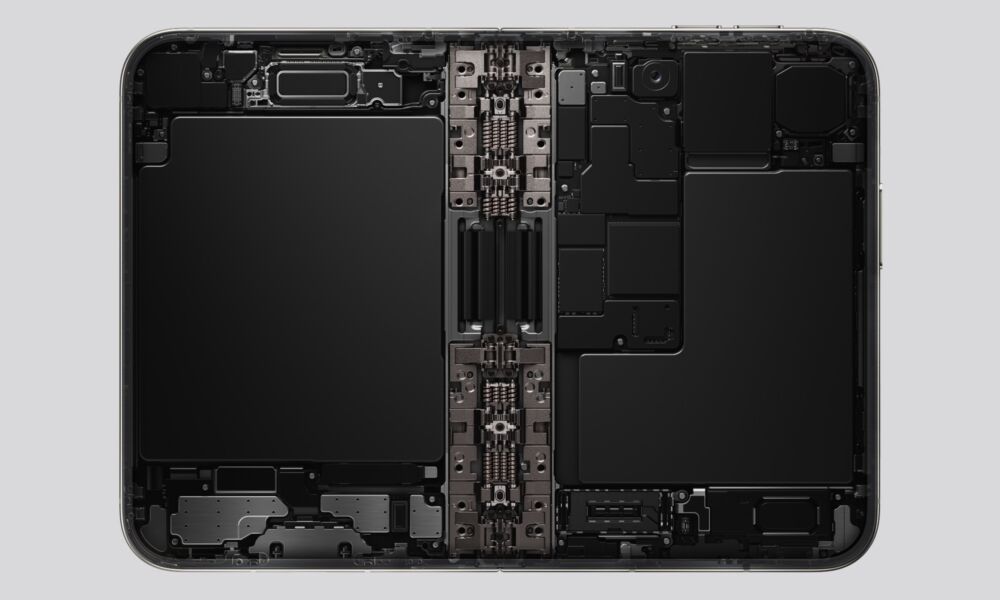
While Apple has yet to comment on why this is happening, several theories have pointed to a problem with the foldable’s hinge, with an iFixit teardown studying the points where stresses build up from folding, and postulating how a trapped dust particle or uneven pressure could lead to problems.

Apple remains tight-lipped about the specifics, although it’s promised to replace affected units, and even advised stores of the policy and how to handle the problem when customers show up with a broken inner screen.
By all accounts, this isn’t a widespread problem. Apple has said it affects only “a small number of iPhone Duo units,” and Bloomberg’s Mark Gurman believes it’s just “a bad batch,” acknowledging that these things happen with any new product (that’s what warranties are for), while pointing to the real problem as being limited availability of replacement units.
Customers who are unlucky enough to get one of these “bad batch” units are likely to struggle to get it replaced. Many Apple Stores still have lineups of people waiting to buy their first iPhone Duo, so Apple doesn’t have many to hand out right now as seconds.
It may be small consolation to anyone holding a broken $2,000+ iPhone Duo, but it seems we have a plausible explanation for why the problem occurred in the first place, and it’s not the hinge design, but rather a batch of defective parts that fell into the mix somewhere along the way.
That’s according to a post from a Chinese supply chain leaker who goes by the name Kang, which was shared (and translated) by Ice Universe on X:
The explanation makes sense, as a design flaw would likely affect a larger number of units. Plus, with Apple’s high quality standards — which are reportedly one reason for the slower rollout of stock — it’s hard to believe it would have missed a fundamental flaw in the design itself.
Anecdotal examinations undertaken by some who have experienced the problem showed a component of the hinge assembly deforming or shearing entirely while folding and puncturing the inner display from underneath. However, it’s unclear if every broken unit has experienced the same problem.
While the leaker points to “one of Apple’s two hinge suppliers,” they aren’t naming any names. Last month, one of those two suppliers, Fine M-Tech, released a statement shared by The Elec, denying that its components had anything to do with the problem. It also said it was considering legal action against anyone claiming otherwise.
Is the Problem Solved?

Either way, the fact that this is a component-level problem sounds like good news for anyone who’s still on the fence about the iPhone Duo, as it almost certainly improves the odds of getting a unit without the problem. In fact, if Kang’s information is accurate, Apple can supposedly determine which devices are affected based on their serial numbers.
It’s an open question whether that will result in Apple issuing a proactive recall, but it should at least ensure it pulls the faulty devices off store shelves and out of its inventory chain, making it even less likely that those who haven’t purchased or received their new iPhone Duo yet will be getting a bad one.
In fact, those who preordered on day one and are waiting until January are even less likely to have problems. That shipping date isn’t based on existing inventory — it’s based on how fast Apple can build new devices. Devices that aren’t arriving until 2027 haven’t been built yet. If this is truly about faulty parts, it’s a safe bet that Apple has already stopped using those parts.