Folding Under Pressure? iPhone Duo Teardown Uncovers Tricky Hinge Flaw
Toggle Dark Mode
As we reported on Friday, even though the iPhone Duo had only been in customers’ hands for less than 24 hours, a few unfortunates had their early-adopter experience ruined by encountering problems with Apple’s new foldable iPhone soon after they unboxed it.
Thankfully, the issues appear to be affecting a relatively small number of units and are limited to two of the new device’s most critical areas, the hinge and the inside screen. A new iPhone Duo owner in Australia shared a photo on Reddit of a badly cracked iPhone Duo:
The user said, “Had my iPhone Duo for about six hours and had probably opened it fewer than 20 times. I was showing it to a friend, and as I opened it, I felt something around the internal hinge, underneath the screen. As I continued opening it, I heard an audible crack, and the screen broke right along the hinge. There were no marks or damage on the inner screen’s surface or the external hinge to suggest anything had been caught or damaged.”
Happily, after visiting a local Apple Store, the user’s iPhone Duo was replaced with a new one. Still, it sucks a bit when your brand-new precious breaks almost as soon as you take it out for its first rounds of oohs and aahs from your friends.
While we’ve also seen several posts that show photos of cracked demo units in Apple Stores in China, it would not be the first time we’ve seen display units at Apple Stores fare badly.
Most of these cracks are reportedly appearing in the same spot: right along the iPhone Duo’s fold. While some of the photos show the damage manifesting as an obvious crack, others show one or more unusual bright lines running along the display.

What’s Causing the Trouble?
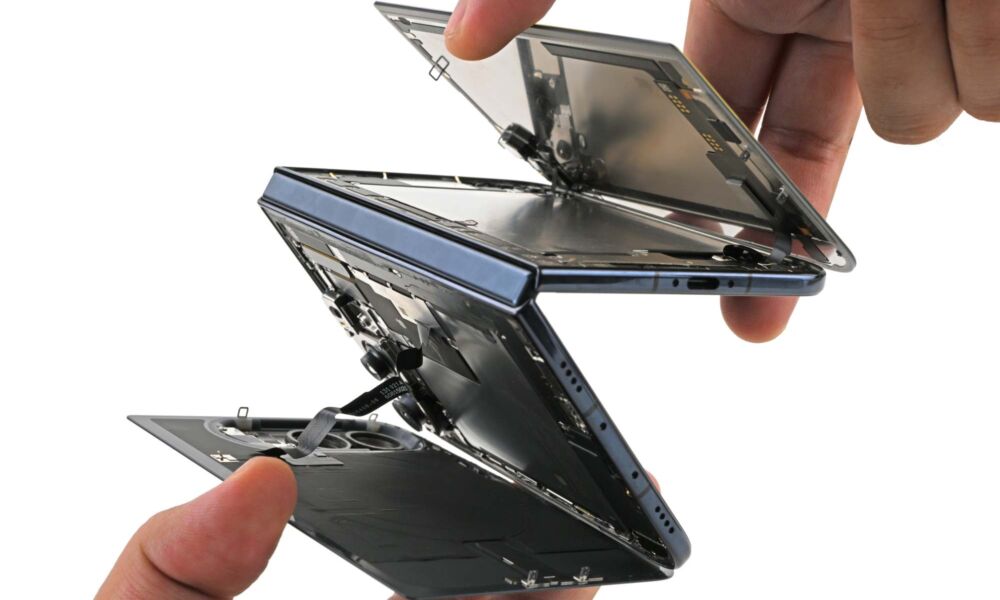
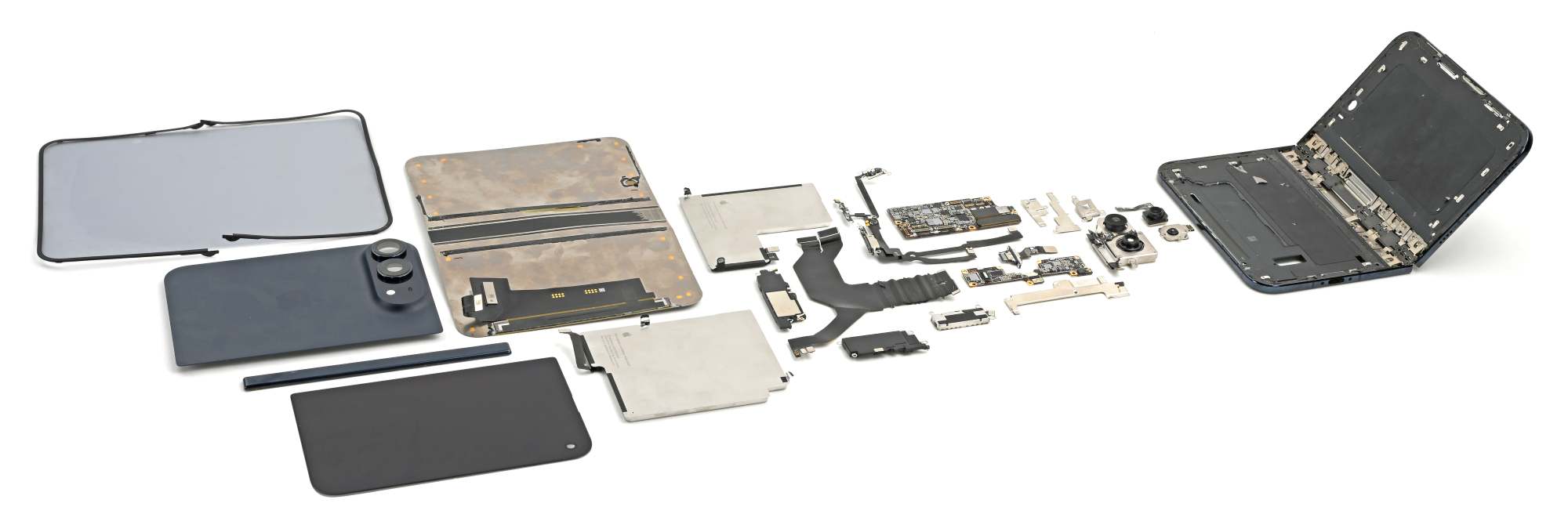
iFixit performed that teardown voodoo that it does so well on the iPhone Duo. The company took a close look at what’s inside the new foldable, checking how well it stands up to dust and determining how easy it is to repair. The teardown guru posted a YouTube video walking us through the teardown and also published a blog post summing things up.
Before opening up the Duo, iFixit sprayed it with fluorescent dust. Since the iPhone Duo has an IP68 dust- and water-resistance rating, it should be nicely sealed. While iFixit discovered its “fairy dust” in the USB-C port, speaker mesh, and bezel, only a few particles actually made it inside the device.
iFixit determined that the dust particles did get in the Duo’s screen hinge, causing it to “crunch,” which could lead to screen damage. However, less dust made it into the hinge than during similar testing on the Samsung Galaxy Z Fold 8 and Google Pixel 11 Pro Fold. While iFixit said that was “encouraging,” it also warned folks that they still might want to avoid taking the Duo to the beach, as dust did work its way into the mechanism.
iFixit suggested that some of the display failures people have been seeing could be caused by pressure, a trapped particle, repeated bending, or a manufacturing defect. The display may not have physically snapped, as a wiring issue can cause the same effect.
The hinge on most of the affected units has a slightly different shape, and the point of failure appears to be where the accordion cable passes through and several edges meet, creating a concentrated stress point.
From iFixit:
To see where the stresses build up from folding, we built a 3D hinge model from teardown footage, patents, and CT scans, then compared it with the reported damage locations. The breaks cluster near the transition from the gap for the crossing flex cable to the central hinge support. The damage we’re seeing in photos isn’t right where the display cable passes through the hinge, but slightly lower, at a point where several edges meet and change how the thin display is supported as it bends.
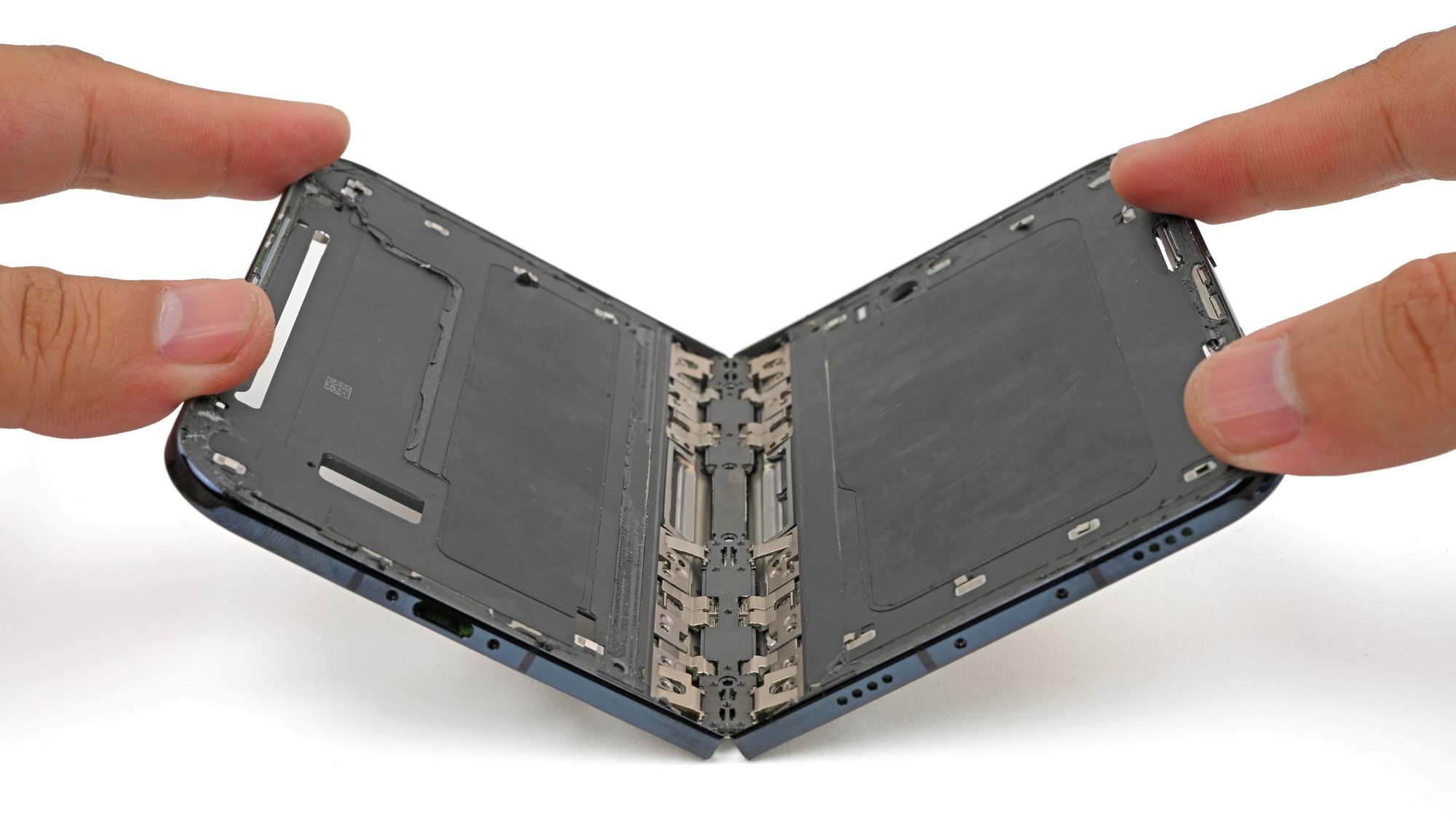
The culprit could also be the curved rails of the hinge following the screen’s pivot points. If the center support bar fails to drop far enough, the screen’s curved fold presses down onto it, which could create a critical stress point near the break location. It’s possible a hinge component that’s meant to retract isn’t doing so, but that hasn’t been proven as yet.
iFixit was able to peel the nano-texture cover layer away easily, just as Apple intended, allowing it to be replaced inexpensively ($19 with AppleCare+, or $49 without it).
The iPhone Duo makes use of the same battery adhesive that Apple introduced with the iPhone 16, allowing a light electrical charge to loosen the adhesive and make the batteries much easier to remove. iFixit calls it the “best battery removal experience” from a foldable to date.
iFixit said the outer display was easy to take off, and that its construction is “robust.” That’s definitely a good thing, as most internal repairs will go through the outer display. As for the inner screen trim, while it comes off with heat, there is a lot of adhesive to work through when removing the inner panel.
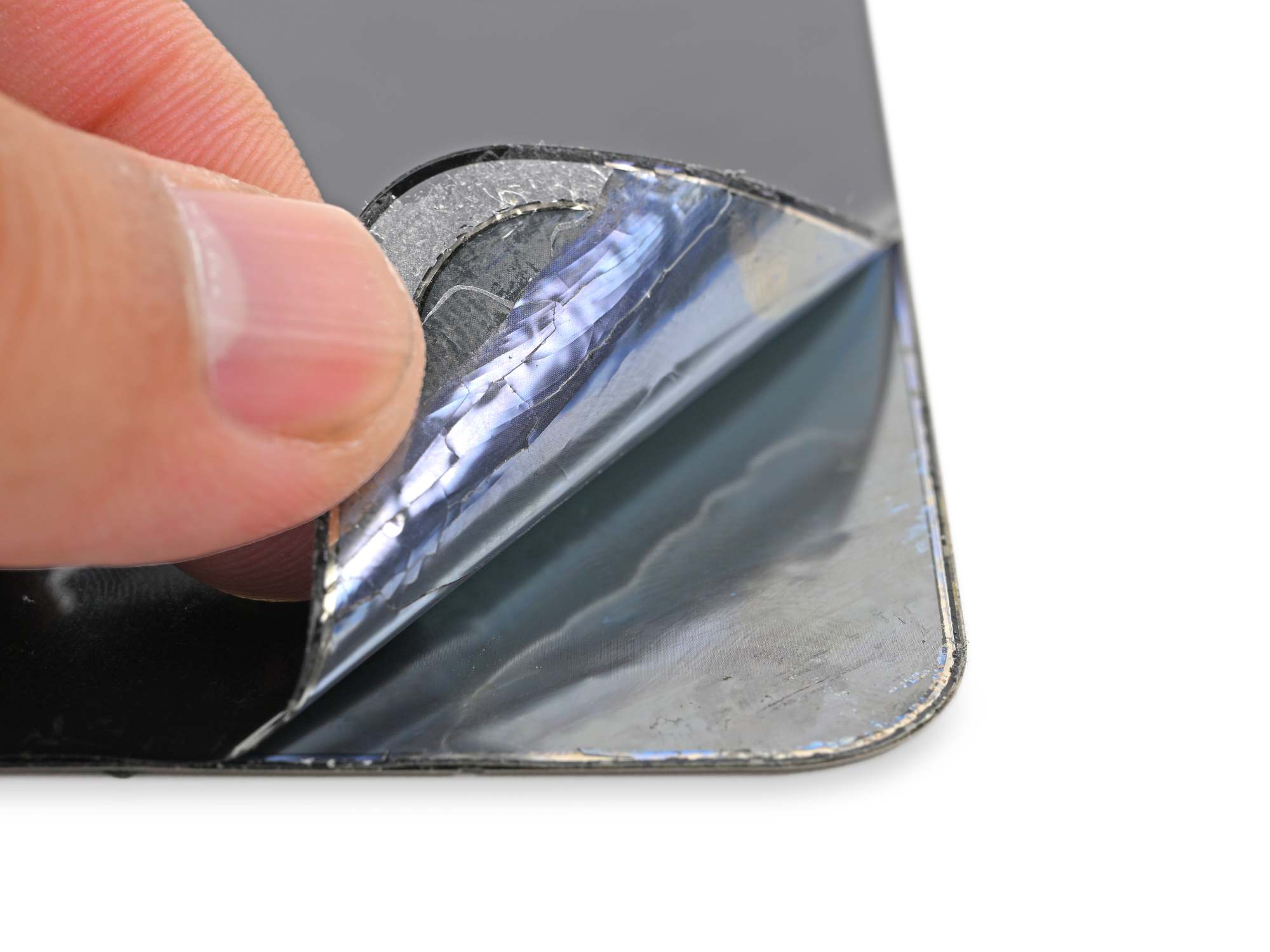
iFixit was able to peel back some of the 10 layers of the iPhone Duo’s inner display to get a look at them under the microscope.

The iPhone Duo’s unstacked logic board — the first in a flagship iPhone since the iPhone 8 — is one way Apple was able to make the device as thin as it is.
iFixit noted that with an iPhone Duo repair manual available on day one, an option to remove the outer display intact, and batteries that release with an electrical charge, the Duo deserves a provisional repair score of 5 out of 10. (The Galaxy Z Fold 8 and Pixel 11 Pro Fold both scored 4 out of 10.)
The iPhone Duo lost points due to its inner display and hinge assembly being the biggest vulnerabilities. Despite having the best repair score of any foldable smartphone iFixit has taken apart, the company says “it’s still going to be a bear to repair.”