Apple Forces the UK Out of the Shadows in iCloud Encryption Battle

Toggle Dark Mode
Apple today scored a court victory in the United Kingdom, as a government tribunal rejected the UK Home Office’s request to keep the Cupertino company’s challenge to the government’s demand for “backdoor” access to encrypted customer data secret, reports the Financial Times. Apple’s challenge can now be heard largely in public.
In September, iDrop News reported that Apple was demanding that the United Kingdom’s Home Office publicly admit that it secretly ordered the technology giant to create a “backdoor” into iPhone users’ encrypted iCloud data. Apple hoped that confirming the existence of the confidential demand would open the door for a legal challenge to be heard in public.

The Investigatory Powers Tribunal today ruled that the British government had failed to show how Apple’s demand would damage national security. The decision now requires the UK Home Office to publicly acknowledge serving Apple with a technical capability notice (TCN), which is an order used by the government to force companies to make their customers’ data accessible to UK security services, even if the data is encrypted.
While the government has a policy of neither confirming nor denying TCNs, the tribunal found that it had already departed from that policy, thanks to disclosures to the media and discussions with US officials.
The tribunal wrote in its judgment that anyone following the dispute was already aware that Apple had received a TCN, describing the Home Office’s suggestion that official acknowledgment would threaten national security or provide fresh information to a bad actor as “fanciful.”
The tribunal’s ruling will now allow much of the legal action brought by Apple, as well as a second challenge by Privacy International and Liberty, to proceed in open court.
When last year’s secret order required Apple to provide backdoor access to all encrypted user data stored in iCloud, reports revealed that the mandate demanded blanket access to iCloud backups from users around the globe, not just those in the UK. Such a request was unprecedented from a so-called “free” country’s government.
Apple’s position is that allowing such access would severely violate the company’s user privacy policies. While we have seen several countries demand a backdoor to users’ encrypted data (the US included), those demands have been limited to users inside the requesting country, not for all user data from all countries around the globe.
The Home Office ultimately withdrew its original, global demand that would have covered both UK and US customers following a spat with the American government. The new notice is believed to focus on the data of UK users specifically.
Still, even in its narrower form, a British TCN would still require Apple to provide wide-ranging access to all encrypted materials, not merely the data from a specific account. If Apple bowed to such an order, it would establish an unfortunate precedent, allowing governments around the globe to use such access as a weapon against their citizens.
While Apple has long used end-to-end encryption for critical data such as passwords and health information, it began offering full end-to-end encryption in 2022 with Advanced Data Protection, covering almost everything from Photos to iCloud backups.
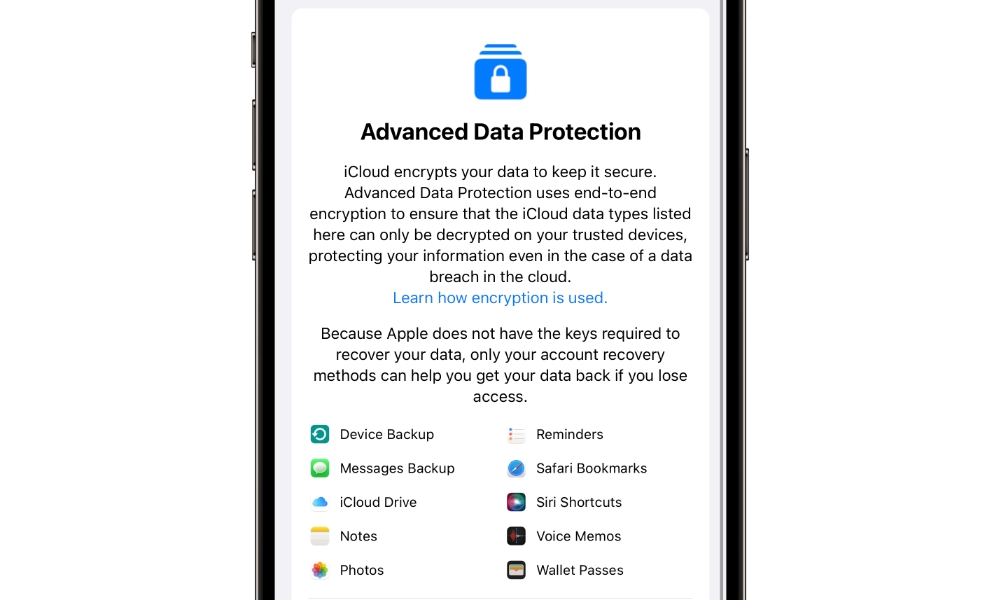
However, it quietly disabled the feature in early 2025 for users in the UK. While no explicit reason was given, most assumed this was a quiet protest against the secret order that the company was otherwise forbidden to talk about.
Law enforcement authorities around the globe have long complained about Apple’s encrypted data security features, claiming encryption allows terrorists and child abusers to get away with their horrible crimes. (Pro tip: Never trust any government claims that a new anti-privacy regulation is to protect us from terrorists or that it’s “for the children.”)
The tribunal will now be able to hear most of the arguments over the government’s encryption demands in public. Meanwhile, Privacy International says the substantive hearing for its separate legal challenge is scheduled for December of this year.