Apple’s iCloud Service Down? You’re Not Alone
Toggle Dark Mode
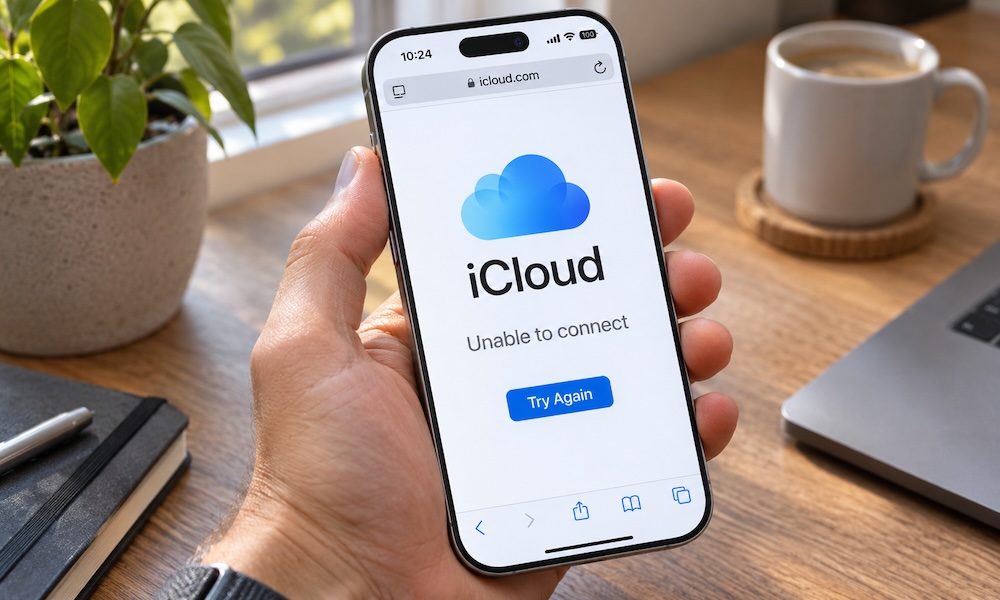
If you spent part of today (Tuesday, November 17, 2026), staring at an endless spinner, getting kicked out of your Apple Account, or failing to activate a brand-new iPhone, take comfort: it wasn’t just you.
Apple’s services experienced a widespread disruption that began around 11:45 a.m. ET. The company’s System Status page flagged iCloud Account & Sign In as slow or unavailable for all users. The App Store, Apple Music, AppleCare on Device, iCloud Mail, iCloud Web Apps (iCloud.com), Apple Business, Apple School Manager, and Schoolwork also appeared in yellow or red at various points during the day.
Users quickly took to social media to share their frustration. Many reported being unexpectedly signed out of their Apple Accounts across iPhone, iPad, and Mac, only to face repeated “Failed to verify your identity” or connection errors when trying to sign back in. Device activation proved especially painful for people who had just bought new hardware. One common complaint noted on outage trackers and forums: new iPhones simply would not activate because they could not reach Apple’s servers.
Apple moved relatively quickly to explain what happened. In a statement provided to multiple outlets, the company said: “Many of our systems are back up and running after an internal update caused some outages this morning. We’re working to get the remaining systems online as soon as possible.” Apple explicitly ruled out a cyberattack. By mid-to-late afternoon, most major consumer services had returned to green on the System Status page, though a few education and business tools continued to show residual issues for a while longer.
The timing felt especially unlucky. The Apple outage landed in the middle of a rough stretch for digital infrastructure. Microsoft 365 had suffered a major global disruption earlier in the week, the FAA implemented a nationwide ground stop, and several large banks reported payment and login problems. While Apple’s incident was independent and caused by its own internal update, the cluster of failures left many users feeling that the internet itself was having a bad week.
Downdetector and similar trackers recorded thousands of reports for iCloud, Apple Support, and Apple Pay during the peak hours, with numbers climbing sharply around midday before tapering off as services recovered. The complaints were global, though concentrated in regions where people were awake and actively trying to use their devices.
For most people the inconvenience was temporary but noticeable. Photos that normally sync instantly stayed stuck. Messages and FaceTime continued working for many, but anything that required fresh authentication or App Store access hit a wall. Those trying to set up a new device or purchase AppleCare coverage on-device were among the most frustrated.
By evening, the majority of systems were reported operational again. Apple’s System Status page is the best place to check current conditions if anything still feels off. In the meantime, the usual troubleshooting steps—restarting devices, checking network connections, or simply waiting—were all that most users could do while the company rolled back or fixed the problematic internal update.
Outages of this scale remain rare for Apple, but when they hit the authentication layer that underpins so many services, the ripple effects are immediate and highly visible. Tuesday’s episode served as a reminder that even the most polished ecosystems still depend on complex backend systems that can, on occasion, trip over an internal change.
If your iCloud experience is back to normal, you’re in good company. If a few stubborn services are still acting up, hang tight—Apple’s engineers appear to have the situation largely under control.