Apple Demands UK Government Come Clean on Secret iCloud Backdoor Order
Toggle Dark Mode
Apple is demanding that the United Kingdom’s Home Office publicly admit that it secretly ordered the technology giant to create a “backdoor” into iPhone users’ encrypted iCloud data. According to The Telegraph, Apple hopes that confirming the existence of the confidential demand will open the door for a legal challenge to be heard in public.
The Home Office is the UK’s government department responsible for internal affairs, national security, immigration, and public safety. In 2025, the body ordered Apple to create a way around the encrypted protection on iPhone users’ iCloud accounts, thereby allowing government officials to see an encrypted iPhone’s contents, even when users have enabled advanced protection features. This would include nearly everything most users store on their iPhones, including photos, files, contacts, messages, and even data from many third-party apps.

Apple has now joined with two human-rights organizations — Liberty and Privacy International — to ask a tribunal to lift the restrictions preventing officials from confirming that there was a government encryption order.
When last year’s secret order required Apple to provide backdoor access to all encrypted user data stored in iCloud, it was reported that the secret order required Apple to provide blanket access to iCloud backups from users around the globe, not just UK users — a request that was unprecedented from a so-called “free” country’s government.
Allowing such access would severely violate Apple’s user privacy policies, and while we have seen several countries demand a backdoor to users’ encrypted data (the US among them), those demands have, as a rule, been limited to users inside the requesting country, not for all user data from all countries around the globe.
The British order would require Apple to provide wide-ranging access to all encrypted materials, not merely the data from a specific account. If Apple bowed to such an order, it would establish an unfortunate precedent, allowing governments around the globe to use such access as a weapon against their citizens.
As you might expect, Apple fought back against these demands. However, since UK law provides criminal penalties for anyone who even admits receiving one of these secret orders — innocuously named “Technical Capability Notices (TCNs)” — Apple had to fight the order in a secret court.
Apple has long promised its users that it will never provide backdoor access to their data and has even said that it has no way to access user data, as it is end-to-end encrypted.
During a closed-door hearing in March, Apple told the UK’s Investigatory Powers Tribunal, “There is no reason why the UK [government] should have the authority to decide for citizens of the world whether they can avail themselves of the proven security benefits that flow from end-to-end encryption.”
While Apple has long used end-to-end encryption for critical data such as passwords and health information, it began offering full end-to-end encryption in 2022 with Advanced Data Protection, covering almost everything from Photos to iCloud Backups.
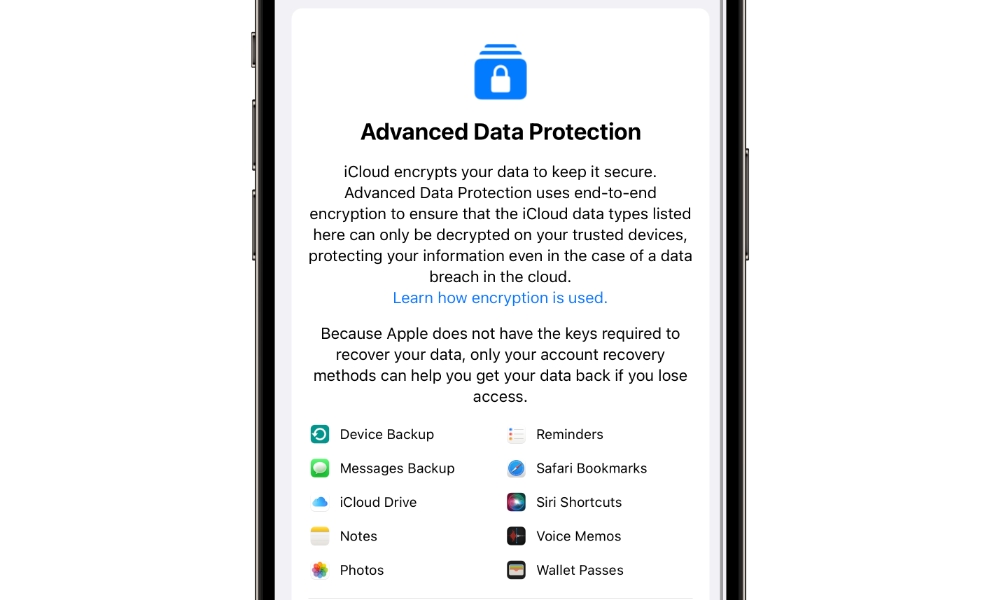
However, it quietly disabled it in early 2025 for users in the UK; no explicit reason was given, but most assumed this was a quiet protest against the secret order that it was otherwise forbidden to talk about.
During the hearing, Apple and its partners urged the court to “remove the cloak of secrecy” surrounding the order, making the hearing and any further proceedings in the case public. They claim that given that the order has now been widely reported and commented on, secrecy in this case is pointless.
“Given the significant technical complexity of this issue, as well as the important national security harms that will result from weakening cybersecurity defenses, it is imperative that the U.K.’s technical demands of Apple — and of any other US companies — be subjected to robust, public analysis and debate by cybersecurity experts,” the trio wrote. “Secret court hearings featuring intelligence agencies and a handful of individuals approved by them do not enable robust challenges on highly technical matters.”
Daniel Beard, KC, representing Apple, has told the tribunal this would allow “facts to be deployed in the open” and “advance the challenge in a meaningful way.” Meanwhile, lawyers for Liberty and Privacy International said maintaining the order was “farcical,” because the order had been widely reported and discussed.
Law enforcement authorities around the globe have long and loudly complained about Apple’s encrypted security features, saying encryption allows terrorists and child abusers to get away with their horrible crimes. (Pro tip: be immediately suspicious any time a government claims a new anti-privacy regulation is to protect us from the bad guys or that it’s “for the children.”)
US lawmakers from both sides of the aisle have come to Apple’s defense over UK officials’ attempts to obtain backdoor access to users’ iCloud data. The US Congress sent a bipartisan letter to the President of the Investigatory Powers Tribunal published in March, demanding that the IPT “remove the cloak of secrecy related to notices given to American technology companies by the United Kingdom.”
In August 2025, then US Director of National Intelligence Tulsi Gabbard said the UK would withdraw its demand to have access to Apple users’ encrypted iCloud data. “The UK has agreed to drop its mandate for Apple to provide a ‘back door’ that would have enabled access to the protected encrypted data of American citizens and encroached on our civil liberties,” Gabbard said in a tweet.
Unfortunately, such hopes were dashed later that month, as the Times reported on new court filings by the UK’s Investigatory Powers Tribunal that indicated the UK was still pushing for global access to encrypted cloud data.