Apple Watch Series 12 Just Got a Big Health Upgrade (and Didn’t Raise Prices)
Toggle Dark Mode
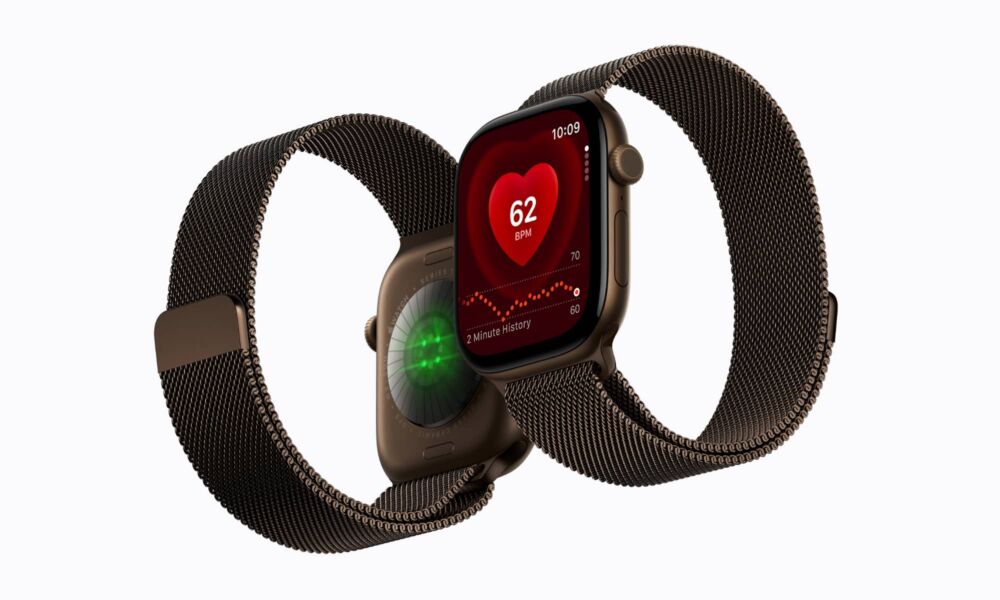
Alongside the iPhone 18 Pro lineup and the highly anticipated iPhone Duo, Apple also had some new Apple Watch models to show off during today’s “Surprise and Shine” event — the Apple Watch Series 12 and Apple Watch Ultra 4.
The new wearables are more or less what we expected in terms of the usual iterative design changes. However, Apple significantly upped its game with a new Health Sensing System and S11 chip that take the capabilities of the Apple Watch to a new level.

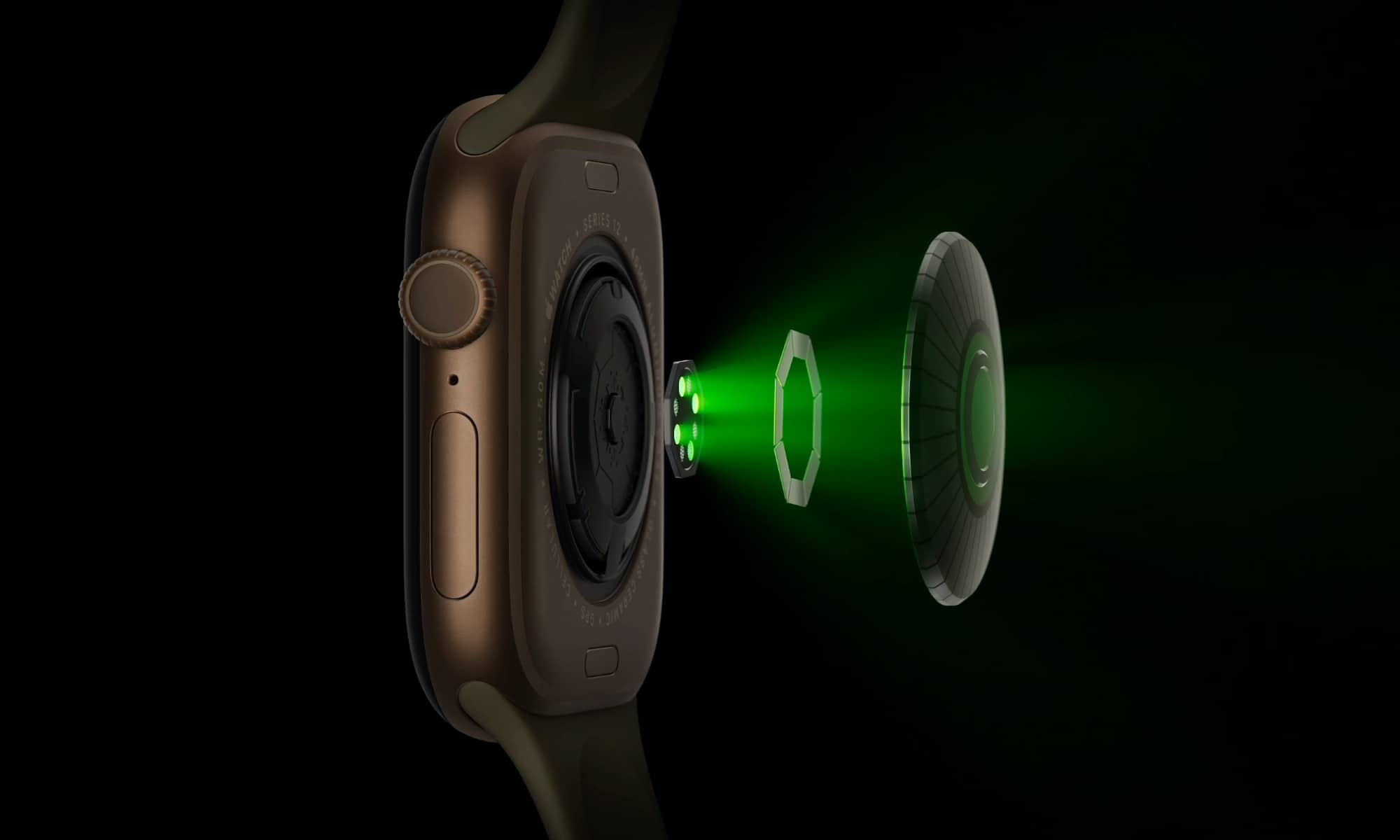
The Health Sensing System is Apple’s branding for a collection of tools that are anchored by a redesigned optical heart sensor that provides continuous heart rate monitoring for the first time ever.
This was a change we’d heard rumored just two weeks ago — an upgrade that would shift from Apple’s traditional approach of only actively monitoring the wearer’s heart rate during workouts while relying on spot checks the rest of the time. However, it wasn’t entirely clear how Apple planned to go about making this change.
Continuous Heart Rate Monitoring
Well, it turns out that it’s ushering in the first major heart rate sensor redesign since the Apple Watch Series 6 added blood oxygen monitoring. The third-generation optical heart sensor of the Series 6 to Series 11 era is now being superseded by an “always-on optical heart sensor” that will be paired with a “third-generation electrical heart sensor.”
Combined with the new S11 chip, which delivers upgraded AI capabilities, the Apple Watch Series 12 (and Ultra 4) now offers “the most accurate heart rate sensing in a wearable” — as validated by an Apple Watch Heart Rate Accuracy Study that put it head-to-head against other wearables using an ECG test strap as a reference point.
That increased accuracy is joined by higher-frequency readings taken every five seconds, all day long — 60 times more often than before. The new Apple Watch models will also measure heart rate variability (HRV) every five minutes, which is 24 times more often than the Series 11 and prior models.
This means users will be able to get better insight into their fitness and health metrics. A new complication is also being added to let users view their real-time heart rate at a glance throughout the day.
The Vitals app is also being updated to show not only overnight metrics, but a new daytime view that will help users spot shifts before they go to bed — and will undoubtedly be even more useful for those who don’t regularly wear their Apple Watch for sleep tracking.
The Readiness App
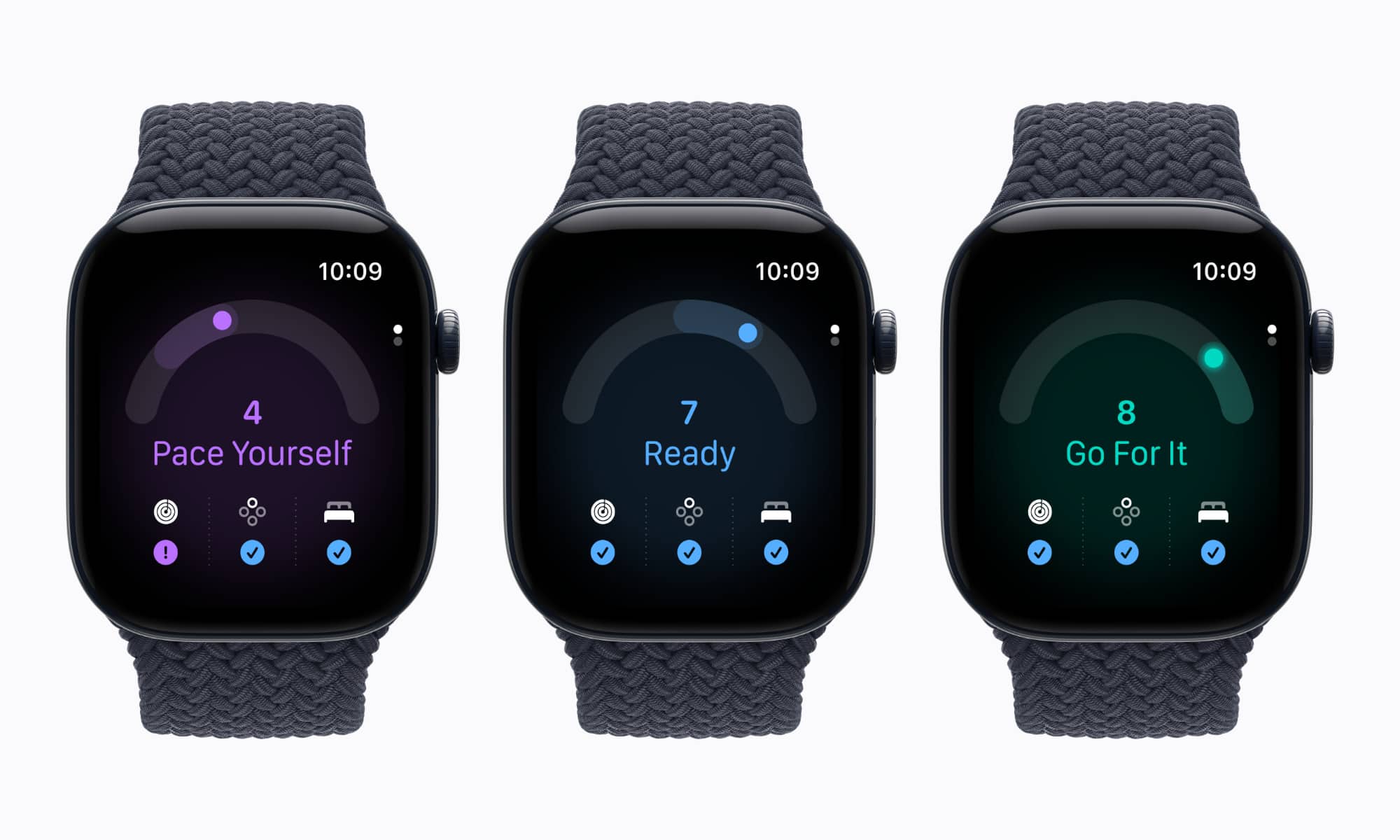
The Apple Watch Series 12 is also adding a new Readiness app that will provide a simplified set of metrics to let users know where they stand in their fitness regimen.
Using recent activity, training load, vitals, and sleep score, Readiness will provide a single 0-10 score tied to an actionable recommendation such as Recover, Pace Yourself, Ready, or Go For It.
The Readiness score will also be updated throughout the day as conditions change, and will clearly indicate which conditions are driving the score. For example, users may be told to recover or pace themselves after an intense workout.
Along similar lines, Apple is also redesigning the Health app to provide a more holistic view of a user’s overall health. Apple will leverage Apple Intelligence to summarize and respond to data, and new analyses are being added such as a Longevity tab with a Health Age metric that will show how healthy the user is relative to their actual age. The Health app will go beyond the Apple Watch, of course, as it mostly lives on the iPhone, and it’s not actually arriving until later this year, and will be limited to US English at initial rollout.
Audio Intelligence
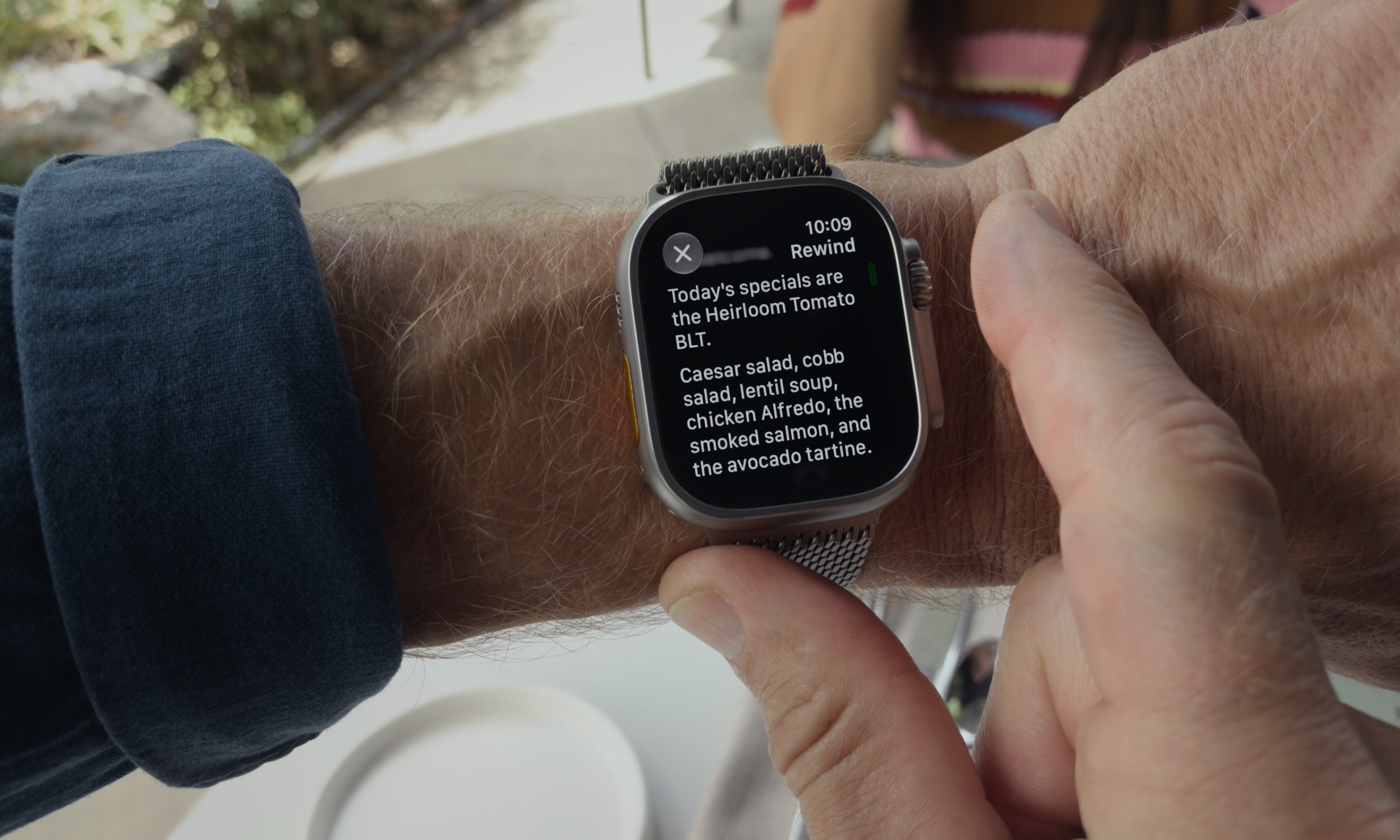
Moving beyond Health, the new Apple Watch models are also taking Apple Intelligence to a whole new level by extending the Visual Intelligence features that Apple has been working on since 2024 into the audio space.
Thanks to the S11 chip’s Secure Exclave and the built-in microphone on the Apple Watch, the wearable will now be able to serve as an AI listening device, using the internal silicon, Apple Intelligence models on the iPhone, and Private Cloud Compute, to power the same Sound Recognition features that have long been available on the iPhone itself, along with new Live Rewind and Siri Recap features.
Live Rewind will help users glance at the previous 15 seconds of a conversation as a text snippet, helping them catch something they might have missed. Those snippets can also be fed into Siri for further clarification or saved to revisit later.
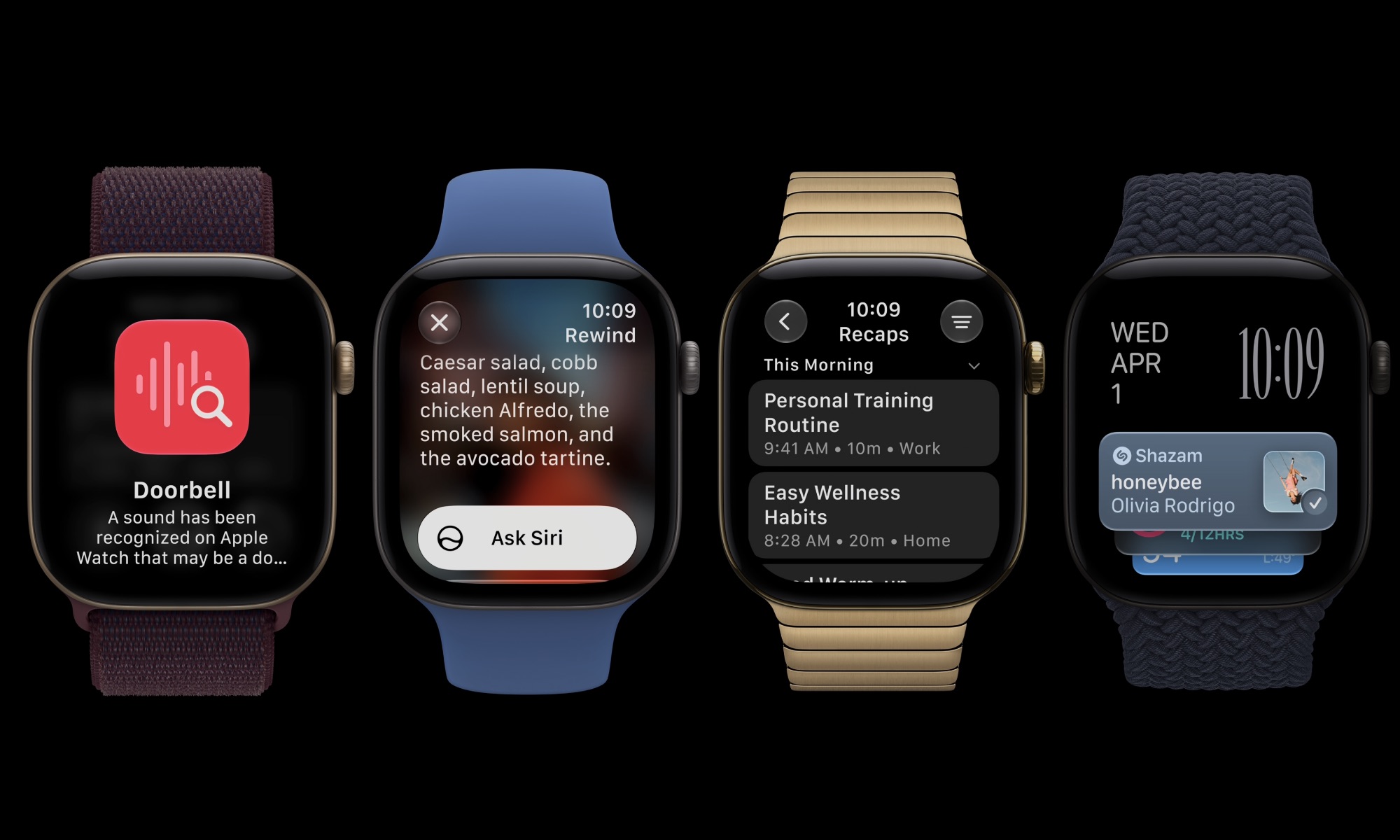
Meanwhile, Siri Recap will be able to summarize actual conversations for later, effectively taking notes during a meeting. Finally, Shazam will also be able to function in an always-on mode to automatically display the title of any song playing nearby without requiring the user to manually initiate a Shazam request.
If all this sounds a little creepy, there is a silver lining. Firstly, it’s not on by default; users will have to toggle Siri Recap on when they want to use it, and there’s no obligation to do so at all. However, if you do choose to enable it, Apple notes that no actual audio recordings are ever stored — only text transcripts and summaries — and Audio Intelligence features do not identify or attribute speakers in any way — they merely summarize what was said, not who said it.
Apple adds that it’s also designed the AI to “exclude sensitive information like financial information or government-assigned identifiers” and play an audible chime when Live Rewind is being used for direct text transcription, along with a full-display animation and microphone indicator.
Price and Availability
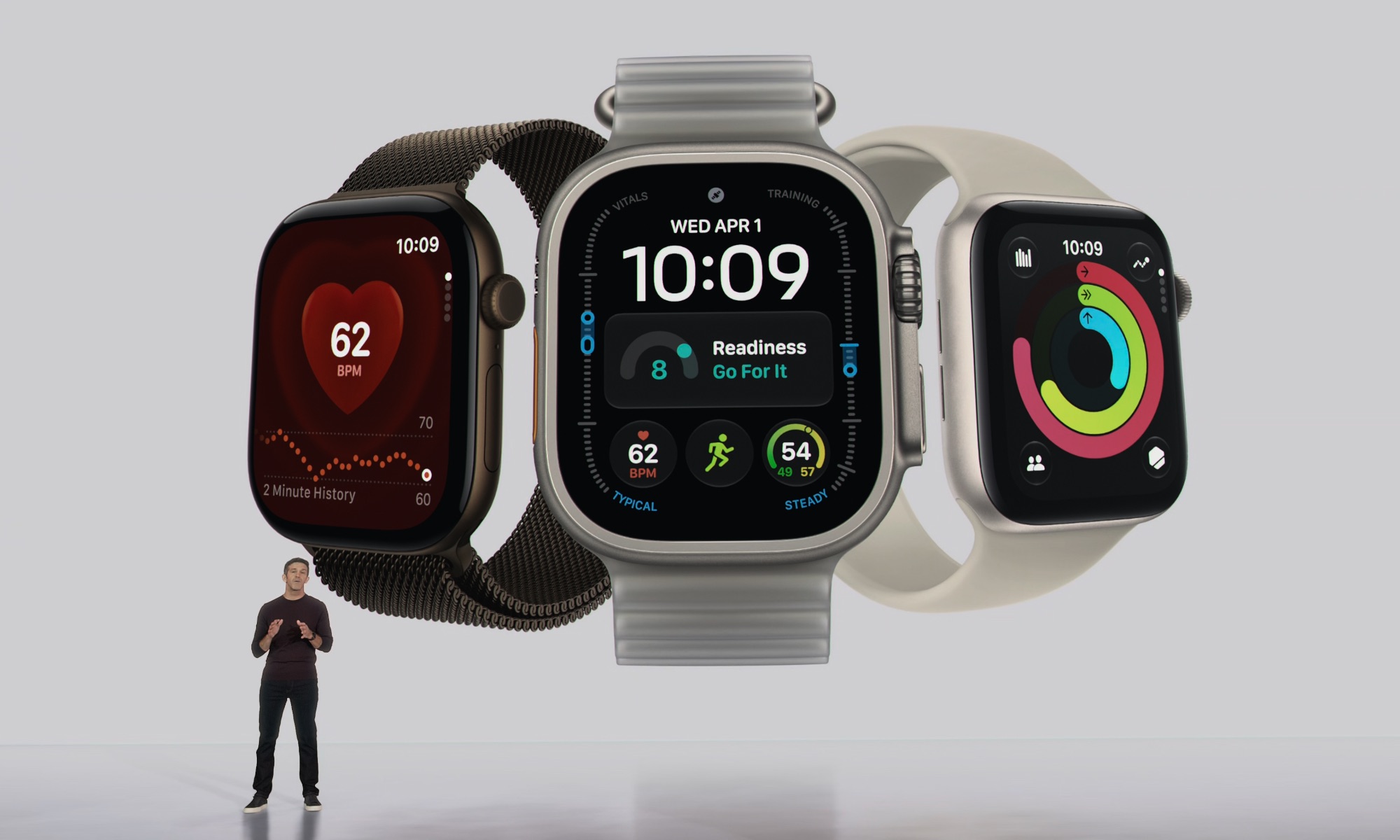
One pleasant surprise is that despite all of Apple’s other recent price hikes, the Apple Watch Series 12 and Apple Watch Ultra 4 will still be selling for the same prices as their predecessors.
The Apple Watch Series 12 starts at $399 and is available in black, space gray, dark bronze, and light gold aluminum finishes, radiant gold and natural titanium, and in new pearl white and night blue ceramic. The titanium models start at $699, while the ceramic models start at $899, although both are GPS + Cellular versions, making the premium only $200 over the equivalent aluminum model.
The Apple Watch Ultra 4 starts at the same $799 as the Ultra 3, and is available in black and natural titanium.
All the new Apple Watch models are available for pre-order starting today, and will land in stores — and in customers’ hands — on September 18.