The Apple Watch Series 12 Might Finally Fix This Health Blind Spot
 Kanut Photo / Shutterstock
Toggle Dark Mode
With all the attention focused on the foldable iPhone that Apple is expected to debut next week, we haven’t heard much about the company’s plans for this year’s Apple Watch Series 12. By all accounts, it’s expected to be another mostly iterative update, but some new insider info from Bloomberg’s Mark Gurman suggests we could see at least one interesting new health feature.
Sadly, it’s not the mythic blood glucose sensor, which remains at least a few years away, or even more accurate blood pressure monitoring, which also remains a tough nut to crack. Instead, this year Apple is looking at a seemingly more modest but valuable improvement.
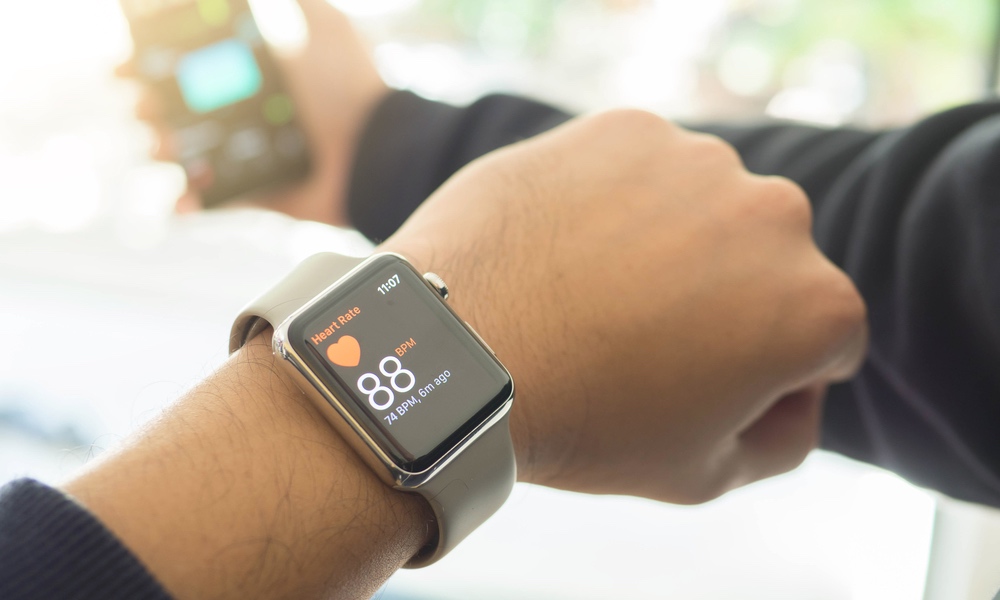
Writing in his latest Power On newsletter, Gurman says that Apple is testing a feature that would allow the heart-rate sensor to offer continuous monitoring, rather than only taking periodic spot-checks.

From the advent of the Apple Watch twelve years ago, the heart rate monitoring feature has only kicked into full gear when you’re doing a workout or when you specifically open the Heart Rate app. Otherwise, it just checks at random intervals throughout the day.
Moving to continuous heart rate monitoring would be very useful, especially for detecting conditions like atrial fibrillation, but it also wouldn’t necessarily be novel. Gurman suggests it would simply leave the workout tracking mode on all the time. While current Apple Watch models leave the sensor on for a few minutes after a workout, this would be a boon for those looking for longer recovery tracking intervals.
Still, there’s a battery hit involved in doing something like that, so it’s possible Apple may also be upgrading the heart rate sensor in the process. After all, it’s already been through three generations of optical heart rate sensors, so it could be time for a fourth.
The first-generation sensor was used from the original Apple Watch until the Series 3 in 2017. It used green, red, and infrared light alongside photodiodes. Apple introduced a second-generation sensor in the Apple Watch Series 4 to complement the new ECG feature, and then upgraded that again with the Series 6 to facilitate blood oxygen monitoring, although even the latest Apple Watch SE 3 still uses the second-generation version.
Each generation also increased the accuracy, and paved the way for features like hypertension notifications in last year’s Apple Watch Series 11 (which also came to the Series 9 and later via the watchOS 26 update).
The generational upgrades of the sensors have traditionally been paired with new health features — the ECG and blood oxygen monitoring — so it’s unclear if continuous monitoring warrants a whole new sensor array. It depends on what hoops Apple needs to jump through to make it work without killing the battery.
However, the Series 12 is also expected to move the needle to a new chip that will be an actual upgrade to the internal silicon — not merely a new number. Whether Apple labels it the S11 or jumps straight to S12 to realign the processor branding with the hardware remains to be seen, but it’s roughly on schedule either way. Apple has followed a four-year cycle for Apple Watch silicon upgrades in recent years. The S6/S7/S8 and S9/S10 (which was also used in the Series 11 without bumping the number) were all essentially the same chip inside.
Ceramic Case and Design Changes
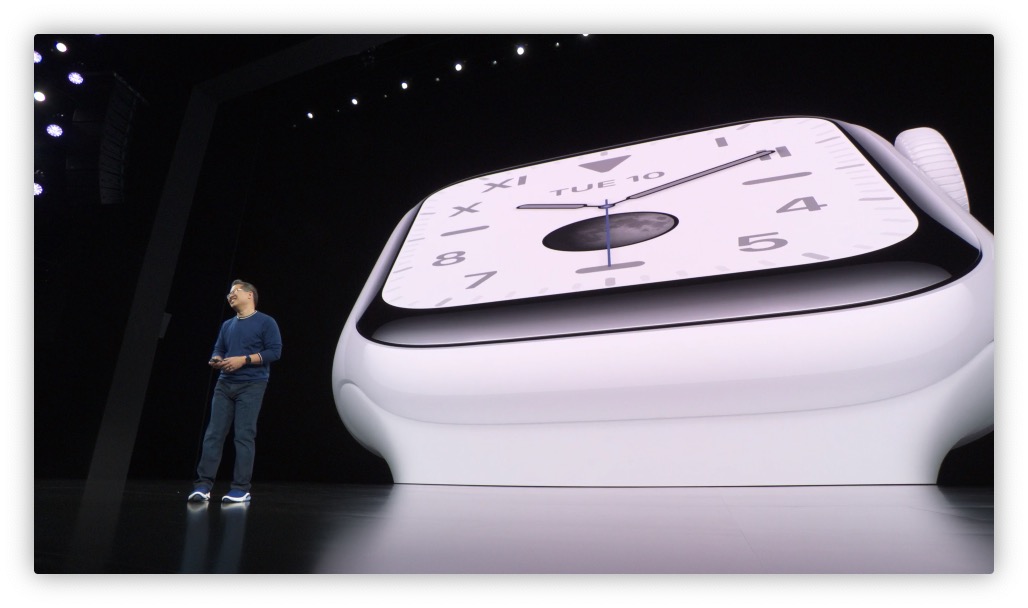
The Apple Watch Series 12 is expected to look virtually identical to the Series 11, except for one optional upgrade: the return of ceramic.
That’s a case material we haven’t seen since the Apple Watch Series 5 in 2019, where it made a brief return after being skipped in the Series 4. However, if Gurman’s information is accurate, Apple could be repeating the playbook from the Apple Watch Series 3.
While Apple introduced ceramic for its “Edition” model for the Apple Watch Series 2 — a far more reasonable upgrade than the 18-karat gold of the original Apple Watch Edition — it was only available strictly in white. The Apple Watch Series 3 expanded that to white ceramic and gray ceramic, but the Apple Watch Series 5 returned to only the white ceramic, since Apple chose to offer it alongside its first titanium “Edition” models.
Apple has since retired the “Edition” moniker after eliminating titanium in the Apple Watch Series 8. When the material finally made a return in the Apple Watch Series 10 two years ago, it replaced stainless steel, eliminating the need to reintroduce the more premium brand.
However, Gurman’s sources say that Apple has tested both white and dark gray ceramics for this year’s Series 12, which are reportedly referred to internally as “iceman.” There’s no word on whether Apple plans to resurrect the “Edition” branding or whether ceramic will replace titanium or supplement it.
Lastly, Gurman reiterates the rumors we’ve been hearing for a while that the Apple Watch Series 13 could be in for a “big redesign” next year, which seems roughly on schedule, but he also acknowledges things could slip into 2028.
[The information provided in this article has NOT been confirmed by Apple and may be speculation. Provided details may not be factual. Take all rumors, tech or otherwise, with a grain of salt.]