Apple’s Foldable iPhone Duo Finally Arrives — With an ‘Ultra’ Price Tag
Toggle Dark Mode
After more than seven years of rumors and false starts, Apple finally unveiled its first foldable iPhone during today’s “Surprise and Shine” event. Of course, the rumor mill meant we all knew it was coming, but Apple still managed to surprise us with a few things.
Chief among these was the name. While the popular moniker given to the upcoming foldable over the past few months was the “iPhone Ultra,” that never quite felt right for a whole lot of reasons, so it wasn’t a big surprise when last-minute leaks this morning revealed that Apple was actually going to call it the iPhone Duo.

While that name has been tossed around a bit last year, it got lost in the shuffle of the “Ultra” noise. Still, it always made more sense, both from a marketing point of view — Samsung has already done the “Ultra” name to death — and the fact that, as cool as the new foldable iPhone is, there’s really nothing “Ultra” about it.
The iPhone 18 Pro and iPhone 18 Pro Max remain the real powerhouses of the lineup with their triple-lens camera systems that now include a variable aperture on the main lens, not to mention staggering battery life. By contrast, the most significant feature of the iPhone Duo is really just the fact that it’s a foldable iPhone.
This isn’t to say that it isn’t an incredible feat of engineering, but it’s also going to leave a lot of folks with the same awkward choice that last year’s iPhone Air presented. The big difference with the iPhone Duo is that the price tag could make that decision for many of us.
The iPhone Duo
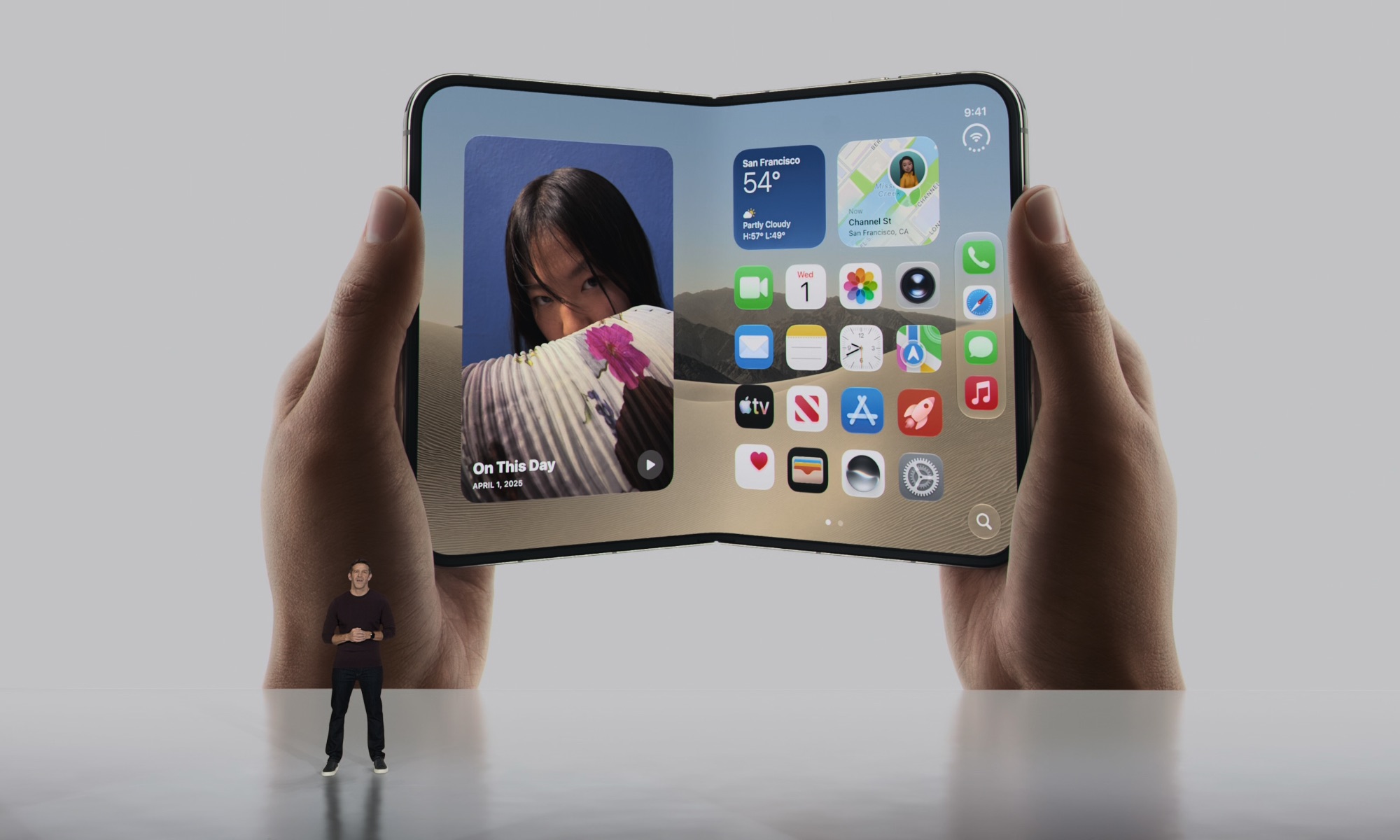
Let’s get this out of the way first. The iPhone Duo will start at $1,999 for a 256 GB configuration. With the iPhone 18 Pro and iPhone 18 Pro Max coming in at $1,199 and $1,299, respectively for the same amount of storage, that’s going to make it a tough sell. While Apple’s Pro models have gotten a $100 increase over their predecessors — a much more reasonable hike than many were fearing — it still puts Apple’s new iPhone Duo where you’re going to have to really want the foldable technology to justify paying $700–$800 more.
That said, there’s no doubt at all that the iPhone Duo is an impressive device. Apple has outdone itself here in pulling out all the stops. It may be late to the game, but it’s coming into the foldable market with a bang.
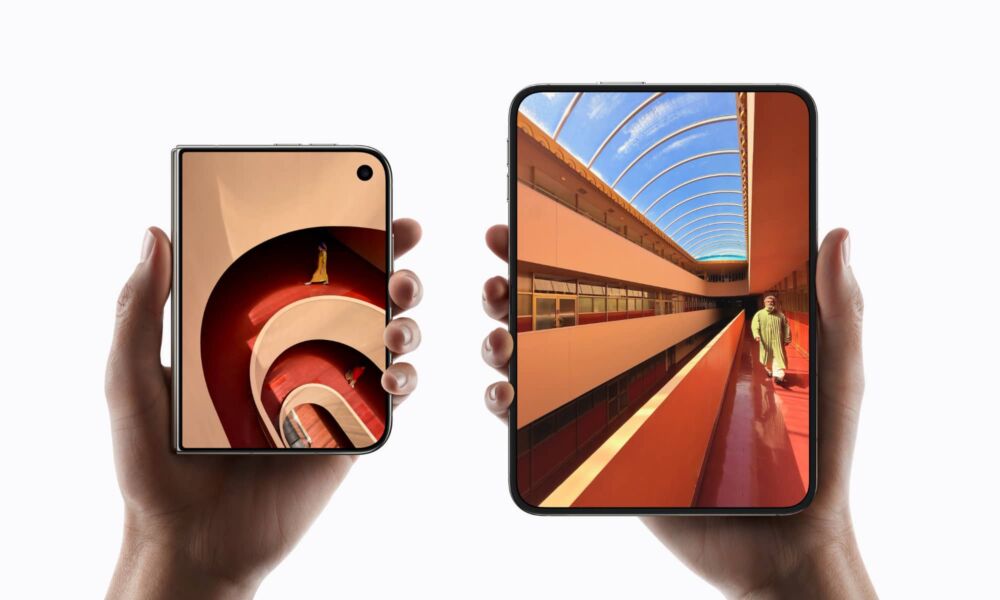
First and foremost, it’s not only offering what appears to be an almost entirely crease-free screen, but it’s sweated the design details to make everything remarkably consistent. For example, the cover screen and inner screen have the same aspect ratio, so the apps you see on the outside will be presented the same way on the inside, just larger.
The iPhone Duo will run iOS 27, but it’s a polished version that’s optimized for the unique design. The Dock and controls now hang out on the right side of the screen rather than the bottom to optimize screen space and make it easier to use the device with one hand. The “status bar” has also been reduced to more of a status “ring” that presents all the information without taking up nearly as much space.
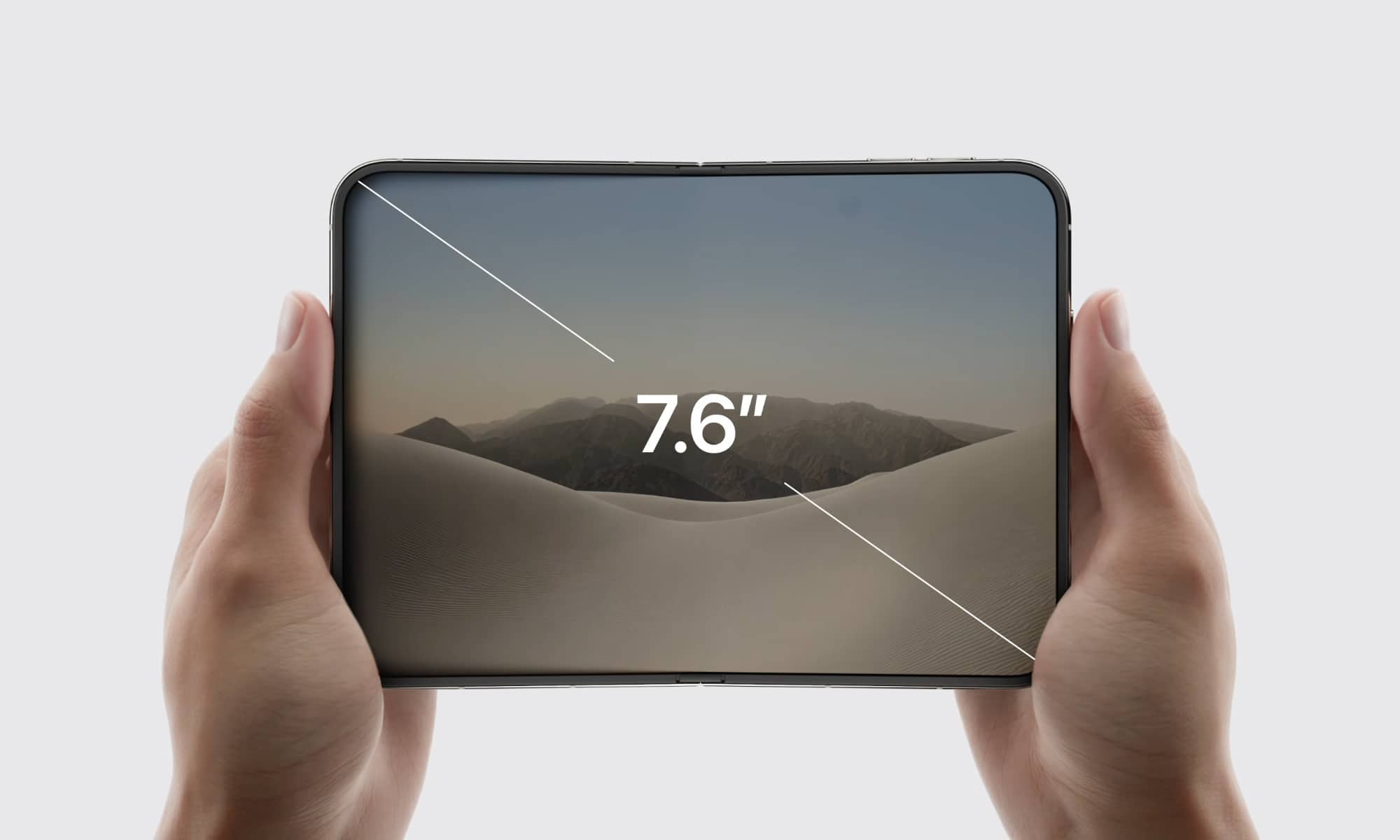
The cover display comes in at 5.4 inches, which is about 90 percent of the screen area of an iPhone 18 Pro, albeit in a very different aspect ratio. However, it unfolds into a 7.6-inch inner Super Retina XDR display that’s 50 percent larger than the iPhone 18 Pro Max. In addition to making the screen nearly crease-free, Apple has also added a premium nano-texture finish to reduce glare and provide a matte surface, similar to what’s found on the MacBook and iPad versions of the display.
Both displays also feature a 120 Hz “ProMotion” refresh rate with Always On technology and 3,000 nits of peak outdoor brightness. Apple has also built the software to provide a nice transition effect as users open and close the device, which also serves a practical purpose of letting users seamlessly transition between modes without having to reorient themselves to whatever they were looking at on the other screen.
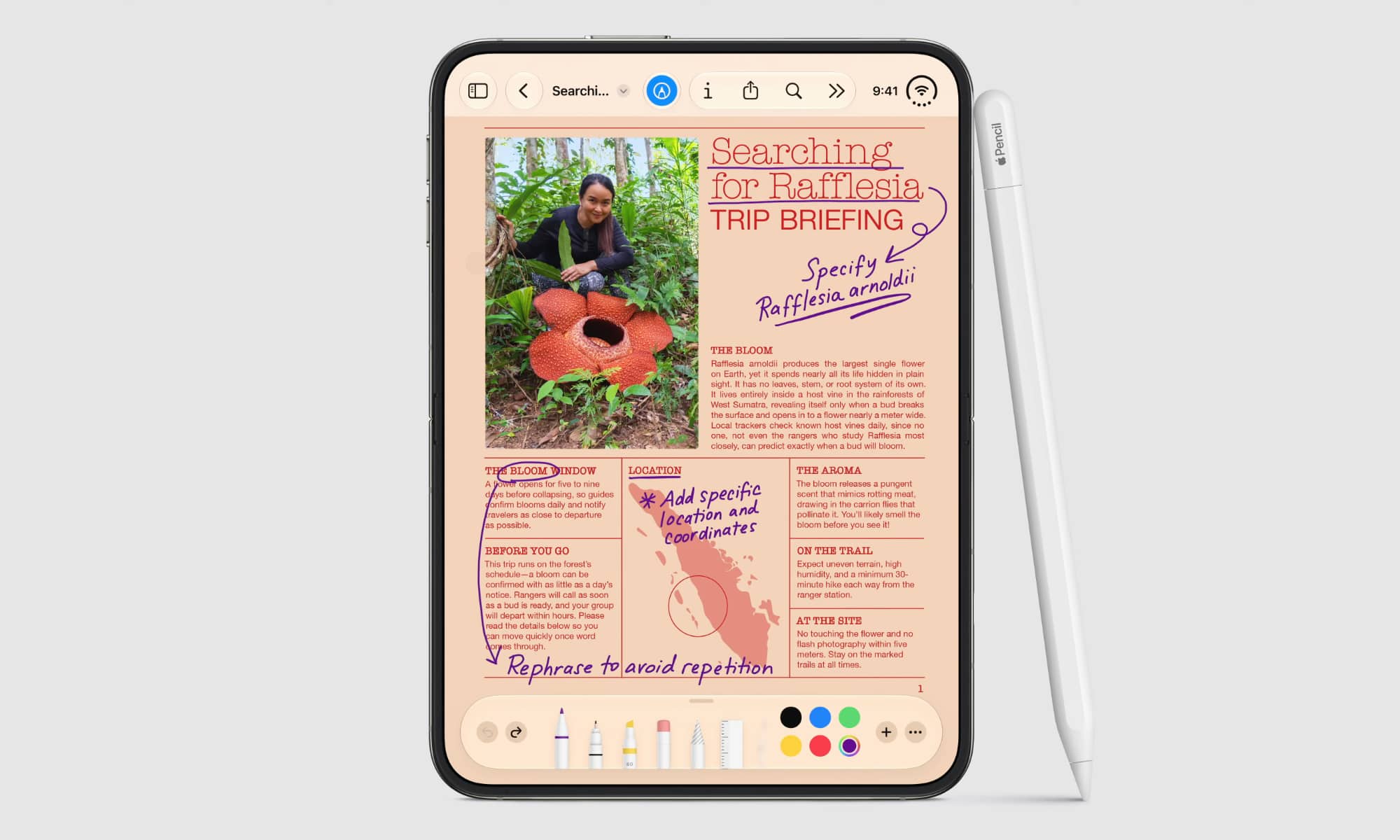
Further, while Apple nixed the idea of a special Apple Pencil for the iPhone Duo, it’s still embracing Apple Pencil support. You’ll just have to use the standard Apple Pencil with USB-C. That won’t be there right away; Apple says it’s coming “later this year,” which suggests it will be part of an iOS 27.1 or iOS 27.2 update.
The Cameras
The inner display hides the FaceTime camera — a first for an Apple device, but as expected, there’s also no Face ID support here. The outside display has a circular hole exclusively for the camera, but authentication will be handled by Touch ID or other methods like unlocking with an Apple Watch.
The main cameras are more or less what you’ll find on a base iPhone model; Apple hasn’t released the iPhone 18 yet — that’s expected to come next spring — so for now the iPhone Duo is in a bit of a unique place, photographically speaking. The dual-camera array is roughly equivalent to the iPhone 17 cameras, although the sensors have undoubtedly been upgraded a notch beyond that.
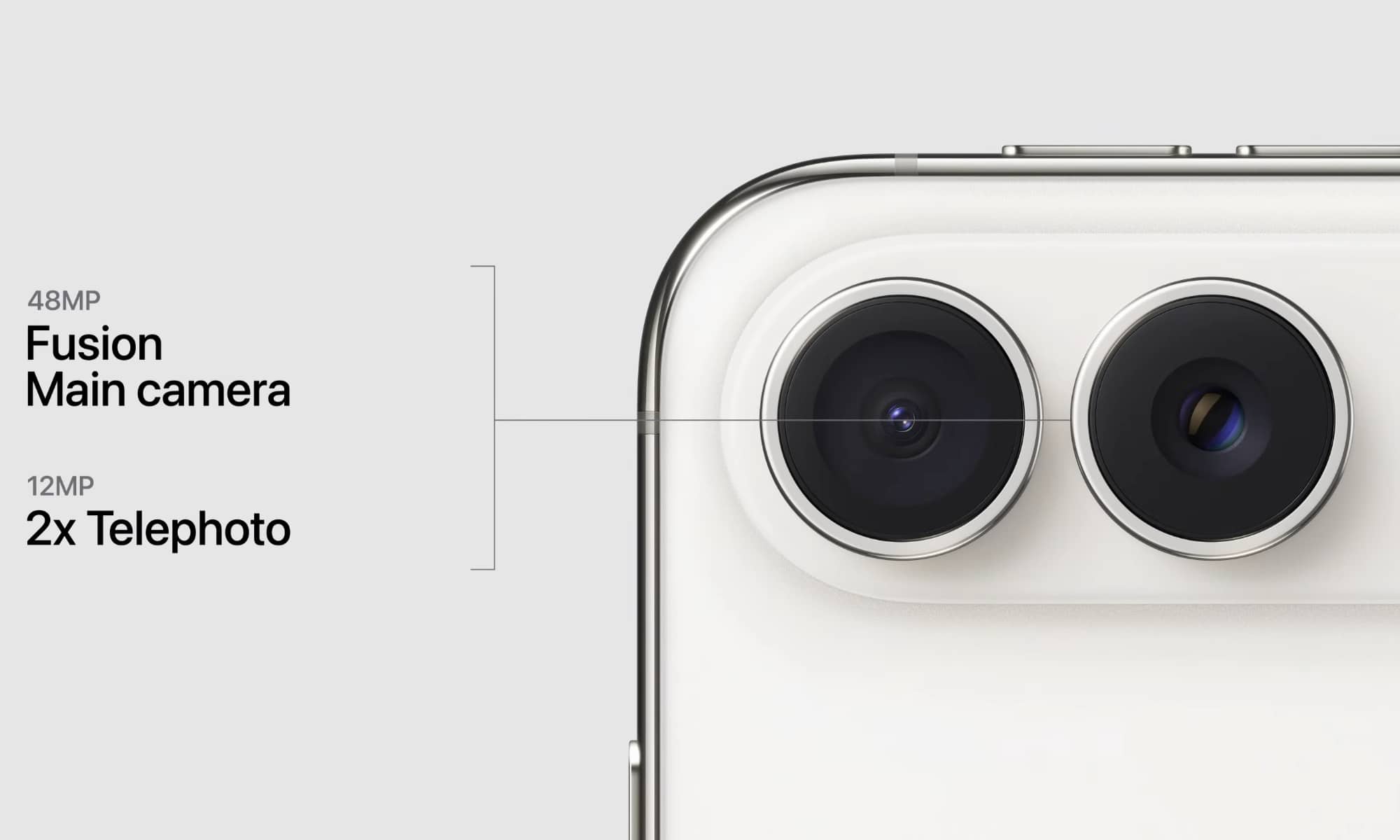
Specifically, Apple says the iPhone Duo’s 48 MP Ultra Wide camera is identical to the one found on the iPhone 18 Pro and iPhone 18 Pro Max, while the 48 MP Main Fusion camera is likely an upgraded version of the iPhone 17 model that falls a bit short of the iPhone 18 Pro, which now adds a variable aperture into the mix.
Nevertheless, the iPhone Duo supports the same image processing pipeline as the iPhone 18 Pro models, which means computational photography and software features are roughly on par, including support for new Photographic Styles with texture and grain controls.
However, what’s more magical about the iPhone Duo cameras isn’t so much the raw sensors as the unique features Apple has baked in to take full advantage of the device’s flexibility.
Since the iPhone Duo can be propped up more easily and also has two screens, it features the ability to use the main “rear” camera to take selfies while previewing them on the outer display, along with a Duo Preview that lets subjects adjust their pose when you’re taking their photo.
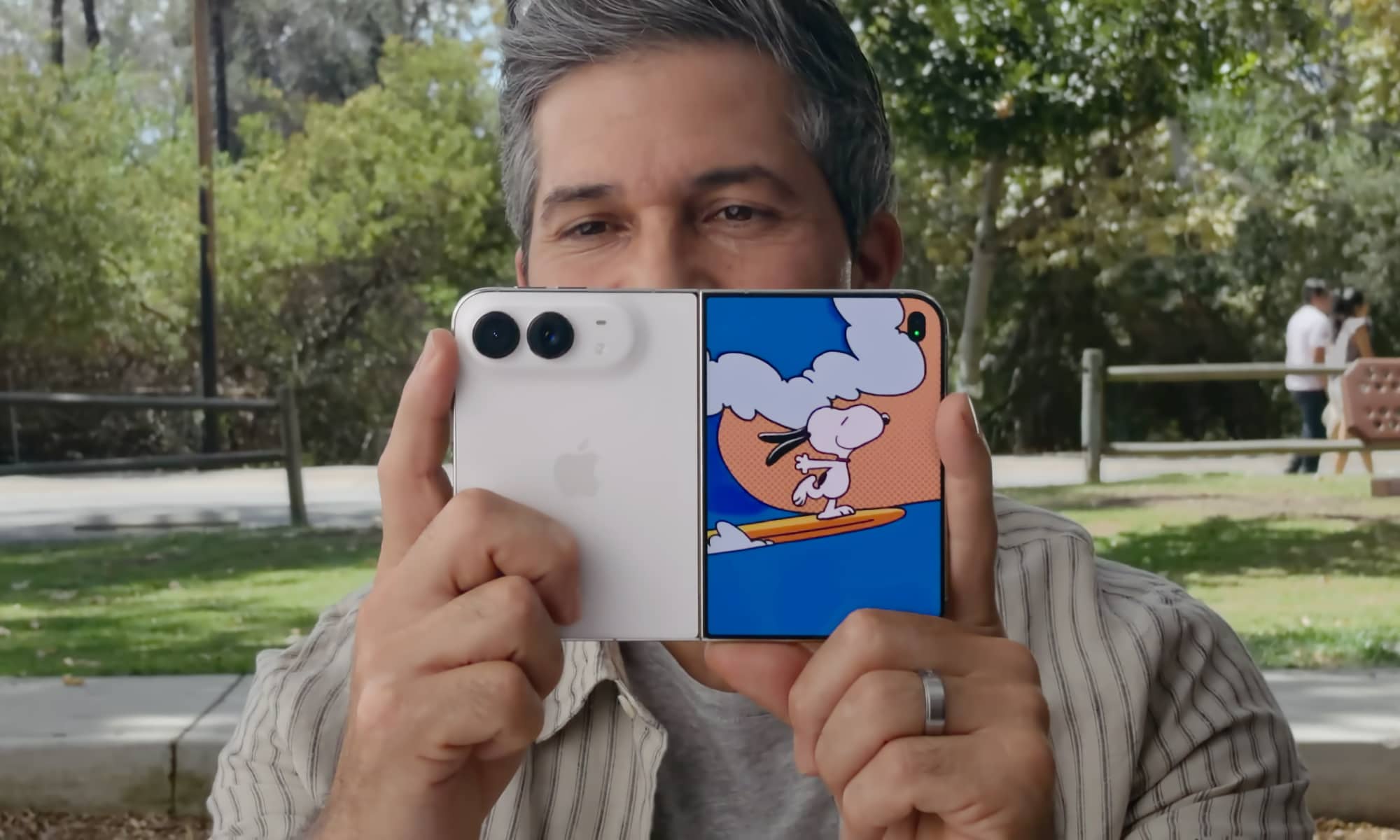
Apple has expanded this into another clever use of the outer display called “Kid Cue” which will play Peanuts animations to get the attention of younger children, encouraging them to look at the camera. Apple has been embracing Snoopy and the gang in Apple Watch faces and Apple TV screensavers, but this is one of the more fun and practical uses of its partnership.
Apple is also adding a FaceTime Duo mode in iOS 27 that works on existing iPhone models, letting you send video from both your front and rear cameras while on a call. However, it should have been obvious this was really made for the iPhone Duo, as it will now allow for two people to participate in a FaceTime call from both sides of the device — one user facing the outer display while the other one faces the inside, without all having to crowd around a single screen.

Lastly, Apple is also introducing a Smart Take feature that uses the A20 Pro chip inside the iPhone Duo to automatically take group shots when subjects are posing, so you won’t have to set a timer and run out in front of the camera, or fiddle with an AirPod or Apple Watch to use as a shutter control. From what Apple demonstrated, you can prop up an iPhone Duo, have the whole group stand in front, and it will just keep snapping photos as everyone poses.
Other Features
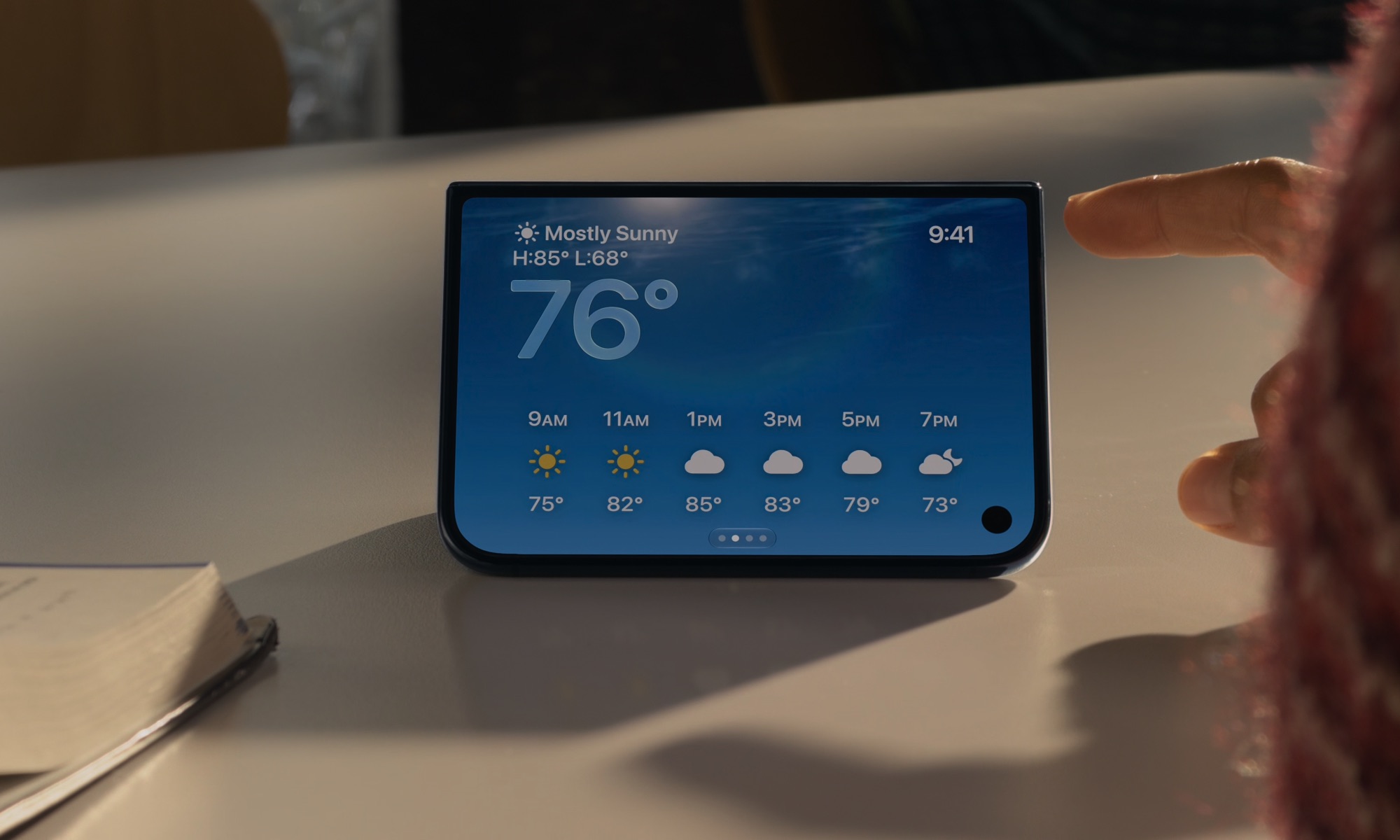
The iPhone Duo will also support StandBy mode even when it’s not charging, letting folks prop it up anywhere to use as a clock or photo display — either tent-card style on the outer display, or partially folded up with the inner display. New Calendar and Weather faces have been added in iOS 27 to make this even more versatile, along with Shared Albums in the Photos face.
Like last year’s iPhone Air, the iPhone Duo is also going to be eSIM-only everywhere. That’s because it’s even thinner, which means Apple didn’t want to waste any space inside to accommodate a physical SIM card slot. It also means the two batteries inside deliver remarkable longevity: up to 31 hours of video playback when using the inner display, up to 44 hours of video playback when using the outer display.
There’s also faster charging, with Apple promising that it can get up to 50 percent in only 20 minutes, or get five hours of video playback (on the outer display) with only a five-minute charge.
Apple is also packing in its next-generation C2 modem chip to facilitate this, providing mmWave support for the first time (for US models), plus significantly greater power efficiency.
Price and Availability
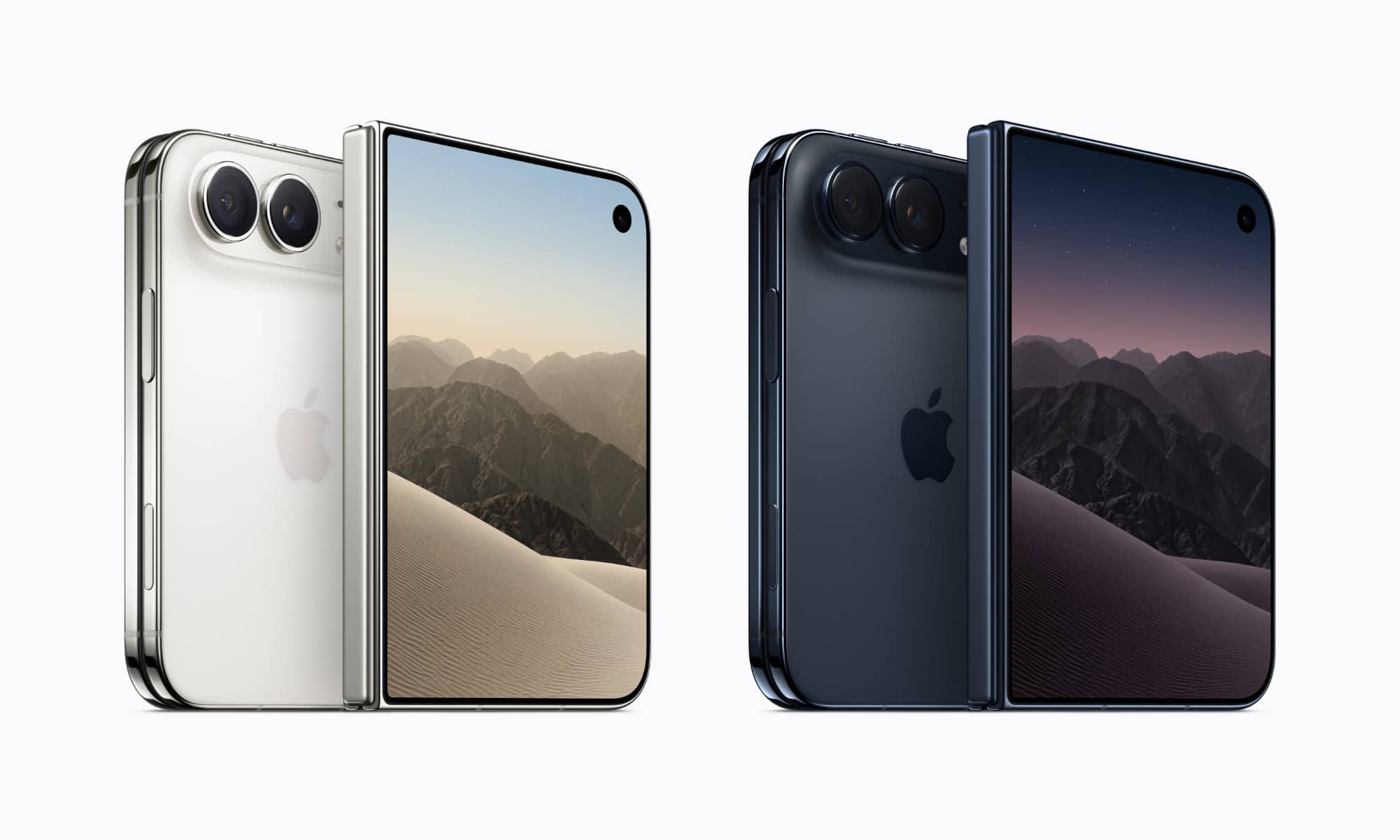
The iPhone Duo comes in two finishes — star white and night sky — and starts at $1,999 for a 256 GB version. It’s also available in 512 GB for $2,199, 1 TB for $2,599, and 2 TB for a staggering $3,199.
However, it won’t be going up for pre-order until October 16, and will hit store shelves on October 23. The good news is that it will be coming to 70 countries right away — contrary to an earlier rumor that suggested it could be US-only at launch — with 28 other countries and regions following on October 30. It also looks like it will be shipping with iOS 27.1.