Apple Quietly Releases the ‘AirTag 2’
Toggle Dark Mode
Apple has just released its first new product of 2026, and it’s not a MacBook or an iPhone. Instead, it’s easing us into the year with an update to the rather humble AirTag.
We’ve seen hints of the so-called “AirTag 2” for at least a year now, and many expected it to arrive last fall alongside — or shortly after — the new iPhone 17 lineup. When it didn’t show up at a major Apple event, it was clear that if it was coming at all, it would be a more quiet press release. Well, that’s what we’ve ended up with, but few folks had “January” on their bingo cards.

It’s also not technically the “AirTag 2.” Everyone has been using that as a placeholder, and we’ll almost certainly continue to do so just to make things easier, but Apple simply announced it today as “the new AirTag.”
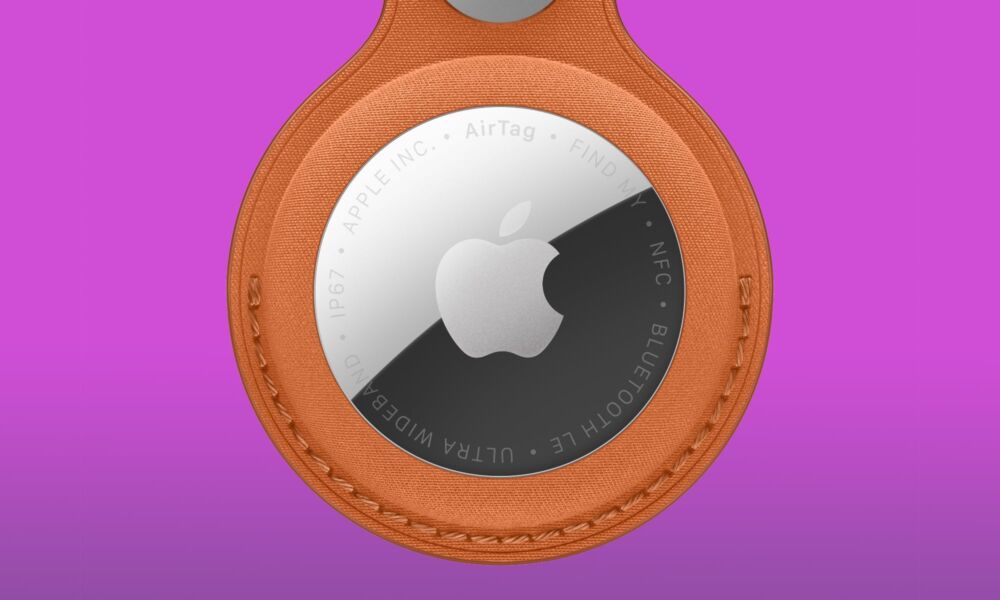
That’s not too surprising, as nobody ever expected the company to keep selling the original alongside the new version, so the naming was also destined to follow the same strategy Apple uses for almost everything except for the iPhone and Apple Watch. Apple will use “second generation” in places where it needs to distinguish, such as support documentation, but you may have to look closely when buying one to make sure you’re getting the latest model and not the original 2021 version, as they’re indistinguishable at a glance.
What’s New in ‘The New AirTag’?
While the design remains essentially unchanged, the internals have been beefed up in a few significant ways. Multiple rumors over the past several months said that Apple was going to improve the range and safety features, and that’s precisely what it’s done.
Increased Range
Apple has made two improvements that work together to help you find an AirTag from even farther away. Firstly, it’s upgraded the Bluetooth chip to expand the raw range. This will not only help when you’re trying to locate your own AirTag, but will more importantly improve its discoverability for location reporting by other devices on Apple’s crowdsourced Find My network, letting you find lost items in more obscure and less-trafficked locations.
The new AirTag also features Apple’s second-generation Ultra Wideband chip — the one colloquially dubbed “U2,” although Apple tends to avoid calling that, likely to avoid confusion with the band of the same name (not to mention its misguided September 2014 attempt to promote a new album).
Apple promotes this as “the same chip found in the iPhone 17 lineup, iPhone Air, Apple Watch Ultra 3, and Apple Watch Series 11,” but that’s merely mentioning its current models; the second-gen chip was actually first introduced in the iPhone 15 over two years ago.
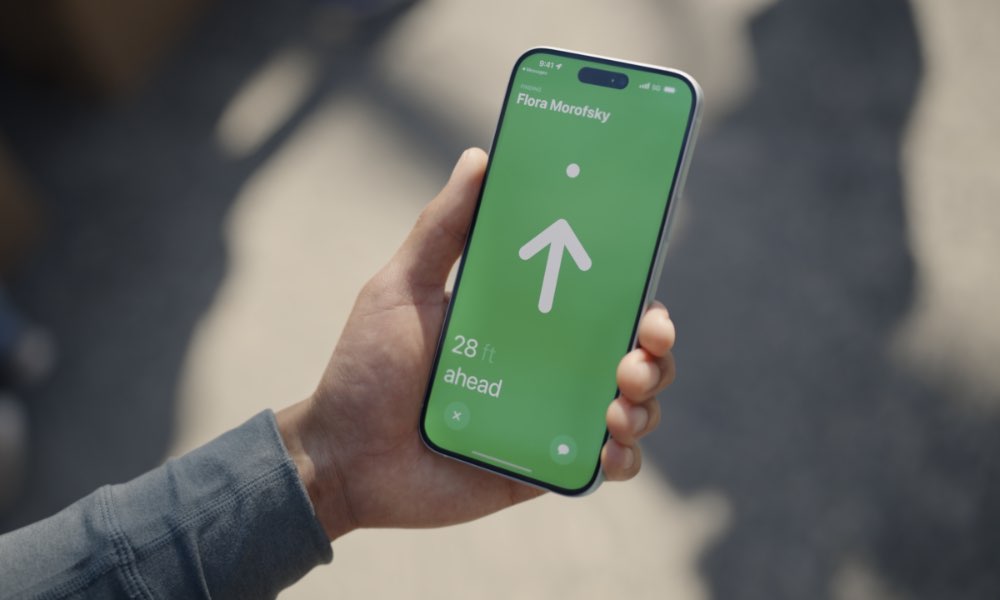
The new chip was used to power a new iPhone-to-iPhone Precision Finding feature to let you track down friends and family members in crowded spaces like stadiums and shopping malls. While the original AirTag has had Precision Finding from the start, Apple says the new second-generation chip will allow you to use it to locate the new AirTag from up to 50 percent further away compared to the original.
As you might expect, the improved Precision Finding will require one of these iPhone models, since the “U2” chip needs to be on both devices. However, older iPhone models equipped with a U1 chip — the iPhone 11 through iPhone 14 — will still be able to use the standard Precision Finding with the new AirTag.
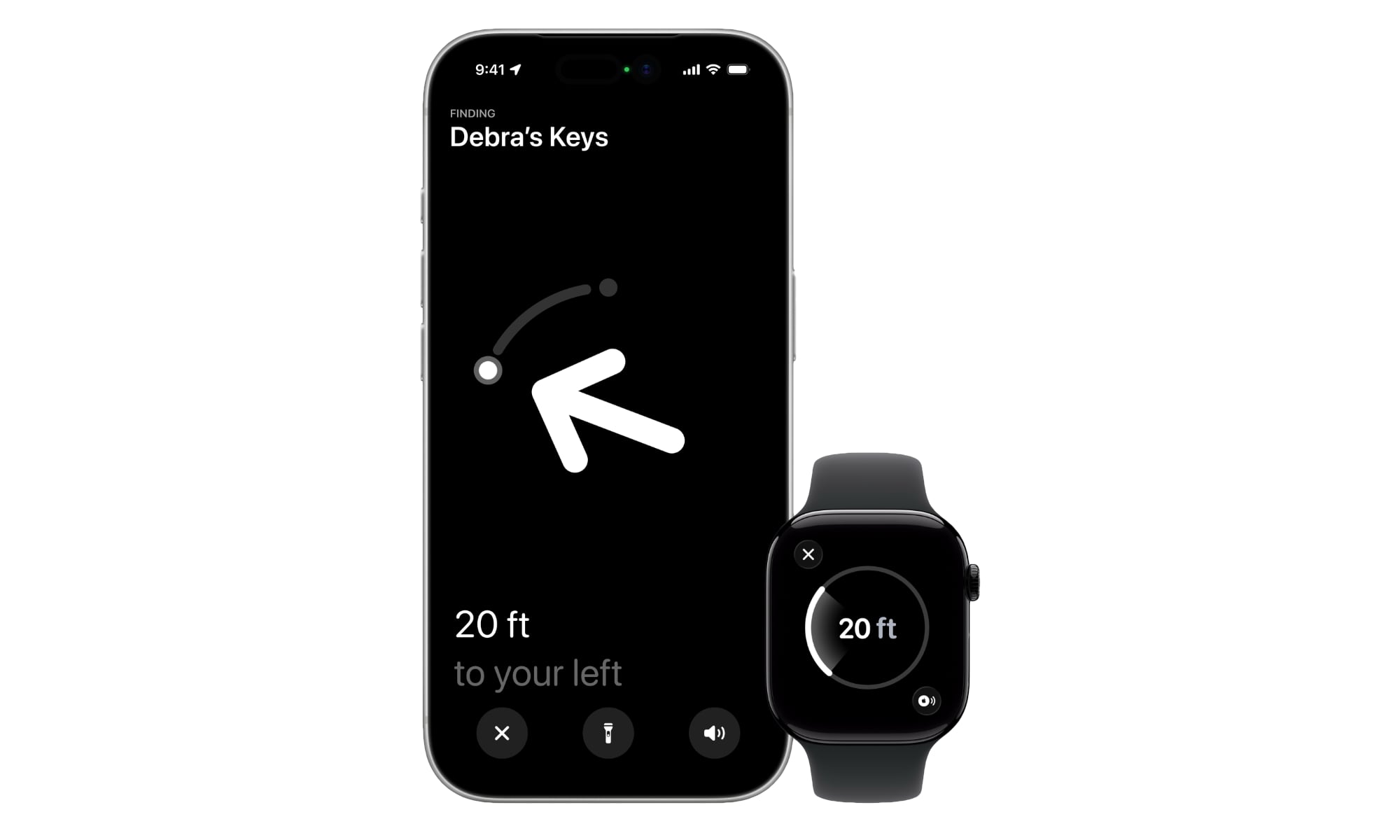
The new AirTag will also bring Precision Finding to the 2023 Apple Watch models — the Apple Watch Series 9 and Apple Watch Ultra 2 — and all newer models in those families. This has been an odd omission for the original AirTag, considering that nearly every Apple Watch released since 2020 has included a U1 chip, and the Series 9/Ultra 2 and later have the U2. We haven’t been able to confirm yet if Apple will add this for the original AirTag in watchOS 26.2.1, which was released today to support the new AirTag.
Notably, there are two specific devices that are being left out here. The iPhone 16e and Apple Watch SE lack Ultra Wideband chips of any kind, which means no Precision Finding — even for the original AirTag.
Even Louder
Apple also says the AirTag is 50 percent louder than the previous generation, which will help you find it in situations where Precision Finding isn’t accurate enough, such as when it’s buried in between your couch cushions or, for that matter, on a different floor of your home (Precision Finding is notoriously trapped in two-dimensional thinking and unaware a “Z axis” exists).
However, the louder speaker could also help to bolster Apple’s anti-stalking features. Apple designed the AirTag from the start to sound an audible alarm if it started moving after being separated from its paired iPhone. That initially didn’t happen for three days, but was later reduced to around eight hours after domestic safety advocates pointed out the risks of abuse by stalkers.
Still, that alert only works if you can actually hear it, so the louder speaker should help in those cases. What’s less clear is whether Apple has added any way to prevent tampering with the speaker. It’s remarkably easy to disable the speaker on the first-generation AirTag, and it wasn’t long after its release before silent AirTags began popping up for sale on eBay.
Several rumors over the past year says that Apple planned to make the new AirTags more tamper-resistant, but today’s announcement doesn’t say anything about that, so we’ll have to wait for the inevitable teardown from sites like iFixit to see what it looks like inside.
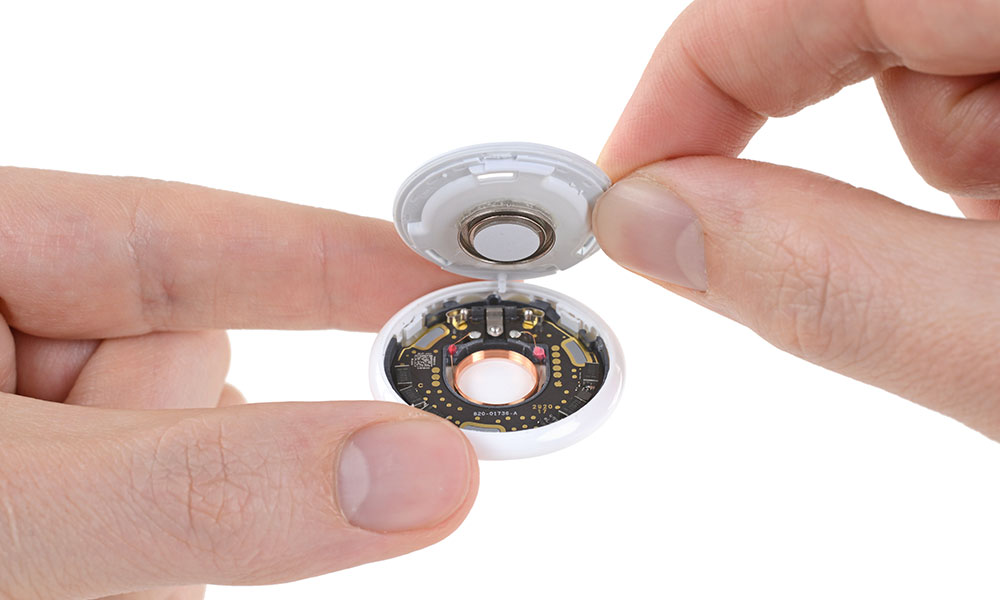
In fact, Apple glosses over the safety features, mentioning only that “the new AirTag incorporates a suite of industry-first protections against unwanted tracking, including cross-platform alerts and unique Bluetooth identifiers that change frequently.”
However, it’s unclear if those are new features or if Apple is simply reminding us of what the AirTag can already do, as it does throughout the rest of its announcement, which highlights several other capabilities like lost luggage tracking, item location sharing, and Apple’s overall privacy features — all things that were also core features of the original 2021 AirTag. Even the statement that “The new AirTag is designed from the ground up to keep location data private and secure,” doesn’t mean it’s done anything different from the original AirTag design.
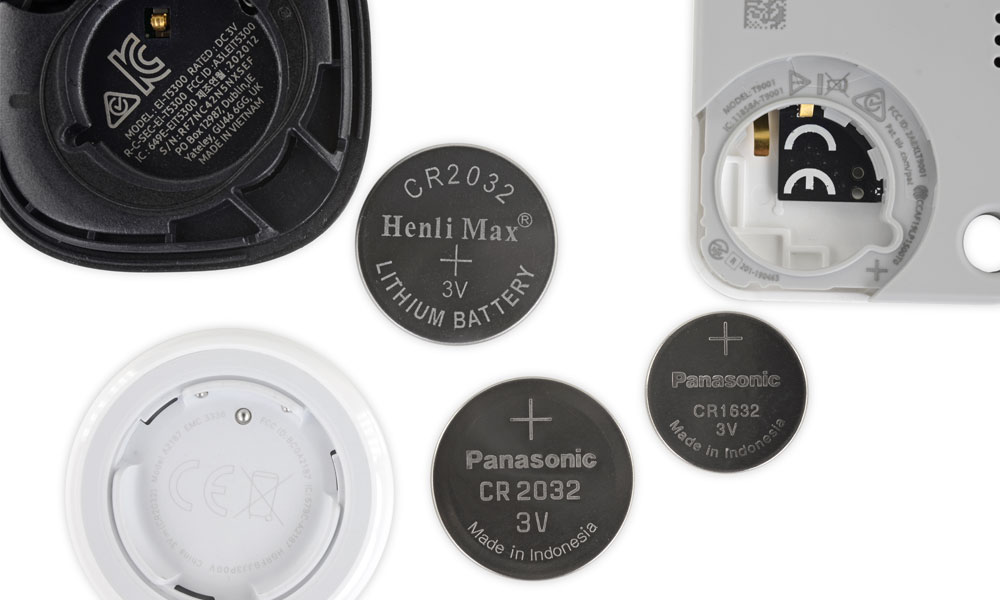
The AirTag is also still powered by a CR2032 coin battery and retains its same IP67-rated water resistance. As much as some folks hoped for a rechargeable battery, that was likely never in the cards — and there are serious advantages to a replaceable cell, especially one as ubiquitous as the CR2032. Plus, Apple promises “more than a year” of battery life on the new AirTag, just like the original, and with where AirTags tend to be stashed, it’s often far easier to change a coin cell than to find a charge, and there are other solutions for those who want extended battery life.
The new AirTag is available in the same one- and four-packs as the original, selling for $29 and $99, respectively. Apple has discontinued the original, which means you can probably find some good deals if you don’t need what the latest model has to offer. We’ve seen Amazon selling singles for $25.99, and blowing our 4-packs for $69.99 to get rid of old inventory before the new ones show up.
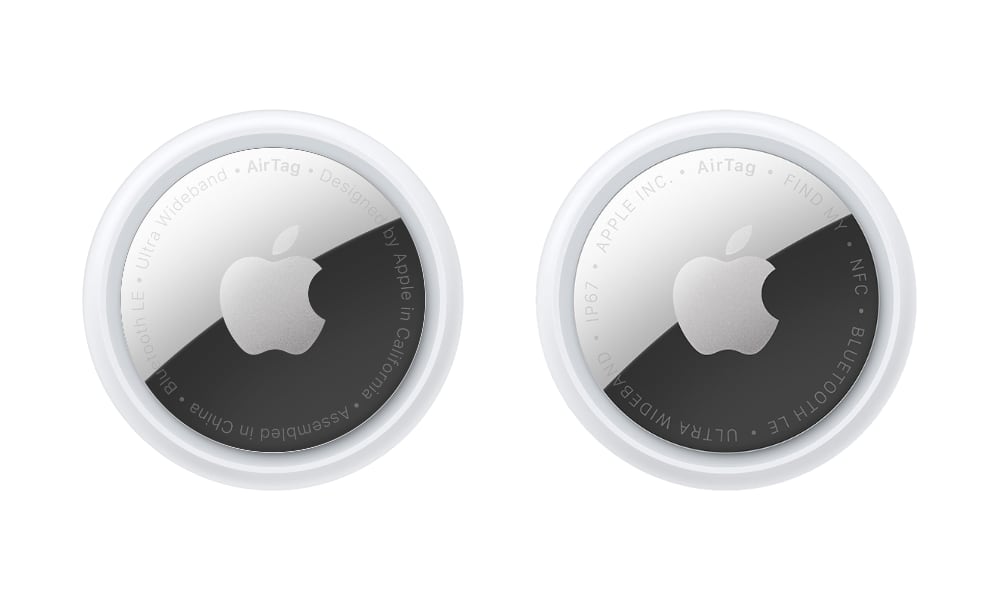
While all Apple Stores should be selling only the new AirTags starting today, be sure to read the fine print if you’re looking for the second-generation version from anywhere else. Major online retailers like Amazon have already updated their listings to “AirTag (1st Generation),” but that may not be true everywhere. As 9to5Mac observes, the most prominent difference is the text on the back, which is rendered in all caps on the new AirTag and now includes “NFC” among the listed technologies.