Apple May Tease Its Secret Smart Glasses at WWDC 2027
Toggle Dark Mode
Next year’s Worldwide Developers Conference (WWDC) could repeat history by marking the debut of Apple’s next “vision” product — but this time with something a bit more mainstream than a bulky $3,500 headset.
Writing in this week’s Power On newsletter, Mark Gurman has put a tentative pin in the calendar for when we’ll see the smart glasses that Apple has reportedly been working on for the past couple of years. While the spectacles had initially been rumored to launch later this year, following Apple’s decision to prioritize them over a lighter “Vision Air” headset, Gurman reported in early June that they’d been delayed to 2027 — specifically, “at the end of next year.”

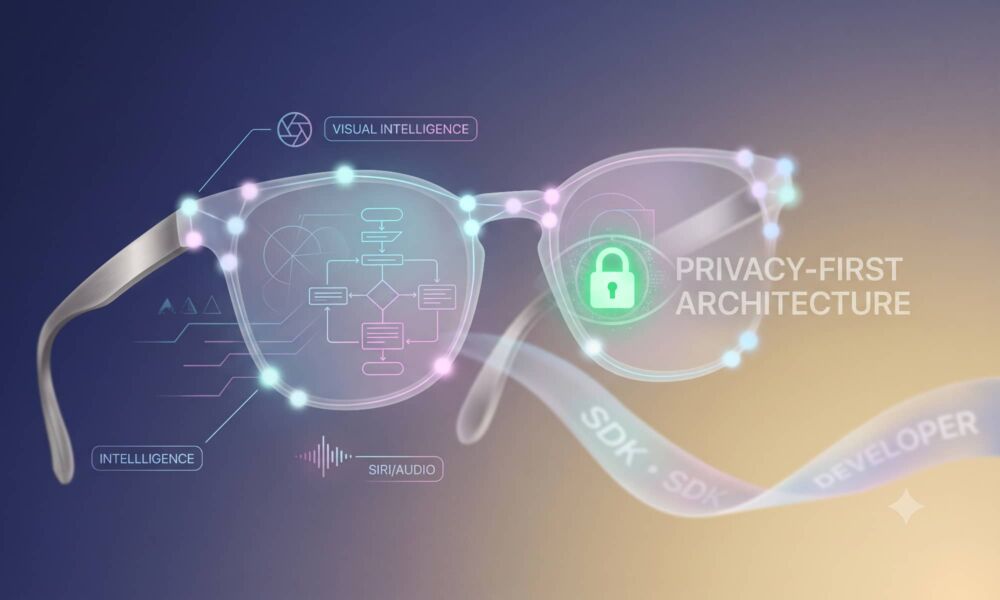
That timeline may still be accurate for when the glasses will actually go on sale, but Gurman now expects to see Apple unveil them at WWDC so it can announce the necessary software development kits (SDKs) to encourage developers to start building apps for the new platform.
While WWDC is typically more focused on Apple’s major operating system updates, it’s not uncommon to see Apple’s hardware products share the stage. It also serves as a common launchpad for larger upgrades and entirely new device categories, even when they won’t be on the market for several months.
For example, the original HomePod and Vision Pro were both unveiled at WWDC, in 2017 and 2023, respectively, even though neither went on sale until the following February. While the HomePod didn’t really have a developer angle, the Vision Pro certainly did, and Gurman expects the new smart glasses to follow a similar playbook.
To be clear, this isn’t the mythic Apple Glass project we’d heard rumored for years. By all accounts, Apple wanted to bring full augmented reality glasses to market alongside the Vision Pro, but ran into more than a few roadblocks. The project, reportedly codenamed N421, never made it past the “architecture” stage as the technology simply wasn’t ready. After all, it’s easy to create the concept of AR glasses for a sci-fi movie; it’s much harder to create an actual working product — especially if you want to sell it at a price that mere mortals are willing to pay.
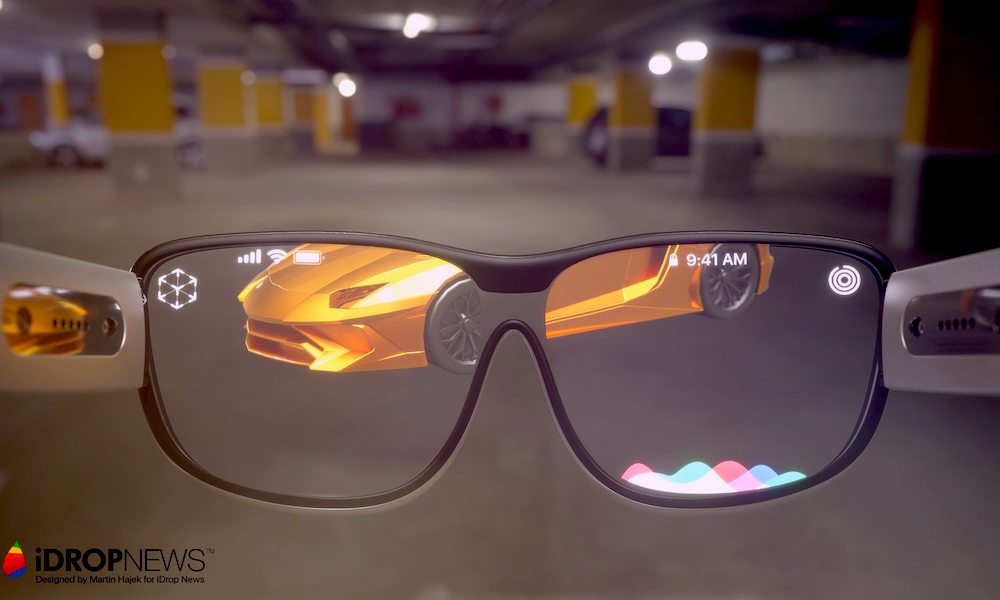
After shelving the N421 glasses and turning the original Vision Pro into a reality, Apple decided to aim a bit lower. Insiders say it began prototyping several sets of smart glasses designed to compete with Meta’s Ray-Ban glasses, ultimately settling on a product it codenamed N50 that it began developing over a year ago.
As you might expect from the comparison to Meta’s product, the Apple smart glasses are expected to lack display technology and focus on providing another form of human interface for the iPhone. Apple has explored cameras that tie into Visual Intelligence to recognize and interpret real-world objects, plus microphones for Siri and calls, and open-ear audio playback.
However, while photo and video recording once seemed like a given, Gurman’s sources say that Apple is now having second thoughts about including these capabilities.
One reason for the delay is that Apple’s engineering and marketing teams have been working to refine not only the product, but also the company’s privacy message.
Mark Gurman
Apple leans heavily on privacy in its marketing. Bringing camera-equipped smart glasses would be risky enough if Apple was first on the market, but it’s facing a world where Meta has already poisoned the well.
Meta doesn’t have the best track record for privacy. In fact, it’s effectively the antithesis to Apple among major tech companies, pulling stunts that make Google look positively respectful by contrast.
For example, earlier this year, Sweden’s Svenska Dagbladet blew the whistle on a Meta subcontractor in Kenya where employees spend ten-hour shifts watching and labeling videos recorded by customers wearing Meta’s smart glasses.
However, even if one trusts that Apple would never do such a thing — and history shows that’s by no means guaranteed — even a company’s best efforts can’t prevent smart glasses from being abused by people who want to create stealth recordings, or even just get in people’s faces for pranks. Social media services can ban the resulting videos from being posted, as Instagram has done, but while that might take away some of the motivation, it just hides the real problem.
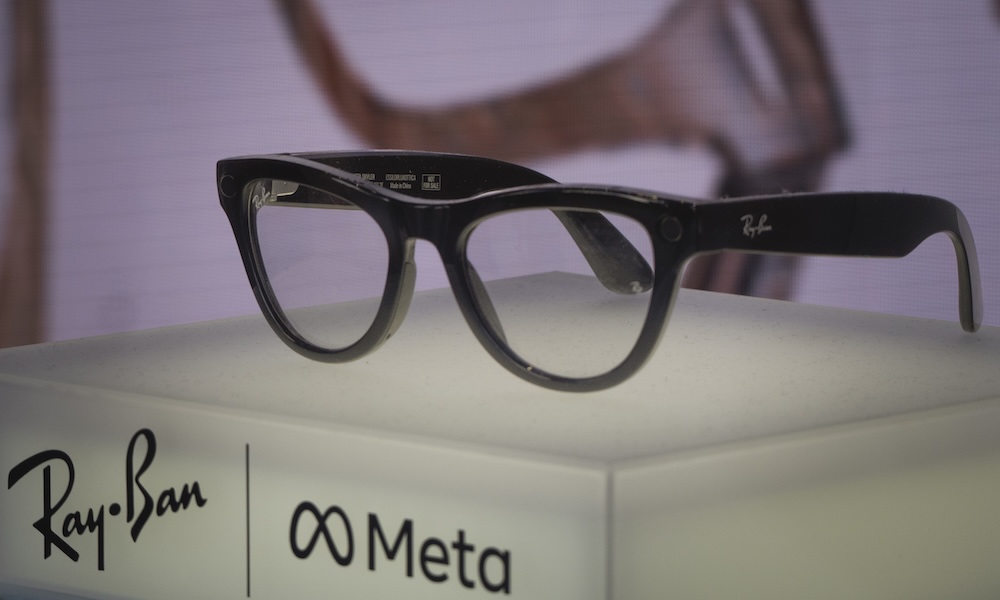
As Gurman says, the problem Apple faces is that many people simply don’t trust smart glasses, and it’s not uncommon to see businesses banning them outright, for various reasons. Nearly every pair of smart glasses on or coming onto the market includes safety features such as a light to indicate when the camera is active — and anti-tamper protection to ensure it can’t be disabled. Apple will undoubtedly do the same, but at least some executives are said to be questioning how strict the guardrails should be.
Apple is planning to adopt comparable protections, but it arguably has more at stake than anyone else. The company has spent more than a decade making privacy one of its defining product messages. Simply entering the same category as Meta risks undermining that reputation, regardless of how Apple’s approach differs.
Mark Gurman
Apple will undoubtedly put a very heavy emphasis on privacy when it unveils these, which is probably why it’s planning to make a big splash with them at WWDC, listing all the actual tangible ways its product differs from other smart glasses. Controversial features like facial recognition, AI model training, and continuous analysis will probably be off the table entirely, but insiders say that Apple isn’t sure if that will be enough.
One extreme option is to eschew the camera entirely, at least for the first-generation model. That would be in line with Google’s recently-announced smart glasses, which will also begin as an audio-only product. The glasses could still be used for hands-free access to Siri, listening to audio, and placing phone calls. However, Apple’s desire to tie its smart glasses into Visual Intelligence means this probably wouldn’t be its first choice.
An alternative is to include the cameras, but remove any possibility of taking photos or recording video. In this context, the smart glasses would become exclusively used for feeding data into Visual Intelligence. Some reports have suggested this is the real priority for the smart glasses anyway, which are being developed alongside camera-equipped AirPods and possibly even an “AI pendant” that would serve the same purpose.
Still, Gurman believes this is equally unlikely, as it would leave Apple’s smart glasses at a competitive disadvantage. It’s unlikely the company believes “privacy” is enough to sell a product that doesn’t have a strong use case beyond “AI,” especially when rival smart glasses can be used to effortlessly capture life’s magic moments as they happen.
[The information provided in this article has NOT been confirmed by Apple and may be speculation. Provided details may not be factual. Take all rumors, tech or otherwise, with a grain of salt.]