Trump Spills the Beans on Massive Apple-Intel Chip Deal
 The White House
Toggle Dark Mode
Last month, The Wall Street Journal reported that Apple and Intel had reached a preliminary deal that would see the US-based chipmaker fabricate Apple silicon for future Macs, iPhones, and iPads. However, while the WSJ’s Rolfe Winkler and Bloomberg’s Mark Gurman and crew had all heard from reliable inside sources, and analyst Ming-Chi Kuo even said new chips were already rolling off the line, neither Apple nor Intel offered any on-the-record comments.
That may have simply been because the ink wasn’t quite dry on the agreement, but it’s also possible they didn’t want to upstage the President of the United States, who had led the US government to invest $8.9 billion in Intel last August, making this new deal perhaps the ripest fruit of his goal to bring more electronics manufacturing to US shores.

Either way, it is indeed US President Donald Trump who took on the task of making the official announcement, albeit indirectly. Very early this morning, buried in a somewhat rambling post on Truth Social about his administration’s work in supporting US chipmaking efforts, Trump shared that “Apple has agreed to work with Intel to design and build its Chips in America.”
Apple and Intel still have yet to offer any comment, but CNBC noted that shares of Intel gained 10% on the heels of Trump’s announcement. No additional details have been announced beyond what we already heard last month.
The Trump administration has been working to reduce the dependence of US companies on chip production from Taiwan, the home of one of the world’s largest and most advanced fabricators, TSMC. While most analysts are skeptical that Intel is prepared to compete on the same level as TSMC at this stage, the consensus is that a multi-year partnership with Apple, combined with the US government investment, may be enough to help them ramp up much more quickly.
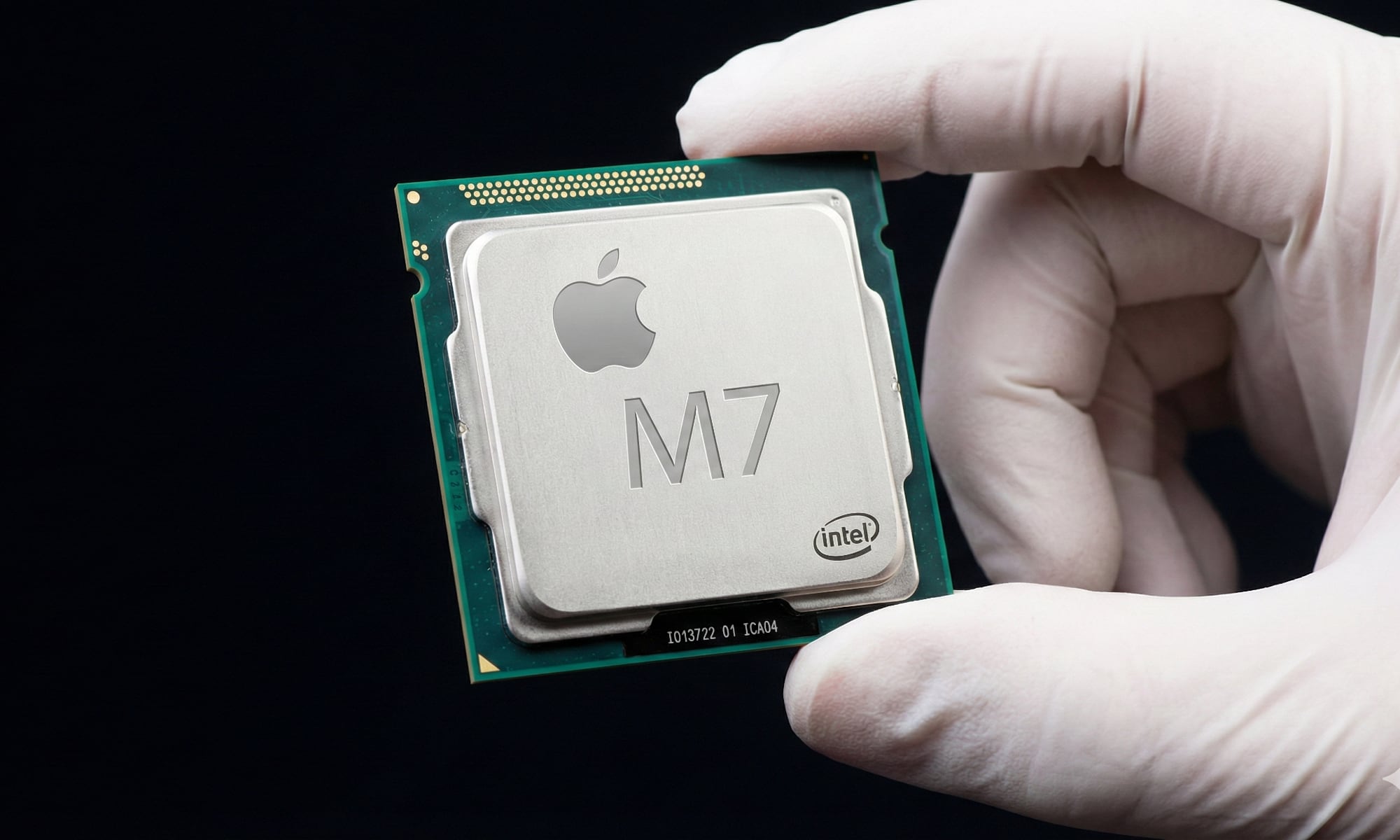
For now, Intel will likely be fabricating only Apple’s entry-level chips. That means the A-series and M-series chips without any “Pro,” “Max,” or “Ultra” suffixes attached. Earlier reports from analysts like Ming-Chi Kuo and Jeff Pu pegged these as most likely being the M7 chip for Apple’s late 2027 and early 2028 Mac lineups, and an A21 or A22 chip for the 2028 iPhone lineup.
Those estimates factor in how long it will take Intel to get ready for mass production. While Kuo reported last month that Intel is already fabricating chips, these are strictly trial runs, not anything that will go into consumer hardware. The most significant difference is that Apple seems to be pushing Intel to move more quickly than usual, skipping a low-risk trial order in favor of running at least three main product lines simultaneously to validate the chipmaker’s ability to perform under real-world conditions and deliver at scale.
That’s still small-scale testing compared to how many chips Intel would be expected to fabricate to meet true demand. According to Kuo, Intel won’t even begin ramping until sometime in 2027, which might give it some time to have the M7 ready for later in the year, and possibly even an A21 for the “iPhone 19,” which likely won’t be released until early 2028 based on Apple’s expected split-release cycle, which would see only the iPhone Pro models debut in late 2027.
Meanwhile, TSMC is expected to continue fabricating Apple’s “Pro” chips, including the A21 Pro and beyond. That gives Intel a bit more time to plan for a base A21 chip that won’t be needed for another six months.
While there’s been no word on other types of Apple silicon, it’s possible the Intel deal could also include Apple’s N-series Wi-Fi/Bluetooth and C-series modem chips, the latter of which would be an ironic twist considering Apple bought Intel’s 5G modem business in 2019 to give it a leg up in developing those very chips.