Apple May Be Teaming Up with Intel and Samsung for US Chip Manufacturing
 JHVEPhoto / Shutterstock
Toggle Dark Mode
Apple may be getting ready to kick Intel Macs to the curb, but in an ironic twist it’s also returning to do business with the chipmaker in an entirely different way as it seeks to diversify its supply chain.
Late last year, supply chain analyst Ming-Chi Kuo reported that Apple could be tapping Intel to fabricate its M-series chips. This was followed by another report a few weeks later from analyst Jeff Pu who suggested even the iPhone may eventually have “Intel Inside.”

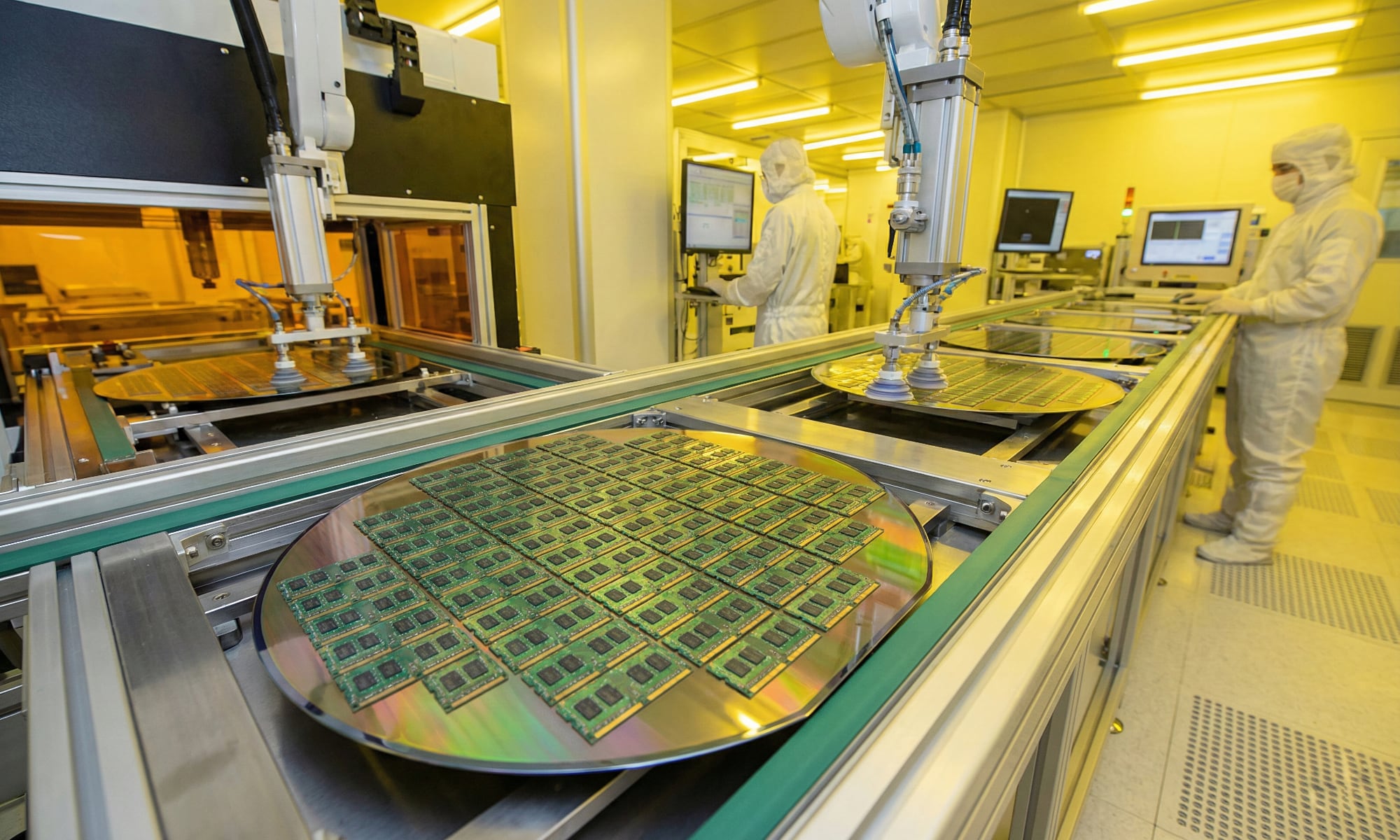
To be clear, none of this meant that Intel would be designing the chips. Apple isn’t about to go back to that old well, especially when its own silicon has now been dominating Intel chips for half a decade. Instead, this is a deal about having Intel manufacture the same M-series and A-series chips that have traditionally been fabricated by TSMC.
The possibility of this has been brewing since at least 2021, when Intel, realizing that the writing is on the wall for its profitable chip design business, decided to pivot to “Foundry Services” — manufacturing silicon for other companies at two new facilities in Arizona. Intel’s then-CEO Pat Gelsinger even planned to court Apple’s business.
While it wasn’t clear back then if Apple had any interest in such a deal, times change, and now it looks like Apple is not only actively talking to Intel under its new CEO, Lip-Bu Tan, but could even be pursuing an arrangement with Samsung to build some of its chips.
Earlier this week, Bloomberg reported that Apple has held “exploratory discussions” with both Intel and Samsung about producing the main processors for its devices. That loosely corroborates what Kuo and Pu shared last fall, but it’s also devoid of specifics and indicates that talks are still in the very early stages.
By contrast, Kuo has predicted that the Intel deal would see the company fabricating the “lowest-end M processor” used in the MacBook Air, entry-level MacBook Pro, and iPad Pro, with the possibility of the deal being ready in time for the M7, expected to arrive late next year. Pu expanded on that by suggesting that the A22 or A23 could also be made by Intel. However, both analysts insisted this would be limited to the entry-level chips in both families, with the “Pro” and “Max” versions still being produced by TSMC.
The gang at Bloomberg — Mark Gurman, Ian King, and Ryan Gould — don’t have nearly that level of detail to share, as the article is focused more on the overall business strategy than the allocation of silicon contracts, which are probably far from being decided this early in the game.
Apple has relied on TSMC as its primary chip fabricator for more than a decade, but the global silicon economy is such that it’s completely unsurprising that it may need to shift its eggs into some new baskets — especially with the risks of relying on a Taiwan-based company amidst the current geopolitical tensions. While TSMC has facilities in Arizona, most of Apple’s higher-end chips are still fabricated in Taiwan. Intel and Samsung offer stable, US-based facilities that promise both stability and an opportunity to curry favor with the current US administration. Further, Samsung’s new facility in Texas promises to match TSMC’s production volume — entirely on US soil.
Intel has seemingly been ready and waiting for this partnership for at least five years, but it would also indicate an entirely new type of relationship between the two companies.
While Intel supplied chips to Apple for nearly 15 years — not only Mac processors but also 4G/LTE modem chips for the iPhone and iPad — fabricating Apple’s own designs would break entirely new ground. On the flip side, Samsung actually has filled the “fabricator” role for Apple, but it was almost as long ago that the two companies actually worked together on this level, with the South Korean company producing iPhone chips from 2007–2013 — an era that ended with the A7 that was used in the iPhone 5s.

Bloomberg says the talks between Apple and the two chipmakers began before the recent dramatic shortages in RAM chips and other silicon that have plagued the market — probably around the time we first heard Kuo’s reports in November — but it’s also fair that Apple felt the wind and knew the storm was coming. During its most recent Q2 2026 earnings call, Apple CEO Tim Cook said it’s availability of advanced nodes to produce Apple’s SoCs that represents its greatest supply chain constraint, which is heavily impacting the Mac mini and Mac Studio right now.
Apple has traditionally enjoyed a lot of leverage with TSMC due to an exclusive arrangement and massive order volume, but as other tech powerhouses like Google and Nvidia throw buckets of money at it to push for more high-performance chips, Apple is slowly getting squeezed out. Farming out the manufacture of some of its simpler, lower-end chips could at least take some of the pressure off TSMC, hopefully freeing up some of those advanced nodes for the Pro and Max chips needed to power the Mac Studio and iPhone 18 Pro models.