Apple’s Wild Storage Profits Have Collided with the AI Boom
Toggle Dark Mode
Even in the midst of RAMageddon, Apple appears to be raking in significantly more profit from RAM and flash storage upgrades on iPhones, iPads, and Macs than it does on its base devices.
That probably shouldn’t come as a surprise, since even in today’s crazy semiconductor economy, it’s hard to imagine iPhone flash storage costing $200 for every 256 GB (although, to be fair, Apple is giving customers a relative break on the 2 TB model, which only costs $600 more to add 1,024 GB). And let’s not even talk about the $15,500 it will cost you to put 512 GB of RAM into a Mac Studio.
It’s always been pretty clear to anyone paying attention that the profits Apple makes on these incremental upgrades are far greater than its costs for the chips themselves, and it’s undoubtedly a big part of the reason why Apple has engaged in a sort of “reverse shrinkflation” in recent years, effectively raising prices — and profits — by discontinuing lower-capacity models and forcing customers into storage upgrades they may not have otherwise chosen.
This began with the iPhone 15 Pro Max when Apple dropped the 128 GB model from the lineup in 2023, and continued over to the Mac earlier this year when Apple effectively hiked the price of the Mac mini by dropping the $599 model. Sure, you could still buy the higher-capacity iPhone and Mac models for the same price as before, but the option of paying less vanished.
Last week, The Wall Street Journal’s Rolfe Winkler reported on some of the challenges that Apple is facing with at least some chip sellers now that it’s no longer the biggest fish in the pond. As it competes with AI hyperscalers for RAM and flash storage, Winkler reports that the iPhone maker can’t afford to play the same kind of hardball, and it’s eating into the profit margins it once enjoyed from storage upgrades.
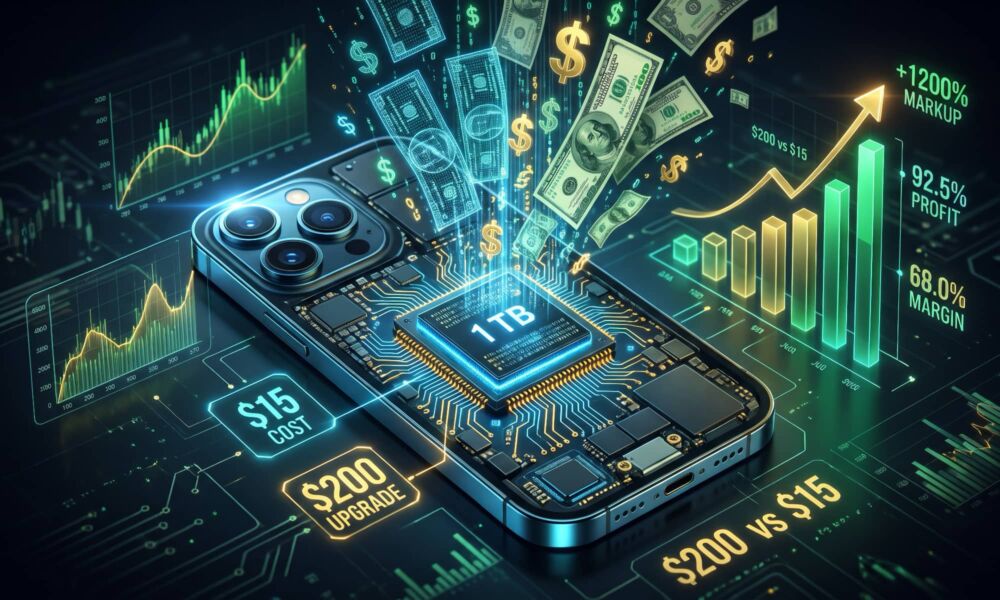
However, what’s particularly staggering here is that Apple isn’t exactly suffering in the grand scheme of things. If anything, the previous profit margins bordered on insane. Market research undertaken by the WSJ shows that upgrading an iPhone 17 Pro from 256 GB to 512 GB — a $200 price difference for consumers — only cost Apple a mere $15. In other words, that was $185 of pure profit landing in Cupertino, or effectively a markup of just over 1200%, or 92.5% profit.
| Model & Storage Tier | Consumer Upgrade Price | Estimated Apple Cost | Estimated Unit Profit | Gross Margin |
|---|---|---|---|---|
| iPhone 17 Pro (Previous Gen) | ||||
| 512 GB (+$256 GB) | +$200 | $15 | $185 | 92.5% |
| 1 TB (+$768 GB) | +$400 | $42 | $358 | 89.5% |
| iPhone 18 Pro (Current Gen) | ||||
| 512 GB (+$256 GB) | +$200 | $66 | $134 | 67.0% |
| 1 TB (+$768 GB) | +$600 | $192 | $408 | 68.0% |
| 2 TB (+$1,792 GB) | +$1,200 | $450 | $750 | 62.5% |
Apple paid a bit more for 1 TB upgrades on the iPhone 17 Pro — $42 for a $400 price increase, or “only” a markup of around 850% (or 89.5% profit).
Today’s rising memory costs have reduced those margins significantly, but not by as much as you might think. Apple’s costs have jumped more than fourfold, with the 512 GB upgrade now costing it $66 (up roughly 340% from $15), and the 1 TB upgrade costing it $192.
Since Apple didn’t increase the price of its 512 GB storage upgrade, these rising costs have shaved its profit margin for that upgrade down to 67%. On the other hand, with the 1 TB upgrade jumping from $42 to $192, Apple presumably decided it was unwilling to live with a 52% profit margin, so it hiked the price of the 1 TB iPhone 18 Pro by $200 over its predecessor to give it a healthier 68% profit.
Finally, the 2 TB upgrade was a new option for the iPhone 18 Pro this year, but that’s also costing Apple $450, placing it at a 62.5% profit margin against the $1,200 price of upgrading to that highest-tier model.
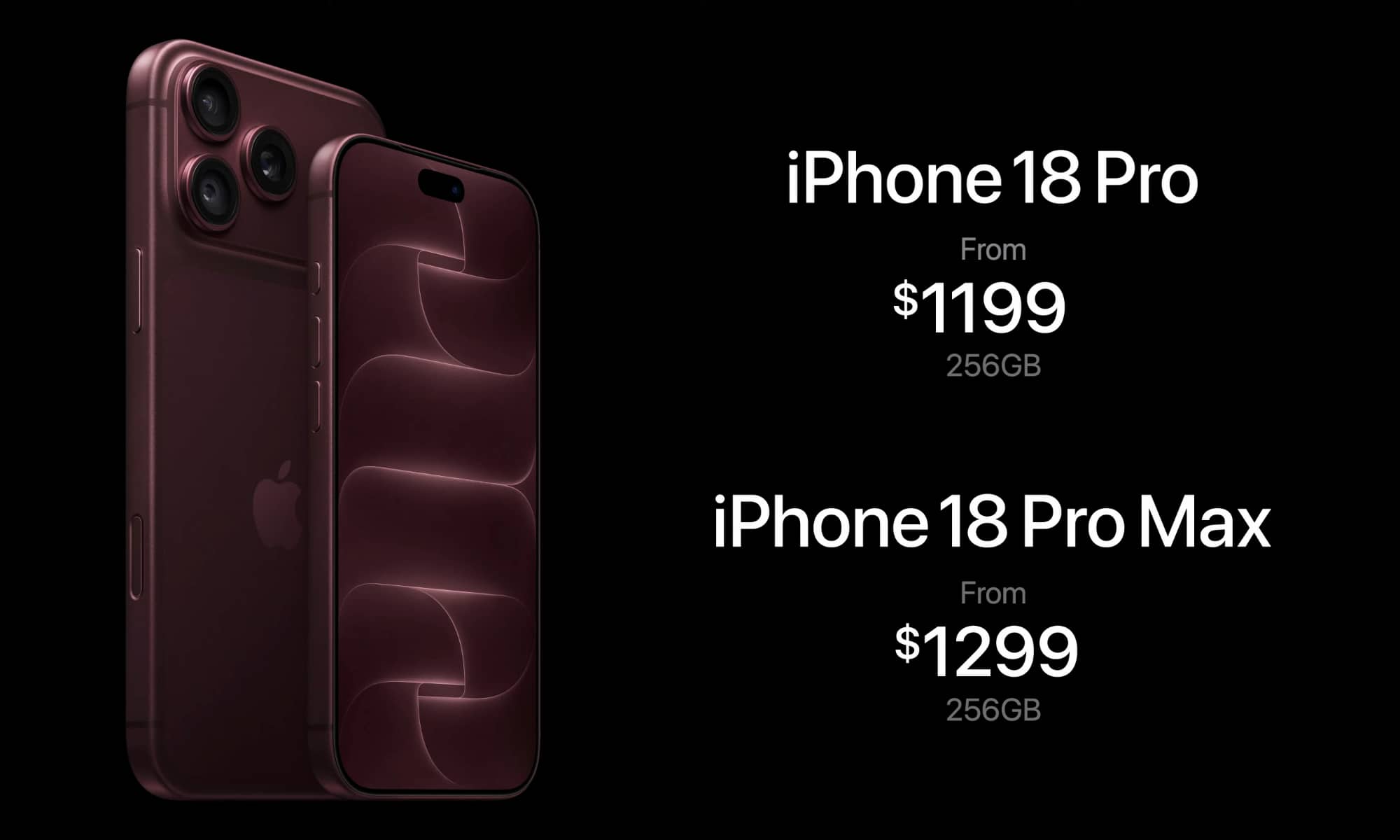
However, these are only the storage upgrade costs — the price difference to move up from the base 256 GB. Apple has also hiked the base prices of the entire iPhone lineup by $100. That means the iPhone 18 Pro and iPhone 18 Pro Max both launched at higher prices, but Apple has also bumped the price of the iPhone 17 and iPhone 17e, since they have yet to be succeeded by newer models.
Although there’s far more to the cost of an iPhone than the mere price of its components — research and development and software engineering all have to be factored in, not to mention distribution and other logistical costs — it’s also fair to argue that incremental storage doesn’t have the same hidden overhead. On the other hand, Apple almost certainly factors in how many models it expects to sell in each storage configuration and uses these to measure gross costs and profit margins across the entire lineup.