Apple Defies the Market: iPhone Sales Surge in Q2 2026 Despite Rising Costs
 appshunter.io / Unsplash
Toggle Dark Mode
Two new reports show that the iPhone is definitely benefiting from Apple holding the line on retail pricing, as the entire global smartphone market struggles with rising costs from the ongoing memory chip shortage.
A recent report from Omdia shows that Apple’s iPhone grabbed a record 20% share of the global smartphone market in the second quarter of 2026. Apple’s increase flew in the face of a 4% year-over-year drop in worldwide smartphone shipments.
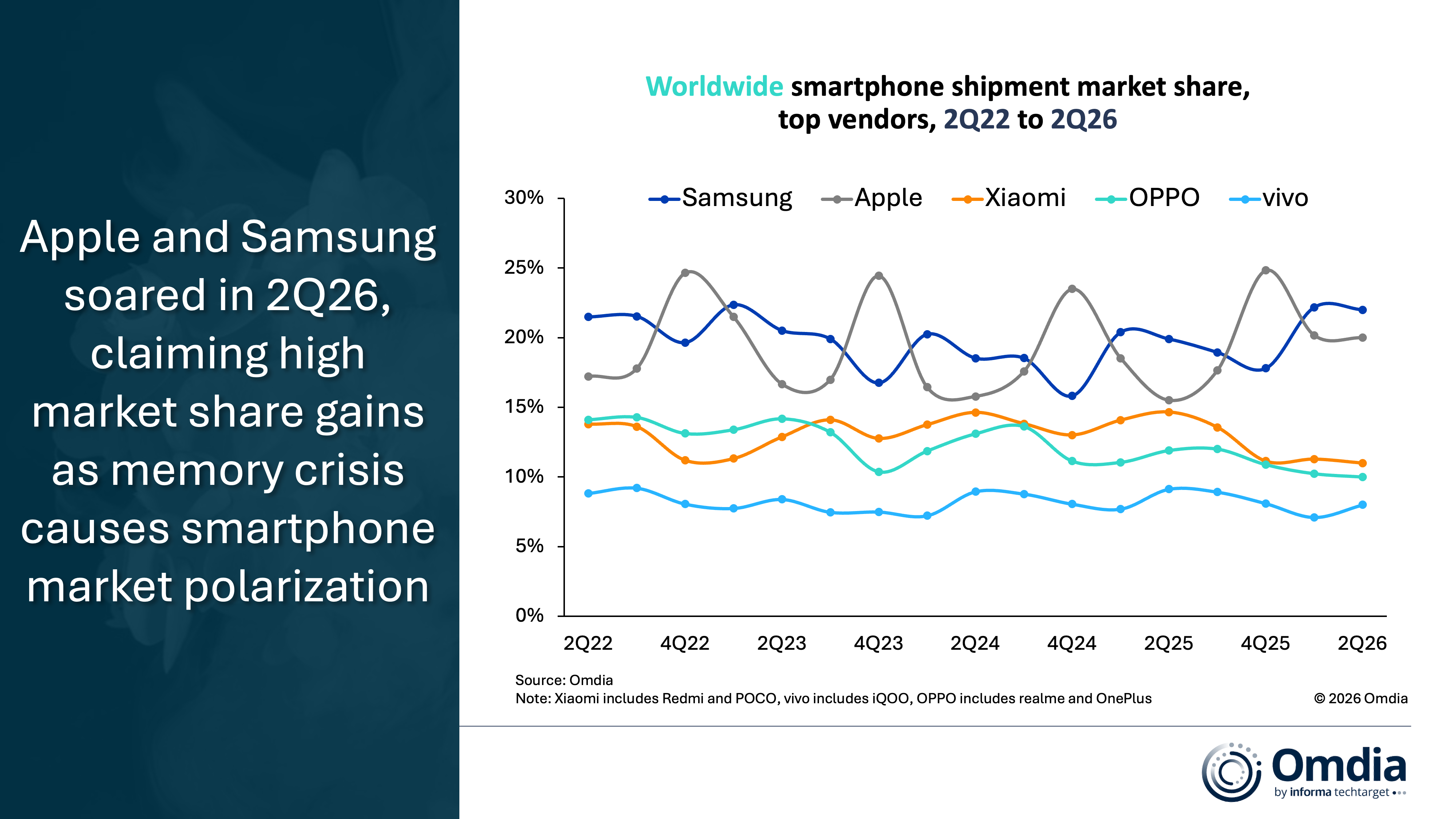
Apple’s best second quarter iPhone performance ever comes at a time that is generally the slowest sales period of the year. Omdia says the strong sales of the iPhone 17 lineup were at least partially due to Apple holding the line on the iPhone’s retail price, even when it recently hiked prices on Macs, iPads, and other products. While the Cupertino firm has yet to raise iPhone prices, it is widely believed that Apple will be forced to finally increase them, thanks to ever-increasing component prices.
The global memory chip shortage was caused by the memory industry’s decision to focus on the production of the type of RAM and storage used in the AI industry. As noted by Mactrast, that means smartphone makers like Apple and Samsung are paying ever-higher prices as they scramble to acquire sufficient components for steady production of their devices.
Samsung was the sole other smartphone maker to see its global market share grow, with a 22% share. Xiaomi held on to the third spot with an 11% share of the market. OPPO took the fourth spot at 10% share, with vivo rounding out the top five with an 8% market share.
Omdia expects to see the ever-rising price of components continue to put pressure on smartphone makers to raise prices at the retail level, Apple included.
Meanwhile, preliminary figures released recently by research firm IDC show Apple’s iPhone shipments in China rose by 24.4% year-over-year in the second quarter of 2026. That made it the fastest-growing smartphone brand in the Chinese smartphone market, which shrank overall.
Total smartphone shipments in China fell 4.3%, moving roughly 66 million units. It was the fifth consecutive quarter of decline, with only Apple and Huawei as the major vendors that saw improvement. (Huawei was up 19.4%.)
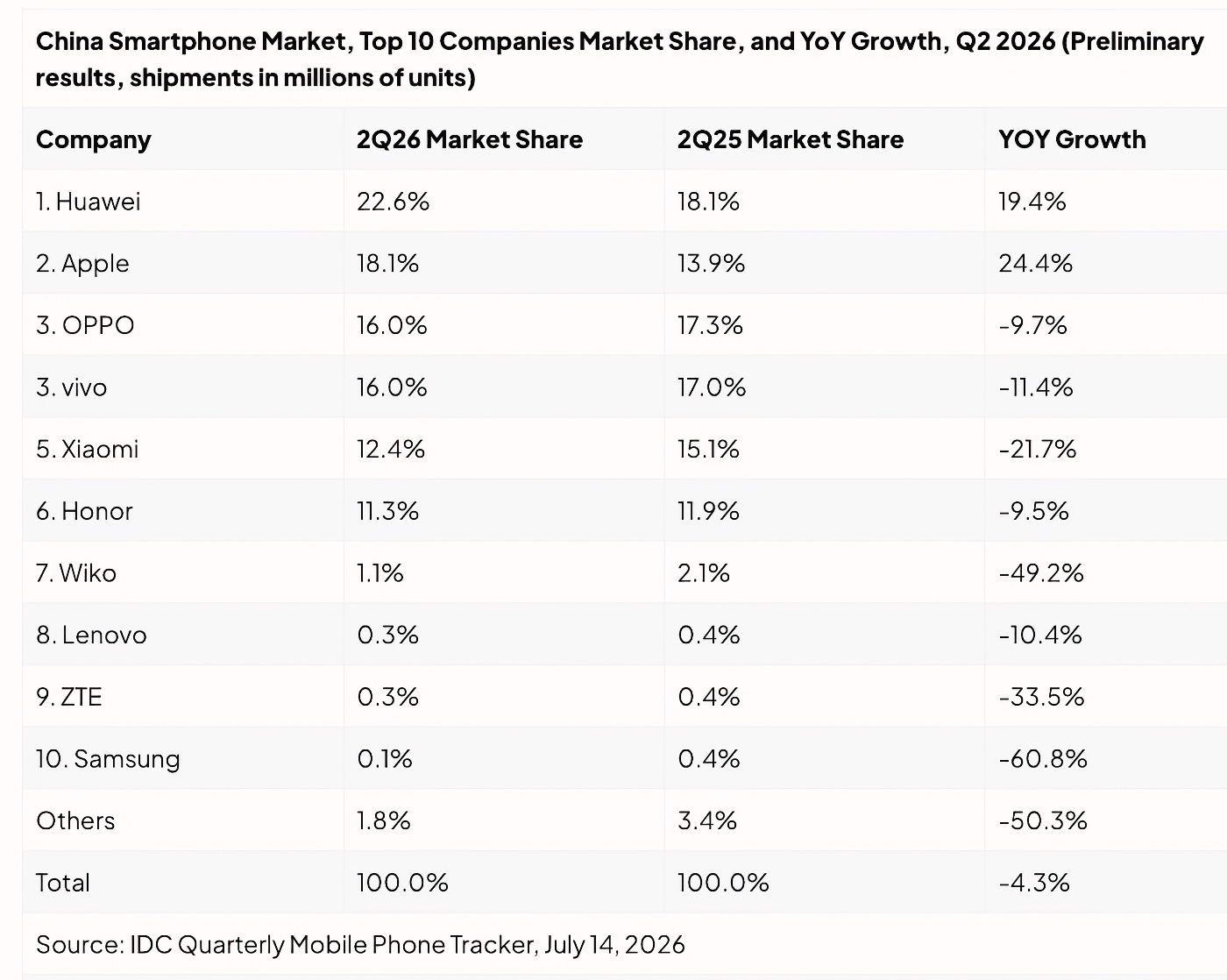
Apple’s increased sales numbers were good for 18.1% of the Chinese market, up from 13.9% a year ago. Market leader Huawei’s piece of the action rose 22.6%. Meanwhile, Xiaomi took the biggest hit among the big brands, with shipments down 21.7%.
Like Omdia, IDC points to the way the phone vendors reacted to the rising costs for memory and other components, thanks to the aforementioned AI infrastructure drive. While most Android device makers began raising prices in March, both Apple and Huawei held firm on their pricing.
IDC also sees some of Huawei’s increasing share of the market as being due to its ever-widening lineup, allowing it to cover more of the market. Meanwhile, the rumors of upcoming price increases also likely pushed Apple customers to buy an iPhone sooner than they otherwise may have. “That gave hesitant buyers a reason to go ahead and purchase,” said IDC analyst Arthur Guo.
Apple and Huawei’s growth came despite a weak June smartphone market, as smartphone sales during China’s “618” shopping festival were down nearly 15% compared to the previous year.
IDC doesn’t see any improvements in store for the Chinese smartphone market over the next few years, instead predicitng a 20% year-over-year decline for the second half of 2026. IDC sees storage prices as likely to keep the pressure on profits well into 2027, with a broader recovery not expected until 2028 or 2029.