Want Siri AI to Summarize a Web Page? Not So Fast
Toggle Dark Mode
To say that Apple’s new Siri AI is a massive improvement over its simple predecessor would still be an understatement. It’s effectively a whole new ballgame, which isn’t surprising since Apple has rewritten the whole thing from the ground up.
That said, it’s also fair to say it’s not entirely what some expected. When the rumors began circulating that Apple was planning to bring a standalone app into the mix, many immediately thought of a full chatbot experience. However, while it may look like a chatbot on the surface, it’s really not — at least not in the way we’ve come to think of one from other apps like ChatGPT and Gemini. The similarity really is only skin deep.

That’s because Apple isn’t interested in making Siri your AI girlfriend. The new AI model is designed to be your assistant — not your friend — and it shows. Siri’s answers are friendly, but also cool and professional. In many ways, it’s the same personality Siri had 15 years ago — it’s just that it’s no longer dumber than a bag of hammers.
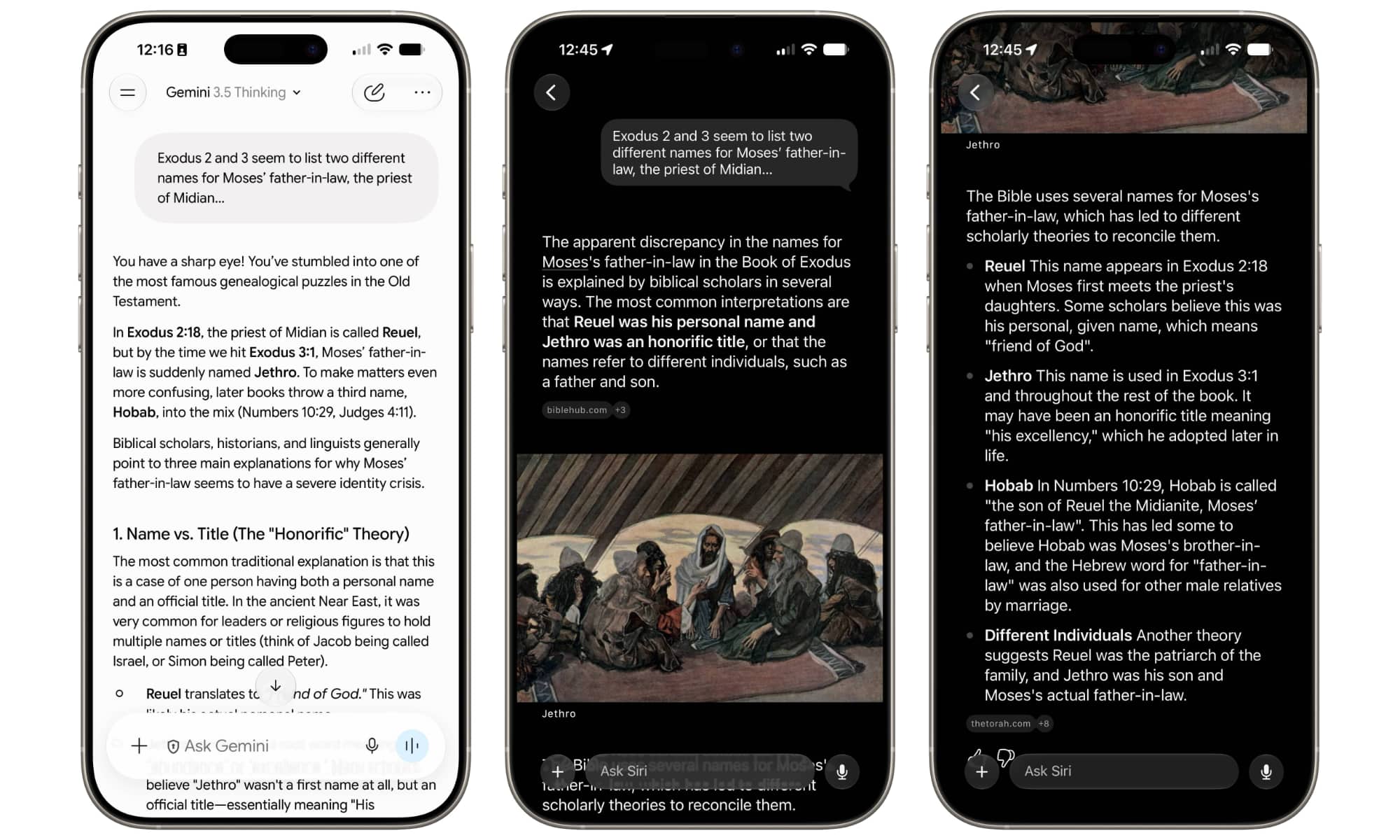
Along the same lines, Siri clearly doesn’t want to be your research assistant either. While Gemini, ChatGPT, and Claude are happy to go out and write entire academic papers for you, Siri has been explicitly designed to answer straightforward questions about what’s on your iPhone, mixed in with some general knowledge about the world around it.
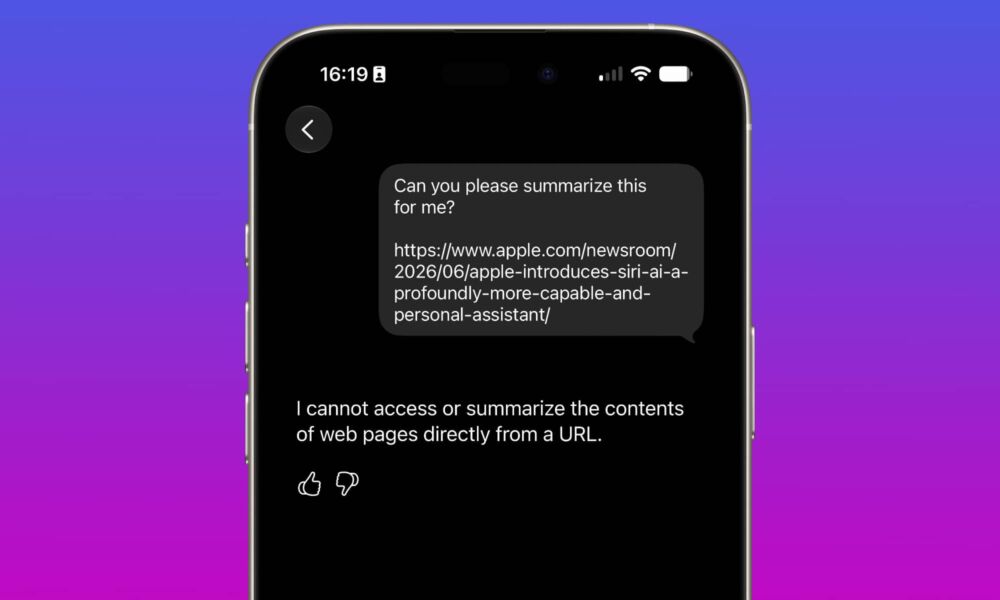
That’s exemplified by a very intentional design limitation that prevents Siri from going out and reading web pages. As shared by 9to5Mac earlier this week, as of iOS 27 developer beta 2, Siri will outright tell you that it can’t do that.
While Siri would also throw up an error when trying to do this in the first developer beta, the second removes all doubt that this is merely a bug; Siri AI’s system prompts now include explicit instructions:
You cannot access content behind a URL: When a user provides a URL and asks you to summarize, read, or extract information from it, inform them that you cannot access web pages. Do not offer follow-up suggestions or workarounds.
It’s hard to know for sure why this limitation exists, but it almost certainly seems more philosophical than technical.
Apple’s Craig Federighi, who has always been a bit skeptical about AI at the best of times, set out to create an iOS-level experience that was integrated, practical, and private. In a June 2025 interview with Joanna Stern, Federighi said Apple had no interest in creating a “bolt-on chatbot on the side.”

However, Federighi also didn’t want to create an ethereal assistant. If people were going to be chatting with Siri, they needed to be able to go back and refer to those conversations later. In a Q&A session at WWDC reported by MacRumors, Federighi conceded that a “deeply integrated” experience also meant it would be conversational, and that “the most natural affordance for any user to go find [a chat that they had] is to have an app that they can manage on their home screen, launch, and get back to.”
Of course, that doesn’t touch on why Siri won’t summarize web pages, but it does speak to the philosophy of the Siri app. It was designed to be a companion to the core voice assistant, not an entity unto itself. Further, while Apple has had some alleged missteps when it comes to copyright, the company has generally been much more careful than its rivals when it comes to letting its chatbots blindly scrape the web for training. The same logic may apply to letting Siri surf the web on its own.
Whatever the reason, the deliberateness of this move speaks volumes about Apple’s goals for Siri AI — and shows there will continue to be plenty of room for others like Gemini and ChatGPT.