Apple Reportedly Exploring a Screenless Fitness Tracker to Take on Whoop
 Whoop
Whoop
Toggle Dark Mode
Apple may be preparing to concede that even its most affordable Apple Watch SE is a bit pricey for anyone who just wants a basic health and fitness tracker.
For years, the Apple Watch has been somewhat undercut by the likes of Google’s Fitbit, which offer a versatile range of fitness bands for well under $150. Some of them even come with basic screens to let you tell the time.

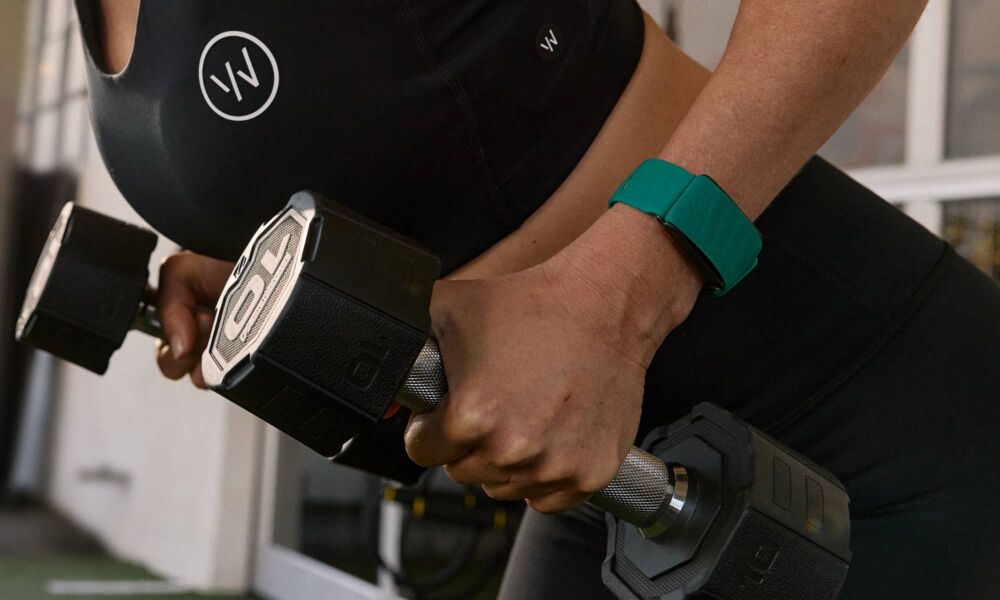
Apple isn’t likely to go quite that far — if you want a screen, it’s still going to push you to the Apple Watch — but a report earlier this week from Bloomberg’s Mark Gurman suggests that it’s exploring a screenless health and fitness tracker that would rival the popular Whoop bands — wrist-worn trackers that treat the lack of a display as a selling point.
It’s become increasingly apparent over the past year that Apple is exploring ways to keep up with rivals such as Oura and Whoop, which have been gaining prominence in the health monitoring space. Earlier this year, Gurman reported that Apple had scaled back on its plans for a “Health+” service after Eddy Cue, Apple’s senior vice president of services, took over the health and fitness portfolio following the retirement of Chief Operating Officer Jeff Williams.

Cue has reportedly been pushing for Apple to “move faster and be more competitive in health,” while expressing concerns that the service being built under Williams didn’t offer a sufficiently compelling feature set to keep up with rival offerings.
It’s unclear if Apple’s new fitness tracker ambitions are directly related to this, particularly since Williams’ retirement saw the previously unified hardware, software, and services split between Apple’s three more traditional divisions. The Apple Watch landed under John Ternus, who was still senior vice president of hardware engineering at the time, while watchOS went to Craig Federighi’s software engineering team, and health and fitness became merged into a single portfolio under Dr. Sumbul Desai, reporting directly to Cue.

This means the band hardware would undoubtedly now come under Johny Srouji, who was recently promoted to chief hardware officer following Ternus’ ascension to the CEO’s office.
So far, Gurman says Apple has merely been “exploring the category for several months,” but it’s also recently hit the stage where it’s developing some prototypes. However, it’s still considered a “technology investigation,” and while there’s support from the top echelons, it may never see the light of day. Should Apple proceed, Gurman predicts the earliest we’d see the new wearable would be 2028.
The prototypes feature a thin fabric band with a sensor-equipped computing module. The absence of a screen would distinguish the device from the Apple Watch, a display-centric product that combines fitness tracking with apps, notifications and other functions.
Mark Gurman
By all accounts, Apple’s health and fitness division is in a transitional phase right now, not only as a result of Williams’ exit, but also the departure of other key executives, including Stan Ng who headed up marketing for the Apple Watch and health, and Jay Blahnik, the former VP of fitness who sat parallel on the org chart next to Dr. Desai, who was solely responsible for the health portfolio under Williams.
Blahnik was moved below Desai after Cue took the helm — a structural shift that was recently echoed with the App Store leadership when Phil Schiller stepped aside, suggesting Cue prefers more vertical reporting structures — but that’s not likely the only reason he left. The former fitness head was also mired in some controversy about his conduct that was the subject of an investigation and a lawsuit.
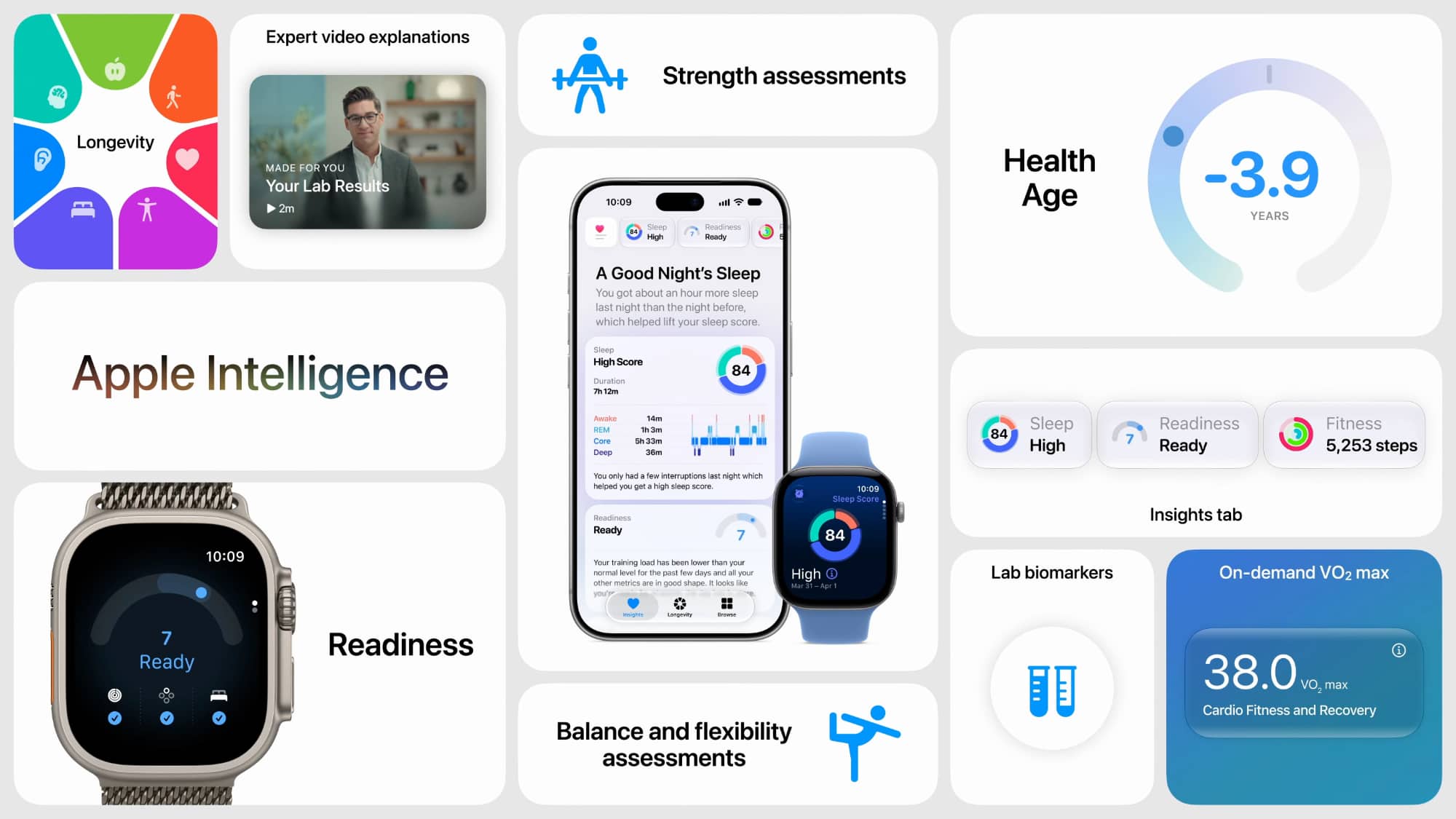
We’re already seeing the first indications of Apple’s new health and fitness approach. The new Readiness app and continuous heart rate tracking on the Apple Watch Series 12 and Ultra 4 are believed to be a direct attempt to embrace Whoop-style features, as is the redesigned Health app coming later this year, which will provide a clearer and more intuitive interface, leveraging Apple Intelligence to summarize and respond to data, plus a Longevity tab with a Health Age metric that will show how healthy the user is relative to their actual age.
[The information provided in this article has NOT been confirmed by Apple and may be speculation. Provided details may not be factual. Take all rumors, tech or otherwise, with a grain of salt.]