Your Fitbit Can Finally Sync with Apple Health
 Andres Urena
Toggle Dark Mode
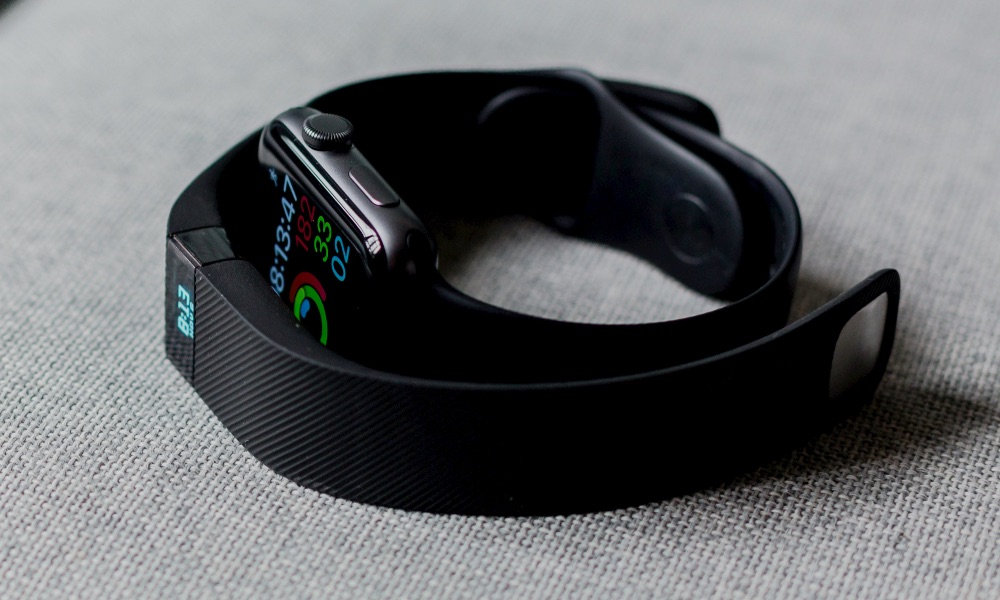
Let’s face it: while the Apple Watch is a great health and fitness tracker, it also doesn’t come cheap, and not everyone needs a full-fledged smartwatch. That means a lot of iPhone owners have turned to more affordable wearable health trackers such as the Fitbit, even if it means losing some integration with Apple’s health features.
The good news for those in that camp is that it looks like Google has addressed one of the biggest compromises to using a Fitbit with the iPhone: the Google Health app now provides an almost complete two-way sync of fitness data with Apple Health.
That’s according to the App Store release notes for Google Health version 5.05:
Sync to Apple Health. Share your data like your exercise records, sleep, vitals, steps, and more from Google Health to Apple Health.
That should be a welcome upgrade for anyone who wears a Fitbit, although a Reddit post suggests some more advanced algorithmic data, such as heart rate variability, isn’t currently supported.
Although Fitbit has been around for the iPhone for almost as long as Siri — the company’s very first iOS app debuted alongside the Fitbit Ultra on October 18, 2011 — the company infamously charted its own course, refusing to integrate with HealthKit when Apple introduced it in 2014 with iOS 8. Since Fitbit was the most popular wearable on the market, it wanted to maintain its own ecosystem and keep users inside its own app (which made it kind of like the Netflix of fitness apps).
This created a cottage industry of third-party apps designed exclusively to bridge the missing gap between Fitbit and Apple Health. These apps mostly got the job done, but they were imperfect workarounds that often ran up against challenges with Fitbit’s API and background processing on iOS.
When Google announced its plans to buy Fitbit in 2019, some hoped this would change. Granted, Google didn’t have the best track record for embracing Apple features, but it still seemed like a step in the right direction. Suddenly, Fitbit would be moving into a larger world.
The acquisition was finalized in 2021, and over the next five years, Google phased out the Fitbit social features, pivoted to requiring Google Accounts to new activations, and shuttered the web dashboard. Then, it drove the final stake through the legacy by rebranding the Fitbit app to “Google Health,” requiring all users to migrate to a Google Account.
However, Google Health v5.0 (so numbered because it was treated as a direct upgrade from Fitbit v4.69, which had been released only 14 days earlier) introduced a redesigned user interface, Gemini AI health coaching, and the first step of Apple Health integration: the ability to read data from HealthKit into the Google Health app.
That was handy for folks who were primarily Fitbit users and liked the Google Health app, but it felt a bit kludgy if you were already feeding data into Apple Health from other apps and fitness devices. After all, Apple Health is designed to be a hub, so why use Google Health as a spoke?
Thankfully, Google Health v5.05 adds that missing piece. It also adds Smart Health Links to let you share your medical records with your healthcare provider or family, although the two-way sync with HealthKit makes that less relevant, since Apple Health offers the same capabilities, plus the ability to pull your health records from supported providers.