OpenAI Wanted an iPhone Halo Effect — It Got a Ghost Town
Toggle Dark Mode
It’s no secret that what once seemed like a promising relationship between Apple and OpenAI has gone remarkably sour over the past year. Between Apple jilting OpenAI for Google’s Gemini, OpenAI threatening to sue Apple, and Apple actually suing OpenAI, there appears to have been very little love lost between Tim Cook and Sam Altman.
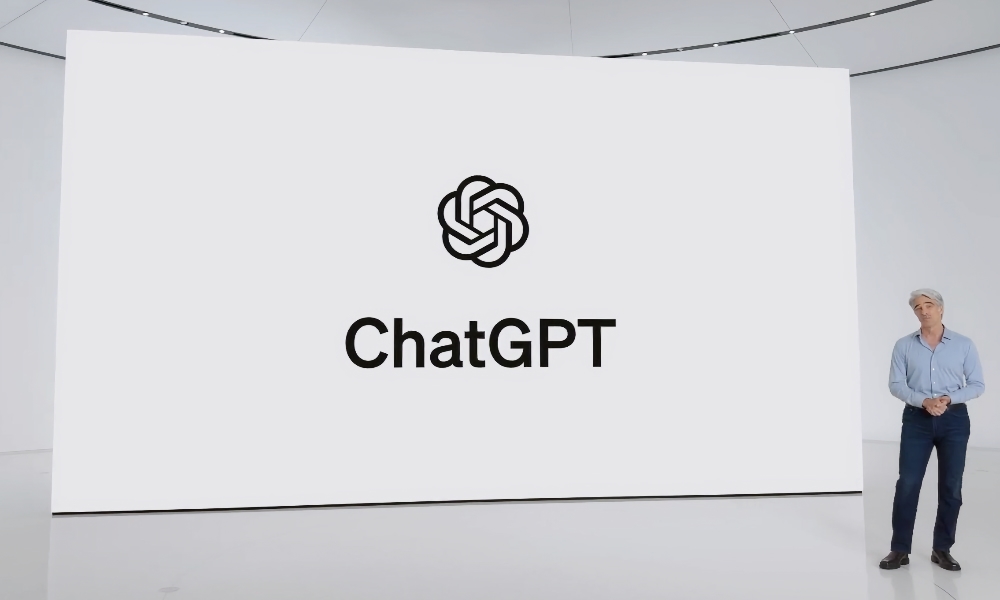
It’s a stark contrast to the story two years ago, when Apple’s software chief, Craig Federighi, stood on stage at the company’s 2024 Worldwide Developers Conference (WWDC) and announced the first wave of Apple Intelligence, which included a groundbreaking deal with OpenAI to have ChatGPT compensate for Siri’s lack of world knowledge.
To be clear, ChatGPT and Siri remained at arm’s length — it was an extension, not an integration. Federighi also suggested at the time it was simply going to be the first of several, although it seems none of OpenAI’s rivals ever stepped up to the plate. However, even after Apple finally unveiled Siri AI in iOS 27, ChatGPT remained in place as an optional extension that users could enable and call upon as an alternative to Siri.
In fact, the only thing that’s really changed on that front is that Siri will no longer even ask to fall back to ChatGPT in iOS 27. That makes sense, since there should no longer be anything Siri can’t answer on its own. The switch to “Confirm Requests” in the ChatGPT extension is gone simply because ChatGPT can now only be called up by explicitly telling Siri to “Ask ChatGPT” or selecting the extension from a context menu in the Siri text input field.
Several analysts have suggested Apple has simply left the ChatGPT integration to “die on the vine,” and it’s a safe bet that the tool really isn’t all that necessary. However, it turns out that it may not have been that popular even in its heyday.
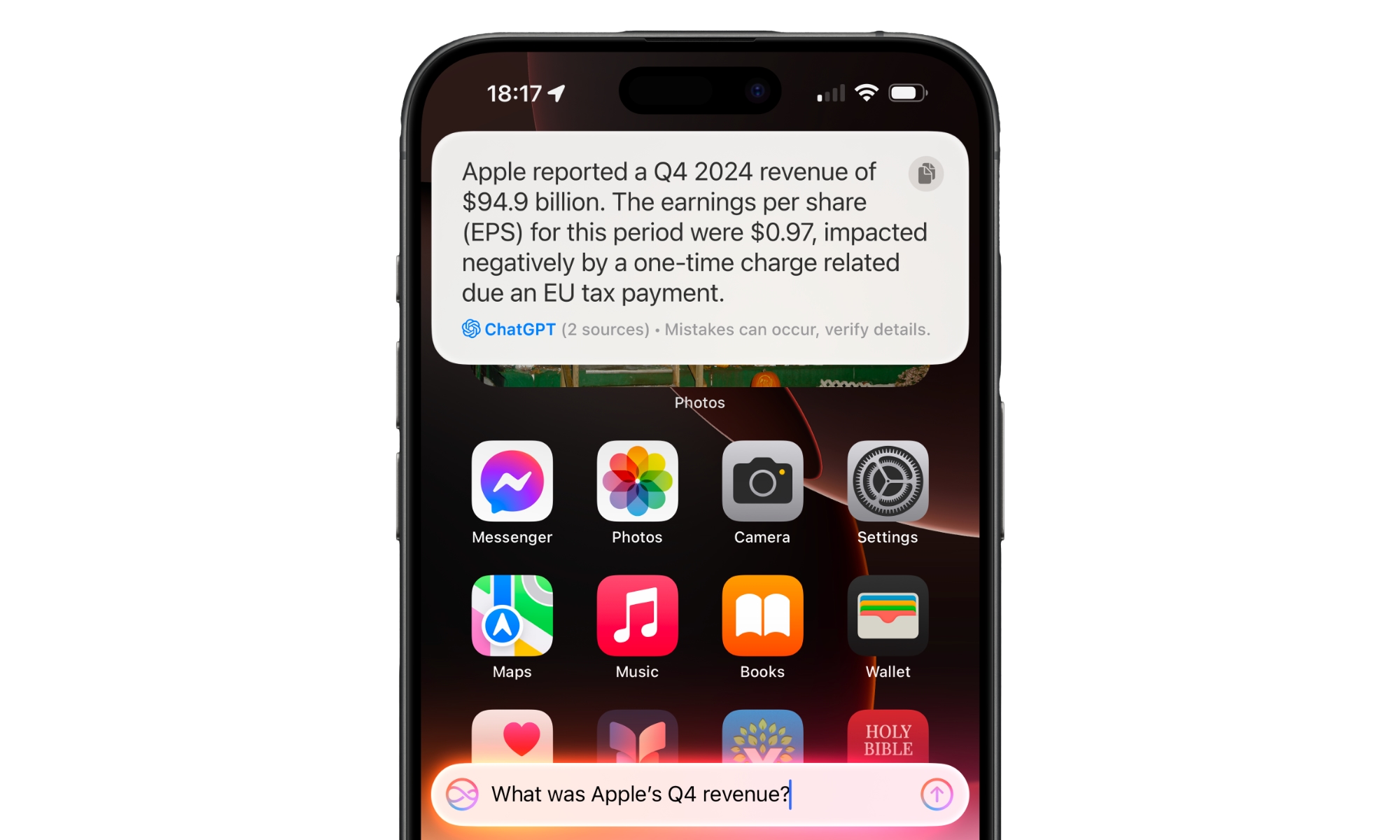
According to Michael Acton of the Financial Times, OpenAI has been less than thrilled at how poorly the ChatGPT extension was received by iPhone users after it was baked into Apple Intelligence in late 2024.
These revelations appear to be a continuation of the same insights that Bloomberg’s Mark Gurman shared in May, when OpenAI was reportedly weighing its options for a lawsuit against Apple. However, it had its hands full with plenty of other things at the time, including a lawsuit from Elon Musk, and it was reportedly hoping to resolve this with Apple more amicably.
That ship appears to have sailed, undoubtedly helped out of port by Apple’s unrelated lawsuit accusing the AI giant of stealing its trade secrets. This week, OpenAI filed court documents outlining its disappointment in how little it actually got from its deal with Apple. The AI giant still isn’t suing Apple — at least not yet. The documents were filed as part of OpenAI’s litigation with Elon Musk’s xAI, which is claiming the Apple-OpenAI agreement is in violation of antitrust laws. Apple settled its side of the litigation, so OpenAI naturally wants to see how that happened.
When the 2024 deal was agreed, OpenAI expected a “halo effect” from promotion and brand association with Apple, as well as more subscriptions coming from Apple Intelligence users, Wednesday’s court document says.
Michael Acton
Apple and OpenAI had reportedly agreed to a deal that involved no actual exchange of capital for the ability to plug ChatGPT directly into iOS 18.2 and later updates. OpenAI hoped to gain greater exposure and more users for its platform — and undoubtedly convert some of those into paying subscribers — while Apple gained the ability to offer a “privacy-first” integration whereby requests made through Siri would be completely anonymized unless users chose to sign into a ChatGPT account.
It seemed like a reasonable compromise, but clearly OpenAI hoped for far more than it actually got out of the deal. In the court filings, OpenAI reported things “appeared to be off to a slow start” about a month after it launched in late 2024, and it began accepting the reality that it wouldn’t be attracting as many weekly active users as it had hoped. By the summer of 2025, it became clear to executives that it was “dramatically underperforming.”
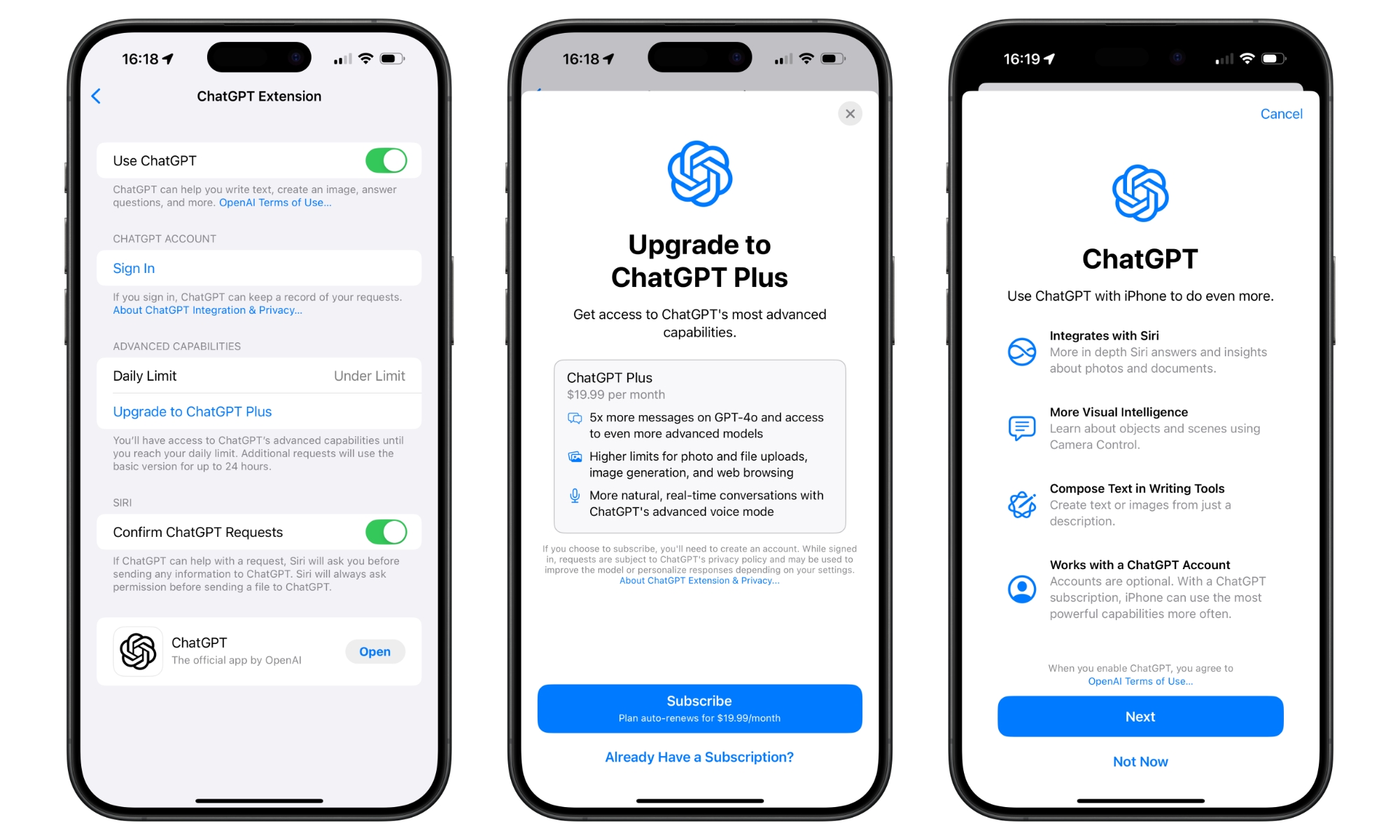
It’s unclear if OpenAI had any exclusivity period — Federighi and other Apple executives certainly never gave that impression publicly — and OpenAI executives indicate they began fearing that Apple would “want to move faster” in bringing more AI partners into the fold.
In May, Mark Gurman shared that Apple was already “actively working with an outside legal firm” to explore possible legal action, partly due to a lack of the “payoff” OpenAI believed Apple had promised, but also the fact that it never received the prominent placement it expected within Siri or other Apple Intelligence apps.
OpenAI believed that the companies’ partnership, which wove ChatGPT into Apple software, would coax more users into subscribing to the chatbot. It also expected deeper integration across more Apple apps and prime placement within the Siri assistant.
Mark Gurman
“We have done everything from a product perspective,” an OpenAI executive told Gurman on condition of anonymity. “They have not, and worse, they haven’t even made an honest effort.”
Apple integrated ChatGPT into Image Playground in iOS 26 last year, but it felt like such a minor addition that we’re left wondering if Apple was simply fulfilling a contractual obligation. Even if you were an active user of Image Playground, you could be forgiven for forgetting that ChatGPT had a role there, since there was no real branding beyond footnotes that felt more like disclaimers to let Apple disavow responsibility for what OpenAI’s models come up with.
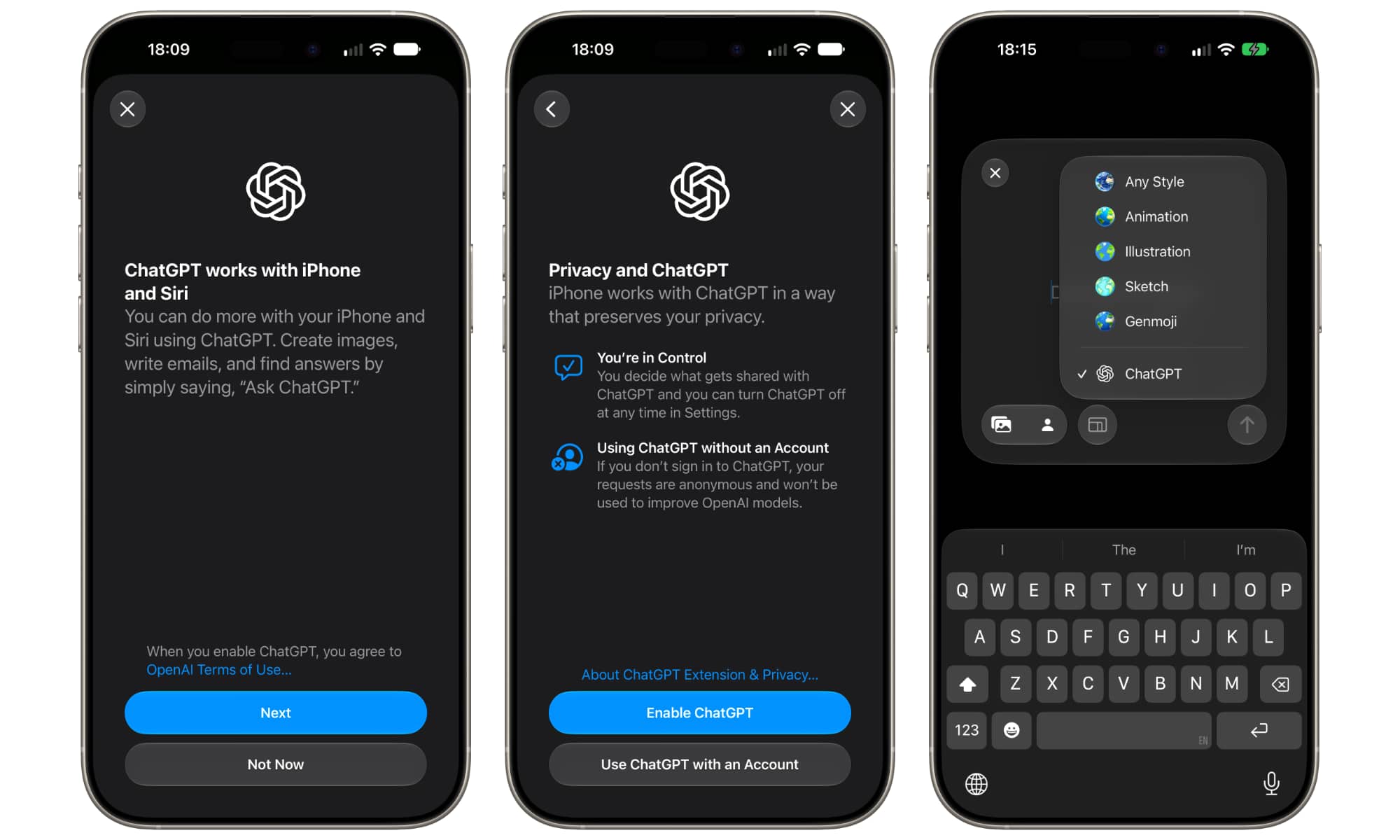
That integration remains in place in the iOS 27 version of Image Playground, with a proper “ChatGPT” menu option that sits below all the new and more sophisticated AI styles that Apple’s more advanced AI models now offer. It’s hard to think of it as especially useful in that regard, especially since anyone who really cares about ChatGPT would probably just flip over to OpenAI’s native app, but the option exists for anyone who wants to use it.
There’s still no insight into what OpenAI will actually do about this — if anything — but it’s clearer than ever that the ChatGPT integration as it exists in iOS 27 today is probably all that it will ever be.