Apple Savings Accounts Gain Web Access
 Apple
Apple
Toggle Dark Mode
While Apple’s financial services are generally meant to be accessed exclusively through the iPhone Wallet app, the company has now opened a web portal into its Apple Card Savings Account to provide an easier way to check balances and download statements and tax documents.
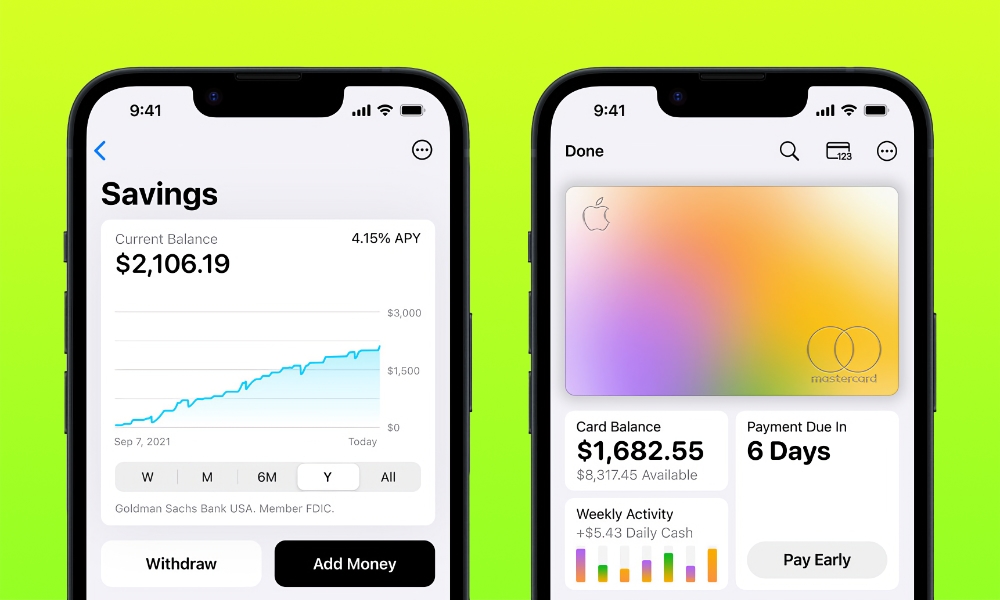
Apple launched the Apple Card Savings Account in 2023 with an opening 4.15 percent Annual Percentage Yield (APY). While that was a fairly competitive rate at the time — enough to attract $10 billion in deposits just four months — like the rest of the economy, it’s also been on a bit of a rollercoaster ever since. By January 2024, the rate had increased to 4.50%, only to begin dropping a few months later, ultimately landing below its launch rate by the end of 2024. Today, it sits at a considerably more modest 3.50% APY.
At its most basic level, the Apple Card Savings Account is a more profitable destination for Apple Card Daily Cash bonuses, which would otherwise go into a zero-interest Apple Cash account. However, Apple also allows money to be moved to or from a traditional bank account via ACH Transfers.
Further, like most savings accounts, funds can’t be spent directly from the Apple Card Savings account, but it’s relatively straightforward to move funds into an Apple Cash account, where it can be spent via the card in Apple Pay or even online with a virtual card number.
This is all done through Apple Wallet, but while you’ll still need to reach for your iPhone to actually move money around, Apple Card Savings account holders can now log in at card.apple.com/savings to check their balance, view year-to-date interest paid, and download statements and other relevant documents.
However, it’s also a pretty basic interface that’s by no means a replacement for the Wallet app even when it comes to checking on things. For example, you won’t see any of the spending analyses or graphs that your iPhone provides. On the flip side, the web interface may still provide a way for folks who have left the Apple ecosystem or closed their Apple Card account to keep track of their previous history, and the tax documents may be particularly crucial when it comes to that time of the year.
For security reasons, actual transactions still need to be done through the Wallet app. This not only provides a more robust interface, but it’s far less susceptible to phishing attacks, as it’s pretty hard for a scammer to convincingly replicate an app on your iPhone, and even if they could fake out a Wallet app user interface through tricks in Safari, there’d be no information they could glean as there’s no sign-in workflow for Wallet.
The Apple Card Savings Account is still provided by Goldman Sachs, but that could change by next year as JPMorgan Chase prepares to take over the Apple Card. As the name suggests, the savings account is intrinsically linked to the credit card — you must be the owner or co-owner of an active Apple Card to open one — so it makes sense that it will be handed over in some form at the same time. However, nobody seems quite sure on what that will look like, as it appears that customers may have the option to remain at Goldman or switch to a new Apple savings account to be offered by Chase — and the real question is what kind of APY a consumer bank will be willing to offer.