Sora-ry, Not Sorry: Why OpenAI Just Killed Its Star Video Tool
 graphics vector / Adobe Stock
Toggle Dark Mode
The AI boom just suffered one of its first major casualties. OpenAI — arguably the face of the modern AI industry — just shut down its breakthrough text-to-video tool, Sora. Sora originally launched in early 2024 to limited users before it was publicly available later that year. In September 2025, Sora launched as a standalone iOS app as well as an Android app shortly after.
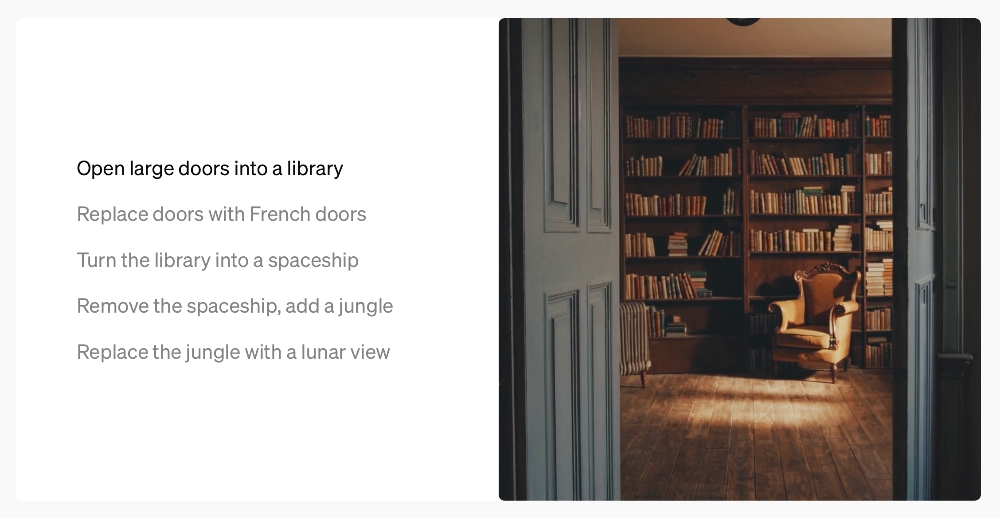
Despite full access costing as much as $200 monthly, the app quickly went viral, securing the number one spot in Apple’s US App Store and reaching one million downloads faster than ChatGPT. OpenAI even had a $1 billion investment commitment from Disney to become its first major content licensing partner, allowing the use of a set of Disney characters in Sora videos. This deal is now reportedly off the table.

In the months following the app’s launch, downloads sharply declined as the novelty wore off. Consumers likely didn’t find AI-generated video as useful as chatbots like OpenAI’s ChatGPT.
OpenAI’s decision to shutter Sora wasn’t just limited to its waning popularity. Last year, the cost to OpenAI for supporting Sora was estimated to be as much as $15 million per day or $5 billion annually. Video generation requires significantly more computing power than text tool counterparts like ChatGPT. According to ChatGPT, “generating realistic video at scale = insanely expensive.” Discontinuing Sora frees up precious computing power in the midst of an extremely capital intensive race by AI competitors to secure computing power.
Just last month, OpenAI announced it successfully raised $110 billion from partners including SoftBank, Nvidia, and Amazon. In a statement announcing the investment, OpenAI said:
Leadership will be defined by who can scale infrastructure fast enough to meet demand, and turn that capacity into products people rely on.
Beyond the financial costs to both OpenAI and users alike, Sora posed some serious reputational and legal risks to the company. The intended licensing deal with Disney underscores the tool’s potential for creating copyright issues and damage to other brands. When queried about Sora’s shutdown, ChatGPT describes these legal and safety issues as a “big problem,” acknowledging “copyright concerns,” “deepfakes and misuse risks,” and “moderation challenges” making the tool “risky to keep open to everyone.”

Further, the decision to kill Sora comes on the heels of OpenAI’s strategic shift. Rather than focus on side projects like Sora, it’s prioritizing deep coding for enterprise and business use and consolidating towards a “super app” direction. This super app will combine OpenAI’s ChatGPT, coding platform Codex, and browser capabilities (Atlas) into a unified desktop “super app.” This move should directly challenge Anthropic’s Claude popularity amongst developers.
Some may view this news as an indication the AI bubble is popping. Maybe. At the same time, it seems like a practical business decision, especially with the backdrop of a scarcity of computing resources. Perhaps Sora’s brief stint as a fun toy brought users to OpenAI that will continue to stay. In that sense, it may have been money well spent. On the other hand, internal OpenAI documents indicate the company may lose as much as $14 billion in 2026 and spend $200 billion through 2030, but may also be on the way to massive profits. Boom or bust, we’ll find out!