Google Plans to Bring Gemini ‘Desktop Intelligence’ to Your Mac
Toggle Dark Mode
Despite Apple and Google recently cozying up to share AI models, Gemini remains a bit of an outlier in the Apple ecosystem. Google offers iPhone and iPad apps for its chatbot, but, like most of its services, expects folks to rely on a browser — preferably Chrome — to access Gemini.
That’s in stark contrast to others like Anthropic and OpenAI, the latter of which not only offers a native ChatGPT Mac app, but also enjoys deeper integration into macOS through its app and its partnership with Apple to use ChatGPT as an extension to Apple Intelligence.

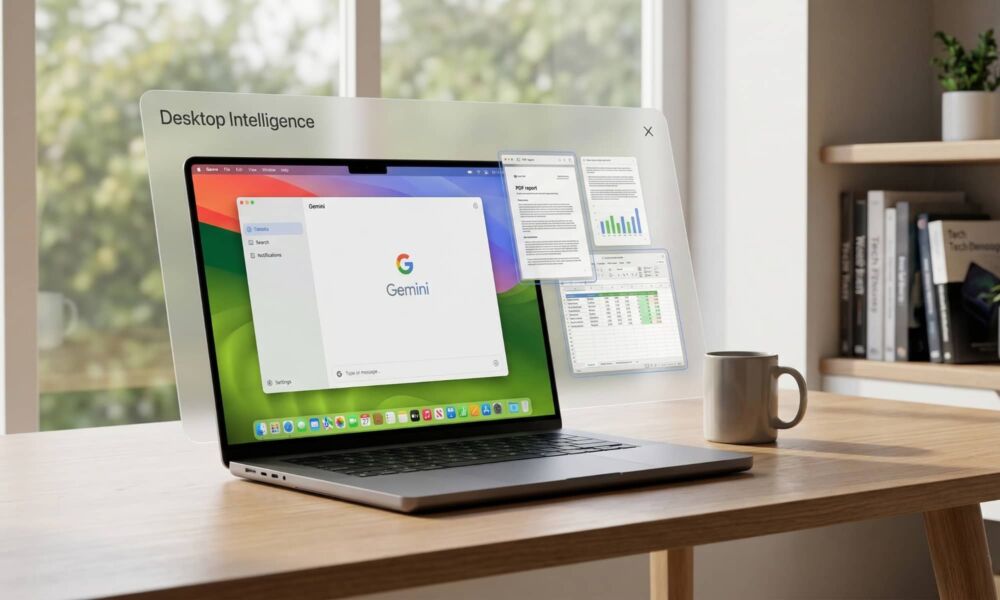
Nevertheless, that may soon change. Yesterday, Bloomberg’s Mark Gurman reported that Google is working on a dedicated Gemini AI app for Mac, and has already sent it out to participants in a private beta program.
The Alphabet Inc.-owned business began privately sharing an early version of the app with participants in a consumer beta testing program this week. The effort allows Google to get feedback on upcoming software from nonemployees, who can also help the company find bugs before a public release.
Mark Gurman
The development still appears to be in its nascent stages, as beta testers have been told that it’s an “early version” that “will have only critical features from the other clients but not all.”
Google will likely build more features into the Gemini Mac app before release, as the goal is to compete with ChatGPT and Claude, which have had an edge in the Apple ecosystem due to their more integrated Mac footprint. Although Gemini works well in a browser, that limits its ability to hook deeper into the operating system in a way that native apps can, providing more seamless uploading of photos and documents, system-level notifications, quick-access hotkeys, and even integration with Apple’s Shortcuts for handling more sophisticated workflows.
However, sources also say Google plans to take this to the next level with a feature dubbed “Desktop Intelligence” that will let it tap into other Mac apps and see what’s on your screen to allow for more seamless data analysis.
“When you enable apps for Desktop Intelligence you are enabling Gemini to see what you see (such as screen context) and pull content directly from these apps to improve and personalize your experience only when Gemini is in use,” Gurman shares from a message in the app’s code.
Of course, as a third-party app, Gemini will still be subject to all the usual privacy and security restrictions enforced by macOS, so even if you install it, there’s no way it can snoop on what you’re doing without your permission.
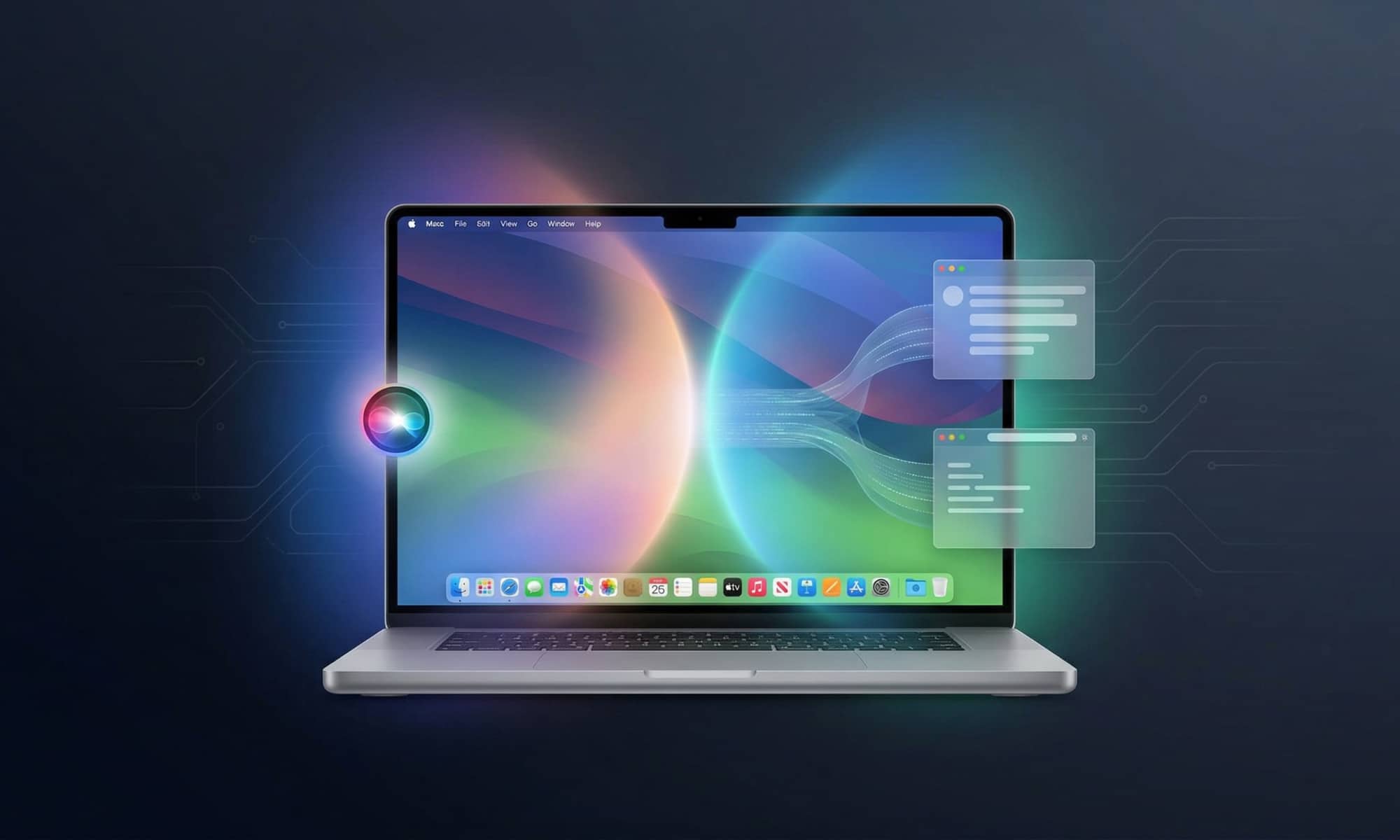
While Apple has partnered with Google to use its Gemini language models for the next version of Siri, this will still be fundamentally different from Google’s own Gemini app. Put simply, Apple is using Gemini’s “brain” to build its own in-house AI large language models (LLMs); it’s not simply turning Siri into Gemini.
Most significantly, that means that Apple’s “Siri 2.0” — a project code-named “Campo” that’s slated for iOS 27 and macOS 27 — will still be built with all the privacy and security guardrails that Apple is known for. That means your data remains under Apple’s control, and Google doesn’t get any of it to use for any purpose.
That makes it even more important for Google to get its own Gemini app onto the Mac desktop, and the ideal time to make this move is before macOS 27 comes along, as users who install it now are more likely to continue using it — and feeding their data to the Google machine to train its AI models and serve its analytical engines — even after Siri grows into its own full-featured chatbot.
[The information provided in this article has NOT been confirmed by Apple and may be speculation. Provided details may not be factual. Take all rumors, tech or otherwise, with a grain of salt.]