Fading Magnetism: Is Apple Seriously Thinking of Killing MagSafe?
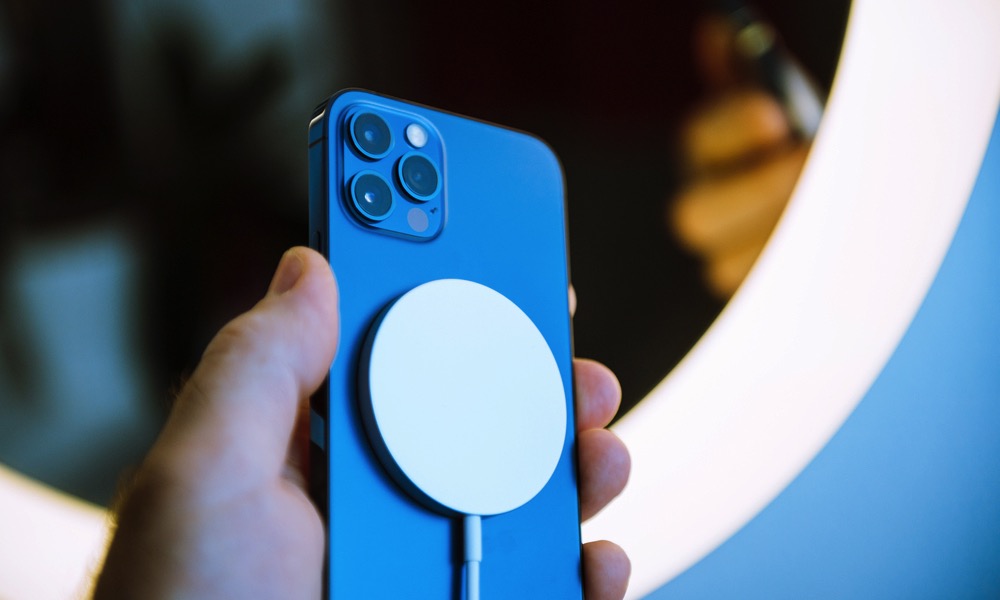 Hadrian / Shutterstock
Toggle Dark Mode
While many of the leakers we regularly hear from have reasonably good track records, every so often we hear something that leaves us scratching our collective heads. Such is the case with a new rumor that suggests Apple might actually be thinking of leaving MagSafe behind in future iPhone models.
The claim comes from “Instant Digital,” who frequently shares reports on Weibo that have turned out to be accurate, but their record is also far from perfect. Like most Weibo leakers, their information comes from Apple’s supply chain partners, not sources within Apple itself, which is why this one should be taken with a particularly large dose of unrefined sodium chloride.

According to what we can glean from a machine-translated Weibo post, the leaker claims there’s been internal debate or controversy within Apple on whether MagSafe should be included as a standard iPhone feature. That implied sourcing alone makes this more dubious than the usual leaks shared by Instant Digital and others on the Weibo circuit, since any information they have on discussions within Apple is third- or fourth-hand hearsay — at best.
There’s also always a risk of mistranslation when dealing with Chinese supply chain leaks. Ironically, Instant Digital called this problem out in January while debunking rumors that the front-facing camera would be moving to a punch-hole in the left corner on this year’s iPhone 18 Pro. Asian-language sites had been reporting accurate information, but somewhere along the way it got misinterpreted and reported incorrectly in English, and several other sites picked it up and ran with it.
The relatively cryptic nature today’s Weibo post by Instant Digital leaves some room for interpretation, especially since the idea of Apple ditching MagSafe on the iPhone would be patently absurd at this point. Still, the theory here seems to be that Apple feels there are enough MagSafe cases that it may no longer need to put magnets into the iPhone itself. That would align with the strategy followed by Apple’s rivals like Samsung, which managed to add Qi2 charging to the Galaxy S26 series earlier this year by relying on users to supply their own magnetic cases.
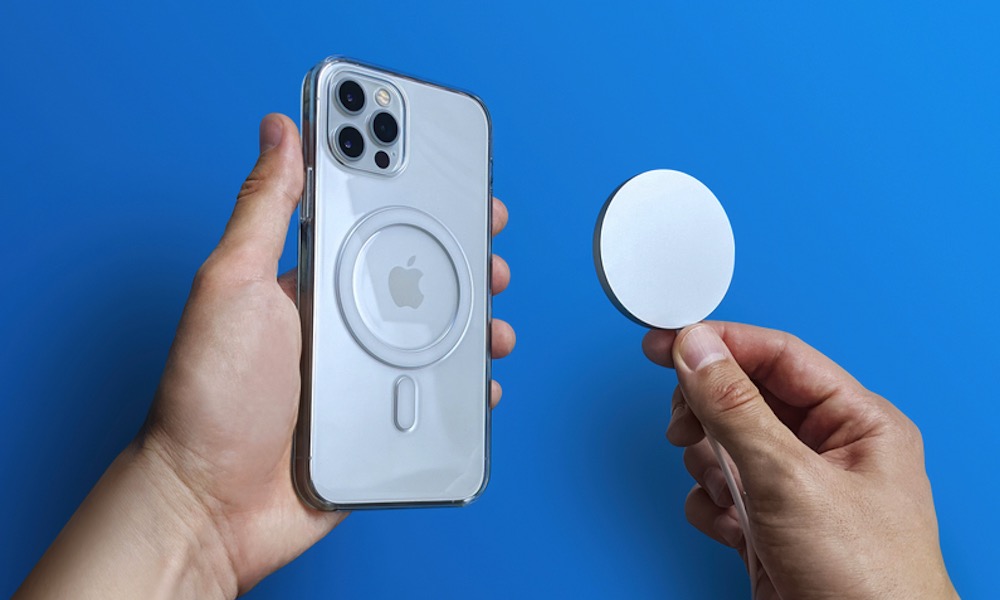
Instant Digital seems to believe that Apple has at least considered a similar approach. However, even if this was a serious debate inside the walls of Apple Park — which is far from certain — it seems the MagSafe side has already won out.
While Apple omitted MagSafe support on the 2025 iPhone 16e, it rectified that in this year’s successor, the iPhone 17e, confirming that it’s moving toward the technology rather than away from it. However, it would also be pretty hard to argue that the iPhone 16e was a strategic move rather than simply a cost-cutting measure for Apple’s most affordable model. After all, it was the spiritual successor to the iPhone SE, which also only supported 7.5W Qi charging with no magnetic ring.
Had Apple seriously intended to use the iPhone 16e to promote the idea of a MagSafe-less iPhone, it would have likely at least adopted Qi2 charging speeds and pointed users to MagSafe cases, similar to what Samsung has done.
That said, Instant Digital may be correct about one thing. Apple was pretty passionate about MagSafe in the early days, and there were plenty of rumors that it might eventually expand to the iPad. That hasn’t happened, and those reports have also significantly cooled down over the past two years.
Similarly, all the information we’ve seen so far about Apple’s so-called “iPhone Fold” (or “iPhone Ultra,” or whatever it will be called) suggests that it won’t have a MagSafe charging ring. However, it may not support wireless charging at all, in which case that’s more about borrowing a page from the iPad and sacrificing components to achieve what’s expected to be a record-breaking thinness. For similar reasons, it’s also widely expected to rely on Touch ID for authentication. This will all make it such a unique beast that we’re starting to wonder if it should even be called an “iPhone,” as it’s starting to feel more like an “iPad nano.”
[The information provided in this article has NOT been confirmed by Apple and may be speculation. Provided details may not be factual. Take all rumors, tech or otherwise, with a grain of salt.]