
OpenAI’s ‘ChatGPT Phone’ for 2027: Visionary Leap or IPO Pipe Dream?
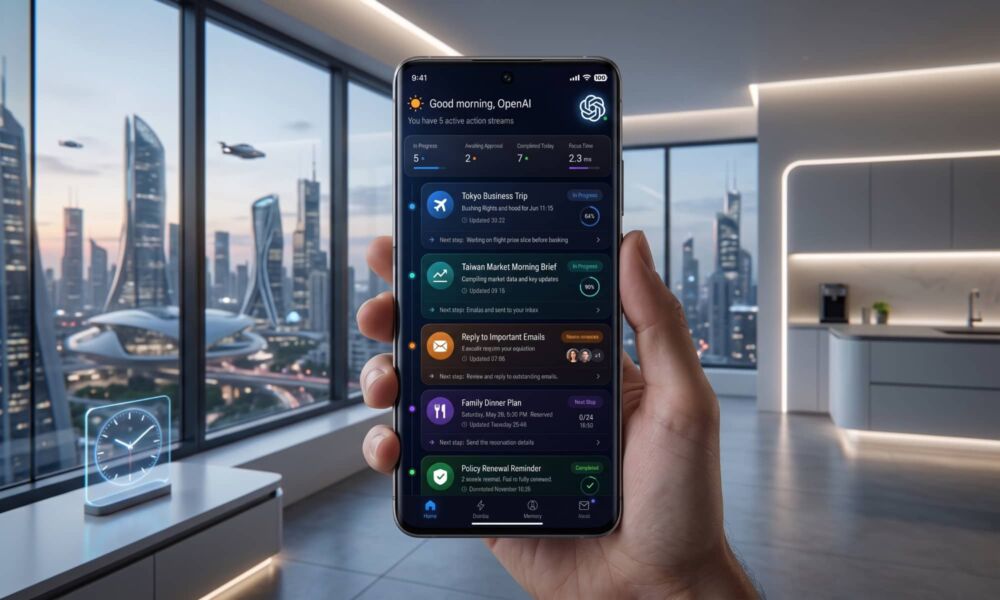 Concept image of an OpenAI smartphone [Ming-Chi Kuo / iDrop News / AI]
Toggle Dark Mode
Additional details have surfaced on last week’s report that OpenAI is building an agentic AI smartphone, suggesting that the company doesn’t plan to drag its heels on bringing the new device to market.
Ming-Chi Kuo, who shared the initial news on April 26, followed up this week to say that the “AI agent phone” is being fast-tracked and could debut in the first half of next year.
Kuo also provides a deeper look at the specs, pegging MediaTek’s cutting-edge 2nm Dimensity 9600 to power the new phone, thanks to its image signal processor (ISP) that offers a better HDR pipeline for sensing real-world objects.
Kuo predicts that OpenAI could sell as many as 30 million units of its new smartphone in 2027–28. While that’s small potatoes compared to the hundreds of millions of iPhones that Apple ships, it would be an impressive start for a company that’s never done this before.
Despite previous claims to the contrary, it’s not a stretch to believe that Sam Altman and Jony Ive are contemplating a smartphone as part of their hardware design partnership. However, whether they can pull it off is another question entirely.
So far, Kuo has been a lone voice in the wilderness on OpenAI’s smartphone ambitions, and while he has unique insights into the supply chain that often results in accurate information, his timing predictions have frequently been way off. After all, he’s the same analyst who once predicted Apple would sell 20 million foldable iPhones by 2023.
In this case, Kuo believes that OpenAI wants to fast-track this project to support a year-end initial public offering (IPO) and beat potential competitors to the punch by releasing the first AI-driven phone. Of course, there’s a gap between what OpenAI would like to do and what it can do, and we have yet to see any fruits from the Altman-Ive partnership.
Granted, it’s only been a year since the duo announced a deal to build an AI hardware business, promising a product that “has never happened before in consumer hardware.” However, they’d already been collaborating for at least two years prior to that, and also repeatedly stated at the time that this wasn’t a smartphone, but “a totally new kind of thing.”
Since then, we’ve heard suggestions from Kuo of a pin-like device “with a form factor as compact and elegant as an iPod Shuffle,” a smart pen, a camera-equipped behind-the-ear wearable, a camera-equipped smart speaker, smart glasses, and a smart lamp. However, this is the first time we’ve heard of a smart phone.
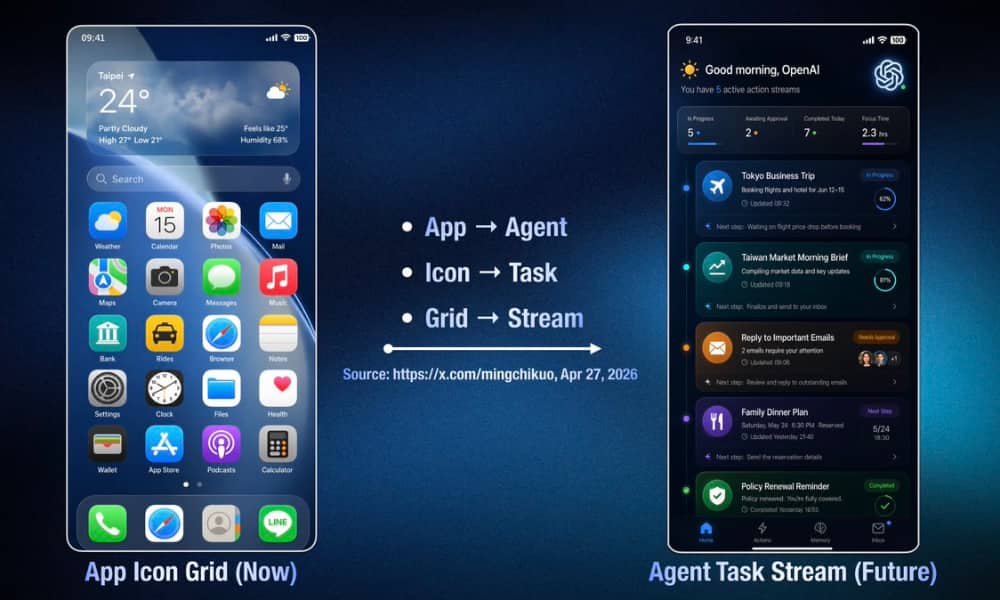
Kuo believes OpenAI will “redefine” the smartphone by eliminating the traditional app layout and letting users interact with the phone entirely through an “agent task stream” that focuses on activities and data rather than individual apps. OpenAI also reportedly plans to bake AI so deeply into the smartphone experience that it can anticipate and proactively respond to the user’s needs in real-time by analyzing their surroundings and regular interactions with the phone.
Still, a 2027 launch feels less like a firm deadline and more like wishful thinking designed to pad a pre-IPO prospectus. Even if OpenAI has scrapped its other plans and intends to lead with the phone instead, it would border on miraculous for the company to come up with anything more than a prototype in that timeframe.
There are so many moving pieces here that it’s hard to know where to start. The Dimensity 9600 has to be fabricated on TSMC’s highly-demanded 2nm nodes, where MediaTek will be competing with Apple, whose 2nm A20 chips for the iPhone 18 Pro and “iPhone Fold” will be hogging virtually all the early capacity. Then there’s the software. Building a whole new OS layer is a massive undertaking and often lags behind the hardware even when it’s based on established foundations; an “agent task stream” represents a fundamental shift in computing that’s bound to have some teething pains.
A full-on smartphone would be an incredibly ambitious first start for OpenAI, so there are still a lot of other things we’re expecting to see from the company before that happens — and so far, we’ve seen nothing.
[The information provided in this article has NOT been confirmed by Apple and may be speculation. Provided details may not be factual. Take all rumors, tech or otherwise, with a grain of salt.]






