Apple Is Already Testing Under-Display Face ID for the iPhone Duo 2

Toggle Dark Mode
From the moment Apple first showed off the iPhone Duo last month, it seemed clear that one of its biggest compromises would be the lack of Face ID — and early reviewers agree.
After all, it’s not just about unlocking the iPhone Duo. That would be annoying enough, but at least it’s possible to work around that with an Apple Watch by taking advantage of an iOS 14.5 feature that Apple added in the mask-wearing days of COVID — minus the old partial biometric Face ID scan.

However, that only solves the initial unlock. Opening apps, autofilling passwords and credit cards, and all of the other things like that where Face ID “just works” will require you to place your finger on the side button to authenticate with Touch ID before you can proceed.
Not everyone will ultimately mind making this compromise, but it’s going to be jarring for a while for anyone who is used to how seamlessly Face ID works. Thankfully, though, it appears that this may be a single “first-generation” limitation.
According to Bloomberg’s Mark Gurman, Apple is already testing “iPhone Duo 2” prototypes that will not just incorporate Face ID, but actually adopt under-display Face ID — a move that would be crucial for making it work on the inner screen, which already hides the camera under the display.
Gurman’s comments come in today’s episode of his Power On podcast:
There are a few different features that Apple is already looking at for the iPhone Duo 2 and the iPhone Duo 3. One thing that Apple has been actively working on is under-display Face ID.
During the podcast, Gurman speculates that one of Apple’s challenges was likely finding room for the Face ID sensors in the ultra-thin iPhone Duo, which packs in even more components than last year’s iPhone Air — and is even thinner than that model. There was also undoubtedly a cost factor.
However, Gurman echoes something I also said previously: consistency is also quite important, which means that even if Apple could get a Face ID sensor in the outer display camera, it probably wouldn’t bother if it couldn’t make it work on the inner display as well. Face ID on the outside and Touch ID on the inside would create an even more jarring user experience.
That makes cracking under-display Face ID an important consideration. Apple clearly decided it was worth putting the camera itself under the inside display, despite the fact that it’s apparently abysmal as a result. There’s a reason Apple kept it a mystery; it’s apparently only 4 megapixels and has ridiculously poor image quality. There’s a reason so few phone manufacturers have gone this route.
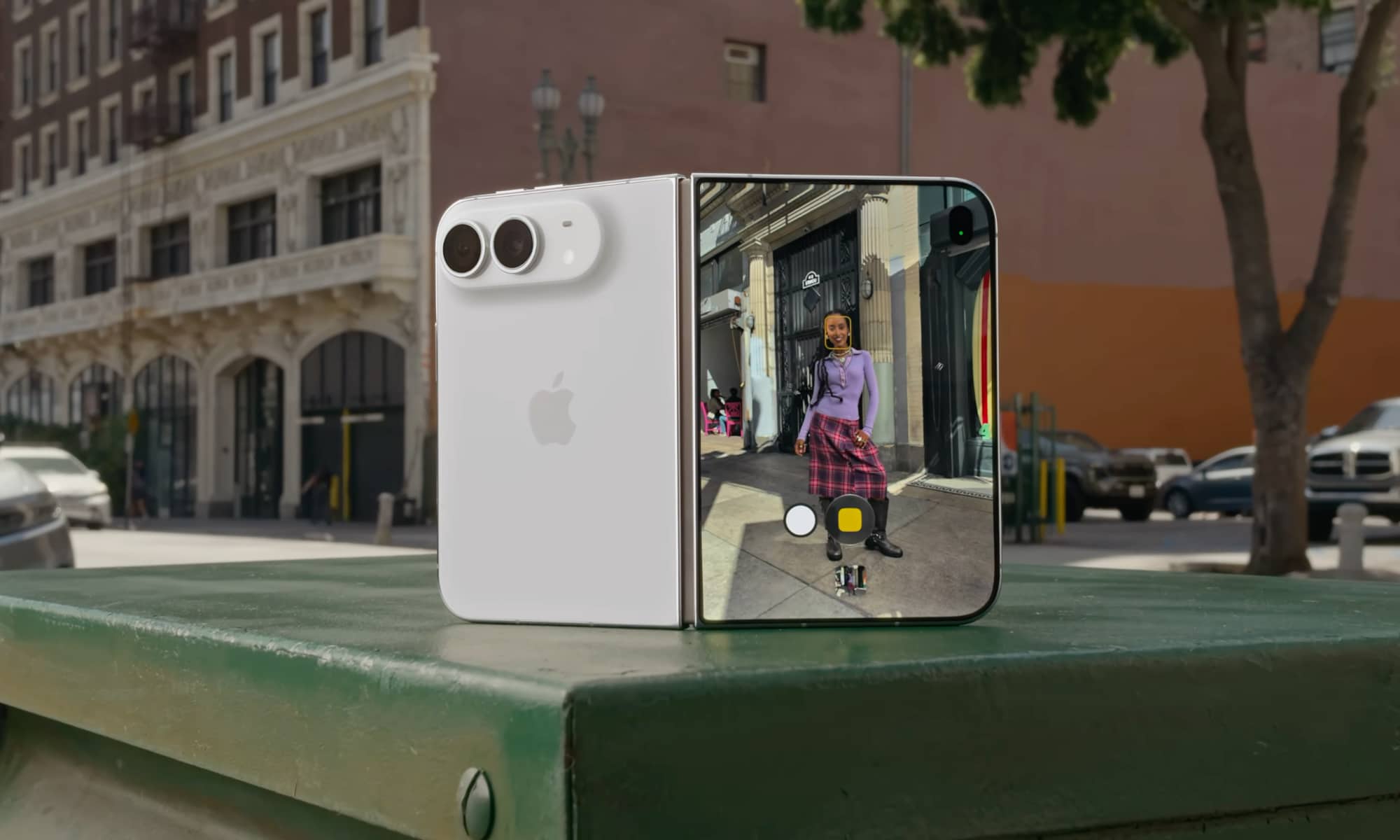
With the iPhone Duo, this is arguably a reasonable tradeoff. Not too many folks are going to need to take selfies on the inside screen, especially when they can simply flip the phone around and use the main 48 MP camera. When folded closed, the outer display camera at least offers a respectable 12 MP. The inside under-display camera is there primarily for FaceTime calls, where it can provide a reasonable 1080p video feed.
That said, Apple is reportedly solely at the testing stage right now, so there’s no guarantee this will be showing up anytime soon. Gurman says he’s been told Apple already has iPhone Duo 2 prototypes with an under-display Face ID sensor and camera on the outside screen, but there’s no word on whether they’re tackling it for the inside one as well.
Apple would surely like to figure it out with the next-generation iPhone Duo, as the company undoubtedly knows how much Touch ID feels like a step backward on an otherwise futuristic device, but Apple isn’t going to do this until it’s sure it can do it right.
[The information provided in this article has NOT been confirmed by Apple and may be speculation. Provided details may not be factual. Take all rumors, tech or otherwise, with a grain of salt.]