The iPod Celebrates 25 Years With a Nod from Apple Music

Toggle Dark Mode
Twenty-five years ago today, Steve Jobs stood on stage at the Town Hall auditorium in Apple’s old Infinite Loop headquarters, unveiled the first iPod, and changed the face of music forever.
With iPod, Apple has invented a whole new category of digital music player that lets you put your entire music collection in your pocket and listen to it wherever you go. With iPod, listening to music will never be the same again.
Steve Jobs
The “breakthrough” music player that promised to pack “up to 1,000 CD-quality songs into an ultra-portable, 6.5 ounce design that fits in your pocket” may seem quaint by today’s standards — a world where Apple Music now puts 100 million songs at your fingertips. But 2001 was a very different era for both digital connectivity and the music industry.
To quietly commemorate the occasion, Apple has added a fun little Easter egg on its Apple Music webpage. You can visit music.apple.com/ipod from any modern web browser, and you’ll be presented with a virtual first-generation iPod that you can interact with — preloaded with hits from the year it launched. Sadly, you’ll only be able to listen to 90-second previews — even if you’re signed in with your Apple Music account — but it’s still a lot of fun.
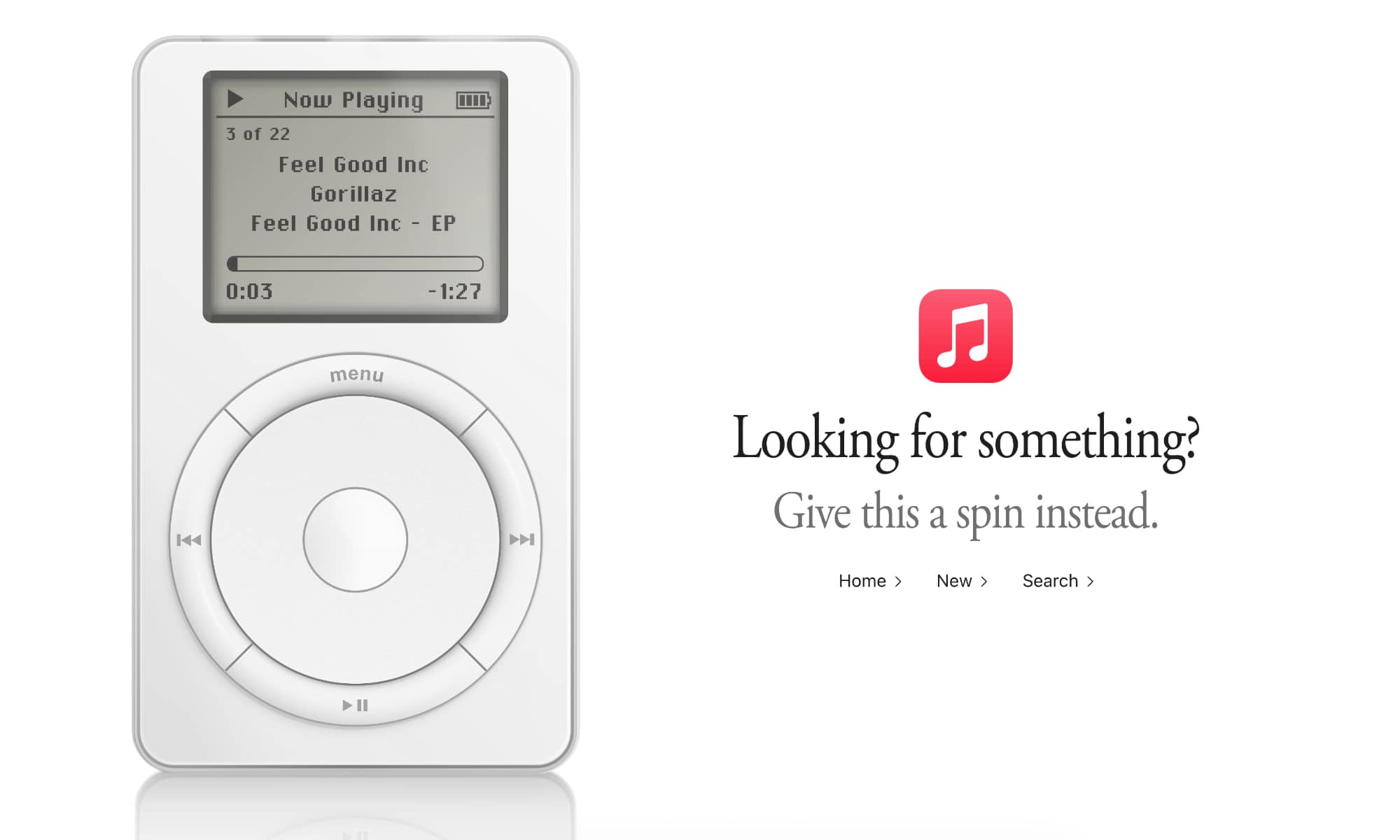
The iPod wasn’t the first portable music player any more than the iPhone was the first smartphone. However, in true Apple fashion, it was the device that brought the concept into the mainstream — and it also turned out to be the thin edge of the wedge that made many folks seriously consider diving deeper into the Apple ecosystem (myself included).
The secret to the iPod wasn’t so much the hardware — although that was certainly cool — but rather the overall software experience. A year earlier, Creative Labs had released the Nomad Jukebox, following up its earlier 32–128 MB flash-based players with a model that resembled an old Sony Discman and featured a 6 GB hard drive inside.

The Nomad Jukebox was a reasonably good digital audio player (DAP), but it was also the kind of device that forced you to spend as much time managing your music as you did listening to it. As usual, Apple’s method was far more elegant, relying on iTunes to properly manage the metadata.
Granted, that wasn’t for everyone — many folks were frustrated by iTunes and the iPod’s inability to just let them dump in a folder full of MP3 files — but for those like me who wanted a nicely curated music collection, it was pure nirvana.
Clearly, the market agreed. I didn’t jump into the iPod world until 2004, when the first color-screened model, the iPod photo, came along, and it was actually iTunes that pulled me in, not the other way around. I was a Windows and Linux guy in those days, and was toting Creative’s Nomad Jukebox Zen hard-drive-based DAP, but I’d always dreamed about having a large digital music collection that I could call up from anywhere in my home.

To that end, I had purchased some audio streaming boxes to place around my house (the Slim Devices Squeezebox, before it was acquired by Logitech and ultimately killed off).
However, I was still struggling with organizing my massive library of MP3 files through its back-end SlimServer software. As I went down a rabbit hole one night researching this, I discovered that SlimServer could integrate with iTunes. I’d never looked too closely at that, as I’d written it off as a “Mac thing,” but I decided to download the Windows version, import my music, and give it a try.
The next morning I went out and bought an iPod.
It was the first time since I’d picked up my first Creative Nomad (the parallel port version) in 1999 that I was able to stop fiddling with my music library and simply start enjoying it. With other DAPs, I was effectively managing two libraries — one on the player, and one on my computer. With the iPod, I was dealing with a seamless extension of my primary iTunes library.
The first magical moment came when I was out for the day adding tracks to my On-The-Go playlist (you could only create one in those days). I returned home, dropped my iPod into its dock, and within two minutes, that playlist was available on the Squeezebox in my living room.
This was Apple’s promise from the beginning, as it said in the very first paragraph of its press release:
iPod combines a major advance in portable music device design with Apple’s legendary ease of use and Auto-Sync, which automatically downloads all your iTunes songs and playlists into your iPod, and keeps them up to date whenever you plug your iPod into your Mac.
The rest, as they say, is history. The original iPod spawned several generations of successors, plus a smaller, hard-drive-based iPod mini, and the flash-based iPod nano and iPod shuffle. Following the debut of the first iPhone six years later, Apple debuted the iPod touch — basically an iPhone without the “phone” part.

The last traditional iPod was released in 2012, and even that was an interesting pivot. The seventh-generation iPod nano felt more like a playground for Apple’s designers than anything else. It featured an iOS-like user interface (although it still ran the old-school iPod firmware under the hood) and was the only traditional iPod to ever use the Lightning port.
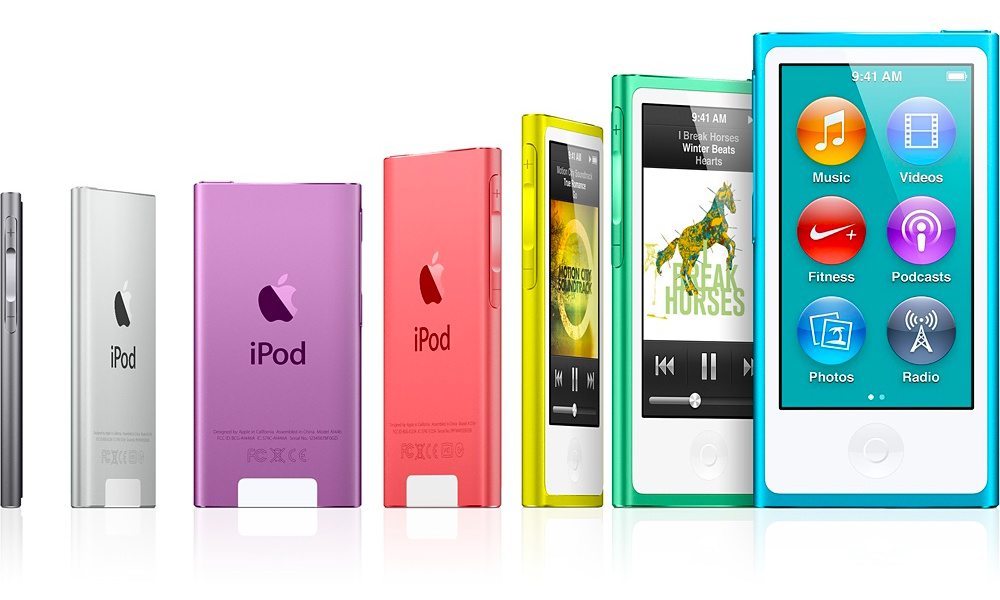
Apple continued selling the iPod classic — the name it adopted to differentiate the full-sized iPod in 2007 — until 2014, when it simply ran out of parts to keep making new ones. The seventh-generation iPod nano and fourth-generation iPod shuffle got some new colors a year later in 2015, but remained otherwise unchanged from their original 2012 and 2010 versions.
In 2017, Apple officially pulled the plug on the last traditional iPods, removing them from sale. Almost right on schedule, they hit the obsolete list in October 2024.
The iPod touch survived until 2022, when its departure announced the formal demise of the name “iPod” from Apple’s product lineup.
Although the iOS-powered iPod touch had received two updates in the modern era, both of those seemed paired explicitly with Apple’s services push. The fifth-generation iPod touch had debuted alongside the iPod nano in 2012, mostly to shift it to the Lightning port. A sixth-generation refresh in July 2015 came just two weeks after Apple Music debuted, and the final seventh-generation model in 2019 showed up on the heels of the Apple Arcade announcement — packing a modern A10 Fusion chip that Apple flat-out said was designed to make it a portable gaming device.
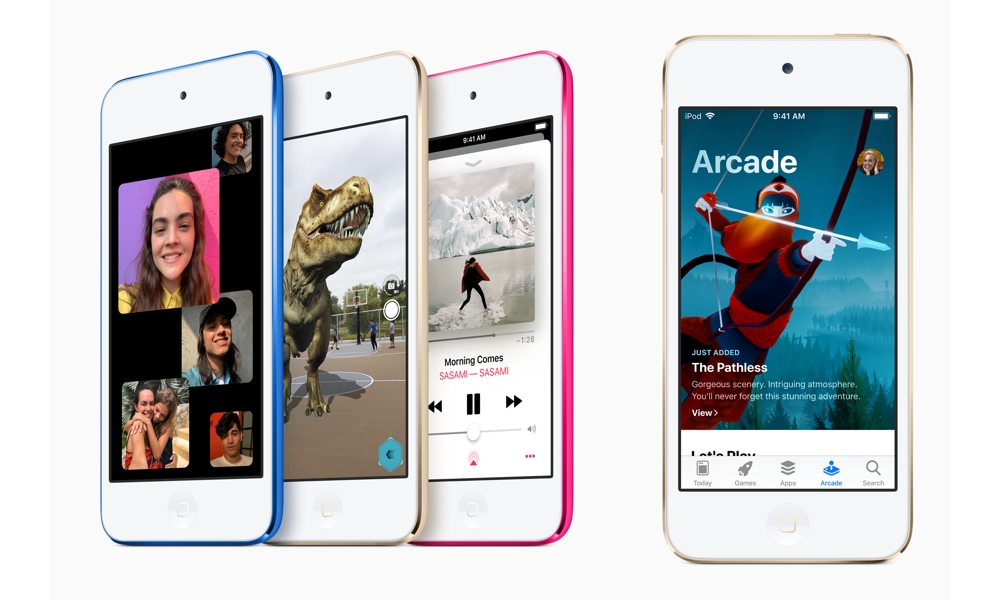
Apple’s strategy with the iPod touch was always a bit different from its traditional iPods. While those were almost entirely about music (and arguably selling some of it through the iTunes Store), the iPod touch was the ultimate “gateway drug” for the iPhone ecosystem. In the early days, that was about the App Store, although it later pivoted to being an accessible platform for Apple Music, Apple Arcade, and Apple TV.
However, like the original iPod itself, the iPod touch existed in a world where not everyone wanted a smartphone — and where many parents weren’t about to even consider buying one for their kids.
Today, hand-me-down iPhones are abundant, and can be used without a plan (something that required a bit of hacking in the early iPhone days — Apple really didn’t want you to buy an iPhone back then unless you were going to use it as a phone). Plus, while there are plenty of people who still prefer to own their music, it’s clear that the majority of the world has moved to the “rental” model of modern streaming services.