The Day U2 Hacked Your iPhone: Apple’s Most Bizarre iTunes Blunder Turns 12
Toggle Dark Mode
To quote MacRumors, it was twelve years ago today that Apple published a web page with one job: to let users delete the free U2 album the Cupertino firm had “forced” upon its iTunes customers.
Five days before that, on September 9, 2014, Apple had held its iPhone 6 event, during which then-CEO Tim Cook announced that U2’s new album Songs of Innocence would be given to every iTunes customer for free. Not only was the album free, it was automatically linked to the customers’ accounts and the album would “download automatically” to users’ devices without any action on their part.

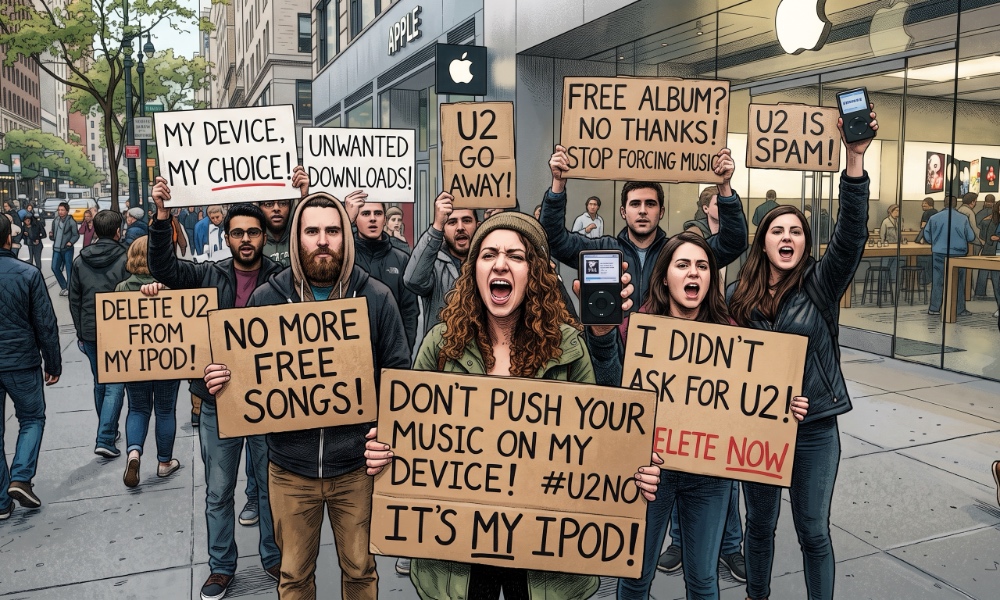
Instead of gratitude, several iPhone users — and by “several,” I mean millions — complained loudly. On September 15, Apple bowed to the pressure, providing a webpage that offered a one-click method of deleting the album from their accounts. Just in case users had second thoughts, they had a month to insert it into their library again at no cost. (Although the web tool is no longer active, an archived version of the support page is available here.)
Apple later said 26 million people downloaded the full album, although we’ll likely never know for sure how many removed it later. Plus, more than 81 million users “experienced” songs from the album, via iTunes, iTunes Radio, and Beats Music.
In the face of continued grumbling, Bono apologized to fans a month later, during a Facebook interview where members of the band answered questions asked by fans.
Oops. Um. I’m sorry about that. I had this beautiful idea and we got carried away with ourselves.
Artists are prone to that kind of thing. Drop of megalomania, touch of generosity, dash of self-promotion, and deep fear that these songs that we poured our life into over the last few years might not be heard.
There’s a lot of noise out there. I guess we got a little noisy ourselves to get through it.
Bono
While the internet complained loudly about the free album being foisted upon them without asking, some observers, this one included, saw it as an opportunity to do a bit of pot stirring:
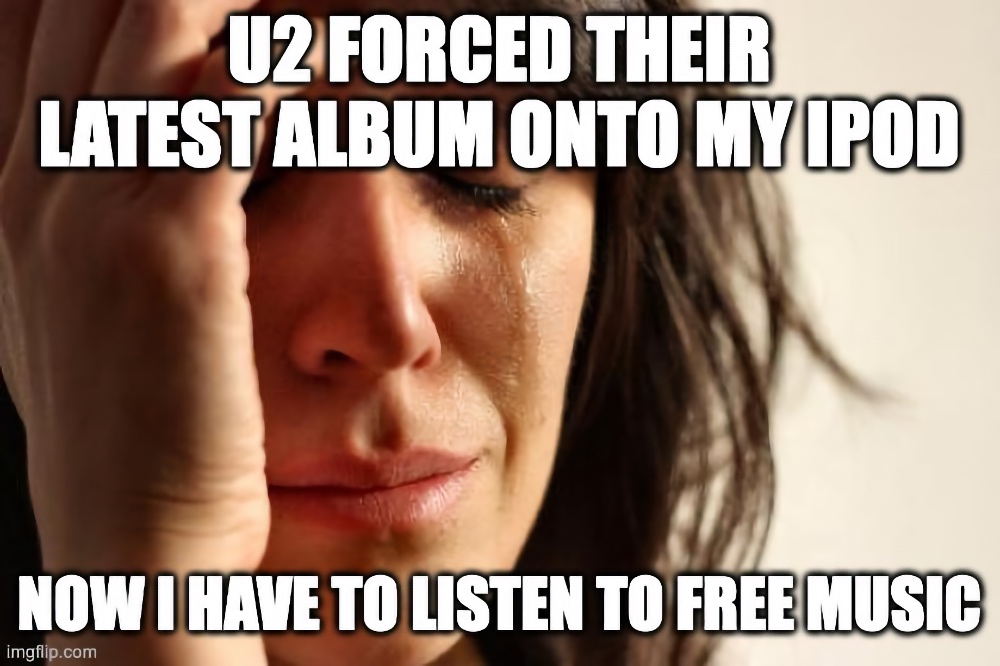
And since some folks just want to see the world burn, I also posted this image with the article I wrote about the situation:
As noted by Mactrast, while the free album wasn’t received in quite the way Apple and U2 had expected, the publicity did spur new sales of U2’s older albums, with 17 of their previous albums currently ranking on the iTunes Top 100, with a remastered version of The Joshua Tree, the band’s 1987 release, at the No. 12 spot.
The relationship between Apple and U2 didn’t seem to be damaged by the controversy, as they continued to work together over the years.
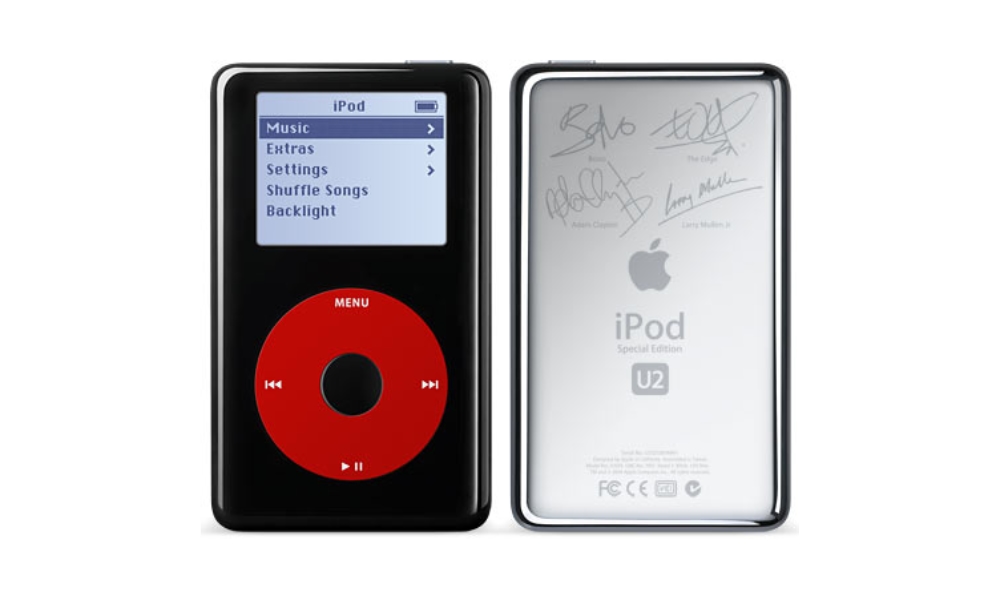
The relationship goes back to the early days of the iPod. In 2004, Apple partnered with the band to release the U2 Special Edition iPod. The iPod was the first full-sized iPod available in anything other than white. It featured a black face, and sported a red click wheel. The band members’ signatures — Bono, The Edge, Adam Clayton, and Larry Mullen Jr. — were engraved on the back, and the box included a coupon for purchasing The Complete U2 digital box set on iTunes.
The following year, Apple announced it would be working with (RED), the organization founded by Bono and Bobby Shriver to raise money in the fight to end AIDS and other diseases that plague developing nations.
Then in February 2025, Apple TV announced the impending release of a new documentary, Bono: Stories of Surrender. The documentary didn’t just debut on Apple TV (which was still flying the “Apple TV+” banner at the time); it was also released as an immersive documentary for the Apple Vision Pro in full 8K, making it the first feature-length film available in Apple Immersive video.
While the documentary covered Bono’s life and personal stories, it also included exclusive, never-before-seen footage from the Beacon Theatre shows, as well as performances of many of his most iconic U2 songs.