Your iPhone and Windows PC May Finally Get Clipboard Sharing (With a Catch)
 A9 Studio / Shutterstock
Toggle Dark Mode
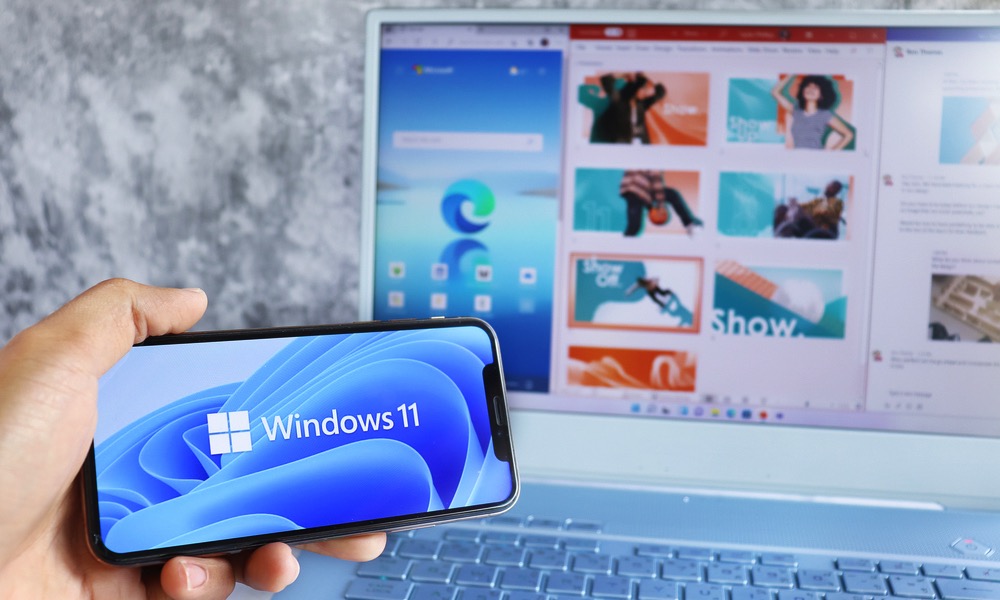
Windows and iPhone users may soon have something to thank the European Union for. In response to the interoperability requirements of the EU’s Digital Markets Act (DMA), Apple is actively developing a solution to allow the iPhone clipboard to be shared with PCs running Windows 11, similar to how its Continuity features already work between iOS and macOS.
The move stems from an interoperability request filed by Microsoft for “Clipboard / Universal Clipboard (cross-device copy and paste).” Under the DMA, Apple is required to offer third-party hardware and software companies the same level of access to the iPhone that its own products enjoy. Put simply, that means if an iPhone can share its clipboard with a Mac, then it also has to be able to do so with any other platform, whether it’s Windows, Android, or Linux.
However, while Apple is legally required to provide that interoperability, it doesn’t need to do so until a company actually asks for it, as Microsoft has now done. That makes sense, as it requires both sides to build the necessary pieces.
While the original request was filed on March 25, 2026, Apple only committed to adding this on June 26 (as recently discovered by MacRumors):
We will introduce a new solution that will follow similar patterns to the Accessory Notifications and Accessory Live Activities frameworks that were introduced on iOS 26.5. It will enable you to create an extension to share and import pasteboard items with paired accessories. The system will notify your extension when items are copied into the clipboard; then your extension can use the Accessory Transport Extension framework to share the contents with your accessory as necessary using available transports.
Thankfully, the DMA’s interoperability requirements don’t require Apple to give complete carte blanche to third-party platforms. While it can’t make the implementation burdensome, it’s still perfectly acceptable to require some reasonable security gatekeeping, and Apple’s response notes that it plans to do precisely that.
Microsoft will “need to adopt AccessorySetupKit in order for the user to consent to the necessary permissions,” and the user will need “to perform a one-time consent to sharing the pasteboard with each paired accessory that will receive this functionality.”
Microsoft’s Universal Clipboard interoperability request is paired with a related request for “Background execution for features like Universal Clipboard,” which would allow Windows to push tasks to an iPhone that could wake up an app to run processes in the background, such as syncing photos or files. While this request has also advanced to Phase III, Apple and Microsoft appear to still be going back and forth on the specifics of its implementation, partly due to the original request being overly broad while also covering features that are already available in iOS through push notifications.
In an illustration of how finely threaded the DMA’s needle can be, Apple rejected another one of Microsoft’s March 2026 requests for access to iMessage, RCS, and SMS from an iPhone. While Apple fully supports the Bluetooth Message Access Profile (MAP), which is what currently powers Microsoft’s Phone Link for iOS, it’s an imperfect solution as it lacks support for anything remotely resembling modern messaging capabilities. Microsoft had hoped to get full access to allow a Windows messaging client to become a full participant, much like Messages on Mac, but Apple determined that their request isn’t within the scope of the DMA, responding that “the functionalities which you seek access to are features of iOS Messages which is an Apple service, rather than features of iOS.”
As for when Universal Clipboard is coming, there’s almost no way it’s going to make the cut for iOS 27, but it could find its way into iOS 28. Calling it a “significant engineering effort,” Apple has committed to have it developed by fall 2027, which means it probably won’t even arrive in the first release. Instead, Apple says it would ship it in “a developer-facing beta release prior to full release,” which likely points to iOS 28.1 or iOS 28.2. There’s also no guarantee it will be made available outside of the EU. Apple typically limits the changes it needs to make for DMA compliance solely to that region, but there have been a few, such as open NFC payments, that have been rolled out globally.