Brace Your Wallets: iPhone and Mac Price Hikes Are Coming
 Yulia Grigoryeva
/ Shutterstock
Yulia Grigoryeva
/ Shutterstock
Toggle Dark Mode
Over the past few months, the technology industry has been rife with speculation on when Apple will have to surrender to the crunch of rising chip costs and ultimately raise iPhone prices. Now it looks like that day may be just around the corner.
While analysts believe Apple’s deep pockets and supply chain connections have allowed it to weather the storms of the so-called “RAMageddon” memory crunch much better than others, it was still never a question of “if” Apple would eventually have to raise product prices so much as when this would inevitably happen. The AI boom has pushed demand for memory and high-end chips into the stratosphere, and it shows no sign of even leveling off.
Now, in the most open admission of the inevitable we’ve heard from Apple yet, CEO Tim Cook has said outright that the company has no choice — price increases are coming.

During an exclusive interview with The Wall Street Journal’s Rolfe Winkler (Apple News+), Cook says that while Apple is doing its best to mitigate the problem and avoid hitting customers’ wallets, it can’t keep doing that indefinitely.
Unfortunately, price increases are unavoidable. We’re doing our best to mitigate the huge increases that are being passed to us, and we’ve been trying to shield our customers from the increases, but the situation has become unsustainable.
Tim Cook
As usual, Cook was quite circumspect about the specifics of what prices may increase or even when that may happen, but he made it clear that they’re coming — one way or another.
During Apple’s Q2 2026 earnings call, Cook discussed Mac Studio and Mac mini shortages, but pointed primarily to demand from customers looking to use these Macs for AI and agentic tools rather than everyday consumers. More significantly, though, he said the real problem wasn’t RAM prices, but rather the availability of the advanced nodes that Apple’s A-series and M-series chips are produced on. Put simply, Apple is being forced to wait in line behind rivals like Nvidia for some of TSMC’s best fabrication lines.
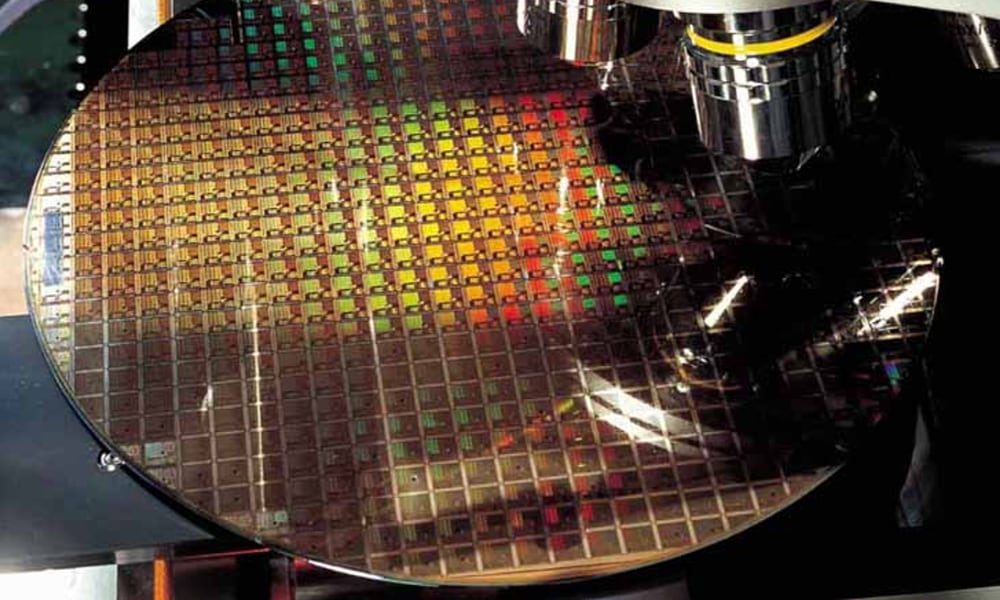
That may have been the primary concern at the time, but the WSJ interview reveals that things have shifted more to the RAM side. Cook said prices for both memory and storage (SSDs) are issues, but the DRAM market is what’s really killing Apple right now, thanks again to AI servers gobbling up all of the high-bandwidth memory.
There’s less supply at a time when consumers want devices and the memory guys are passing along huge price increases. We definitely need memory pricing and supply to return to reasonable levels for consumer products. That’s the bottom line.
Tim Cook
Even though Apple has traditionally managed to front-of-the-line pricing and availability thanks to its purchasing power and long-term supply chain contracts, its biggest rivals in the DRAM and NAND space have now become forces to be reckoned with. AI hyperscalers are now fighting to lock up supplies by putting huge piles of cash on the table to sign three-to-five-year exclusive agreements. Apple has deep enough pockets that it could match that, but that would be a big pivot from its usual supply chain tactics.
Cook also told Winkler that Apple has no intention of building its own memory and storage factories. Unlike its custom Apple silicon chips, DRAM and NAND are largely undifferentiated commodities. “We can’t do everything,” said Cook. “We know what we’re good at.”
What This Means for iPhone Prices
While the WSJ outlines the possibility of a $1,299 iPhone 18 Pro based on rising memory costs, there are still indications Apple will try to hold the line on iPhone pricing for as long as it possibly can. After all, the iPhone is its best-selling consumer device, and it’s a delicate balancing act to price it at a level where Apple can make a profit without taking a hit on demand.
In the short term, Apple’s more likely targets are the Mac and iPad — probably in that order. Apple already effectively hiked the entry price of the Mac mini by dropping its $599 256 GB configuration from the lineup, although it has yet to actually raise the prices of existing models — the 512 GB version remains at $799, it’s just that folks can’t buy a cheaper model.
That led to speculation that Apple could do the same for the $599 MacBook Neo, but that model is likely safe, as the new budget MacBook targets an entirely different — and much more important — audience for Apple than the Mac mini. As far as Apple is concerned, companies that want to build agentic AI server farms can absorb a $200 price bump that students and schools cannot.

Still, the Mac mini move echoes Apple’s typical playbook for raising the cost of entry — and its profits — without actually raising prices. We saw the same thing in 2023 when Apple dropped the 128 GB capacity of the iPhone 15 Pro Max, forcing customers to pay for the 256 GB version, and then did the same the following year with the iPhone 16 Pro. In both cases, Apple didn’t technically increase its prices — a 256 GB iPhone 16 Pro sold for the same $1,099 price as the 256 GB iPhone 14 Pro did two years earlier. It’s just that the more affordable $999 option ceased to exist.
It may be a bridge too far for Apple to pull something similar with this year’s iPhone 18 Pro lineup by eliminating the 256 GB tier, and it will probably still be a couple of years before a 512 GB iPhone could realistically be considered a base storage capacity. This means that we may see some extremely rare price bumps in the future, but with the iPhone 18 Pro and iPhone 18 Pro Max already entering mass production, it’s likely Apple has already figured out how to maintain those prices with its existing supply chain agreements.
As for next year’s so-called “iPhone 20” anniversary model? We’ll just have to wait and see, as we’re living in uncharted territory. Tim Cook, who is a seasoned veteran of the supply chain, having come from IBM and Compaq before he moved to head up operations at Apple, told Winkler he’d never seen a commodity price swing like this one. “This is a hundred-year flood,” said Cook. “I’ve never seen anything like it in any area in over 40 years.”