
Surprise! Apple Announces New Desktop Macs with M6 and M5 Ultra Chips

Toggle Dark Mode
Heading up the list of things we did not see coming this month is today’s announcement of not only a new Mac mini and Mac Studio, but also Apple’s next-generation M6 chip.
It seems like just yesterday I was wondering whether we’d see a new Mac mini this year. That’s probably because it was. Amidst rumors that Apple had an M6 iMac ready to go later this fall and the current supply chain crunch, it was easy to question whether a Mac mini (and Mac Studio) would come sooner or later.

It certainly felt like we’d reached the end of the M5 generation, but it seems Apple had a few more surprises in store with an M5 Ultra — and in August, no less. Perhaps Tim Cook just wanted to get these out the door in one final act before he vacates the CEO’s office next week.
While the specs in the new models aren’t particularly surprising, the timing definitely is. Summer product releases from Apple are exceptionally rare, but it’s also fair to say that these two Macs were also long overdue.
The other twist is that Apple is echoing last year’s 14-inch MacBook Pro in its latest lineup. As we’ve already heard, Apple is skipping the M6 Pro and M6 Max as it focuses on the M7 lineup of chips. That means it’s once again selling a mixture of chip generations.
While the Mac Studio gets a shiny new M5 Ultra chip to go along with the M5 Max that Apple unveiled in March, the Mac mini is moving ahead to the M6 for its entry-level model, while the more powerful version will get the slightly older (but beefier) M5 Pro.
That’s slightly different than what happened with the MacBook Pro last year, since that hybrid lineup was simply a stopgap while we waited for the better models to arrive. In October, Apple launched the M5 chip in a 14-inch MacBook Pro, leaving the M4 Pro and M4 Max versions on the market until March, when it released two new models with the M5 equivalents.
By contrast, the Mac mini is unlikely to ever see an M6 Pro chip inside, because that chip likely won’t exist. The next update we can expect will be M7 and M7 Pro models, probably another 18–24 months from now.
The M6 Chip
Apple’s new silicon is a bigger deal than it sounds at first glance, as it’s the company’s first 2-nanometer chip, making it more powerful and more efficient than ever.
In fact, Apple is now packing in a 12-core CPU and a 12-core GPU with Neural Accelerators, a Dual 16-core Neural Engine, and up to 170 GB/s of unified memory bandwidth.
To put that in context, the current M5 chip has a 10-core CPU, 10-core GPU, and a single 16-core Neural Engine with 153 GB/s of memory bandwidth.
Considering that the individual M6 cores will also be faster, this is going to translate to some nice performance gains, and the new Neural Engine is expected to power even more complex on-device AI workflows.
M6 has a brand-new 12-core CPU complex — two more cores than M5 — that consists of 2 super cores, 4 performance cores, and 6 efficiency cores. It delivers the world’s fastest single-threaded performance and up to 1.2x faster multithreaded performance as compared to M5, and up to 2.4x faster than M1.
Apple
The M5 Ultra Chip
Meanwhile, the M5 Ultra is a little bit less surprising, as Apple is following the same playbook it’s used for its previous “Ultra” chips. However, in this case it’s fusing together two dual-die M5 Max chips to form a quad-die architecture. That’s a first for Apple silicon, as previous M-series Max chips were single-die, making the Ultra versions dual-die.
In other words, the M5 Max had already fused two dies, the same way previous Ultra chips did, so the M5 Ultra doubles that again, giving it 36 CPU cores, 80 GPU cores, and a 32-core Neural Engine.
That said, Apple has also managed to increase the inter-die bandwidth to over 4.4 TB/s, making all four dies behave as a single, unified processor.
The Mac mini
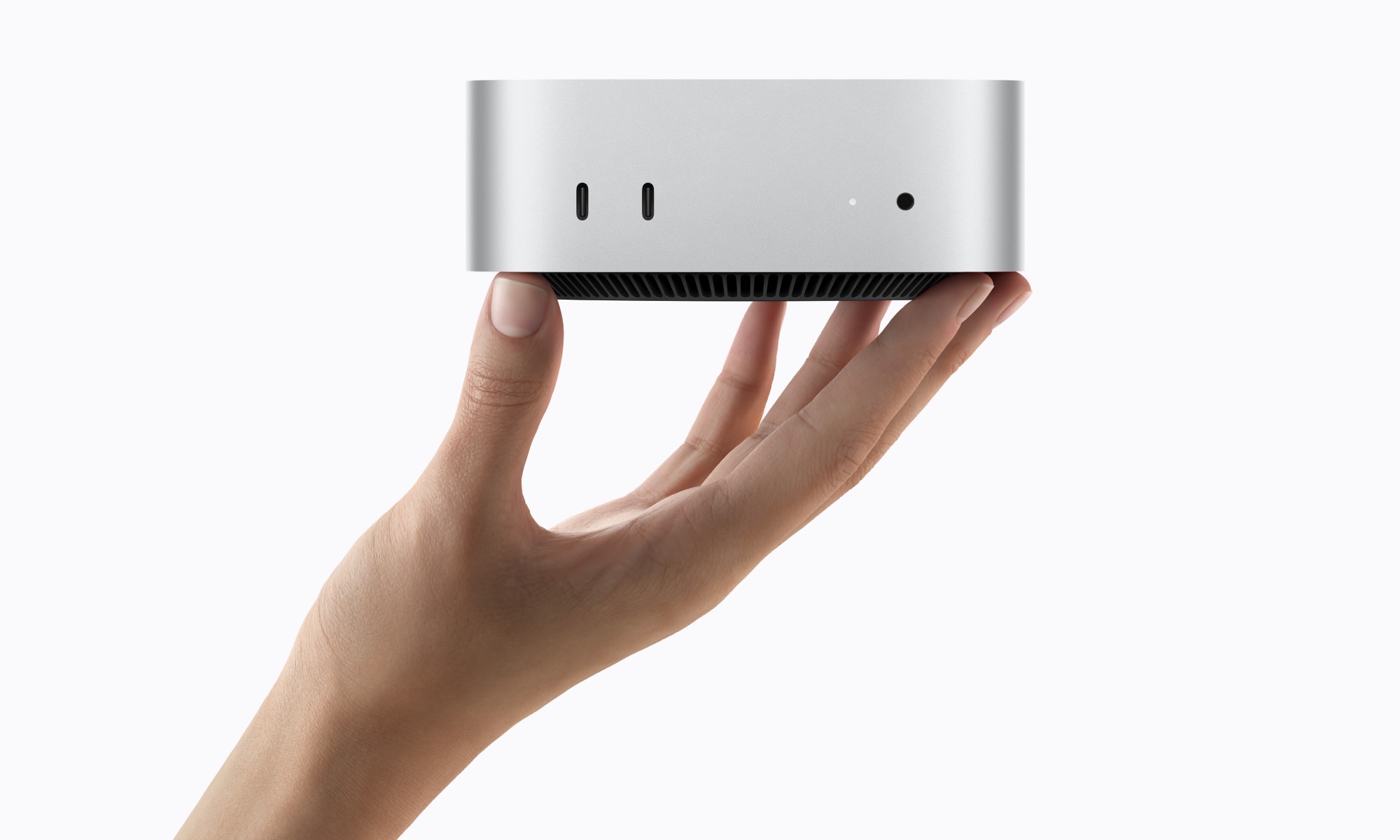
The new Mac mini retains the same compact design as its predecessor. As usual, not too much else has changed beyond the chip inside.
The M6 model does get a Wi-Fi 7 and Bluetooth 6 upgrade, making it very likely Apple is now using its own N1 chip, although it doesn’t mention that anywhere in the specs. The base model also comes with a 2.5 Gb Ethernet port, with the usual 10 GbE upgrade option available.
However, Apple is still limiting Thunderbolt 5 to the M5 Pro version; the M6 model comes with the same Thunderbolt 4 ports as its M4 predecessor.
The new chips do offer an additional memory tier, allowing the M6 Mac mini to be configured with 32 GB of RAM, and the M5 Pro with up to 64 GB of RAM.
The Mac Studio
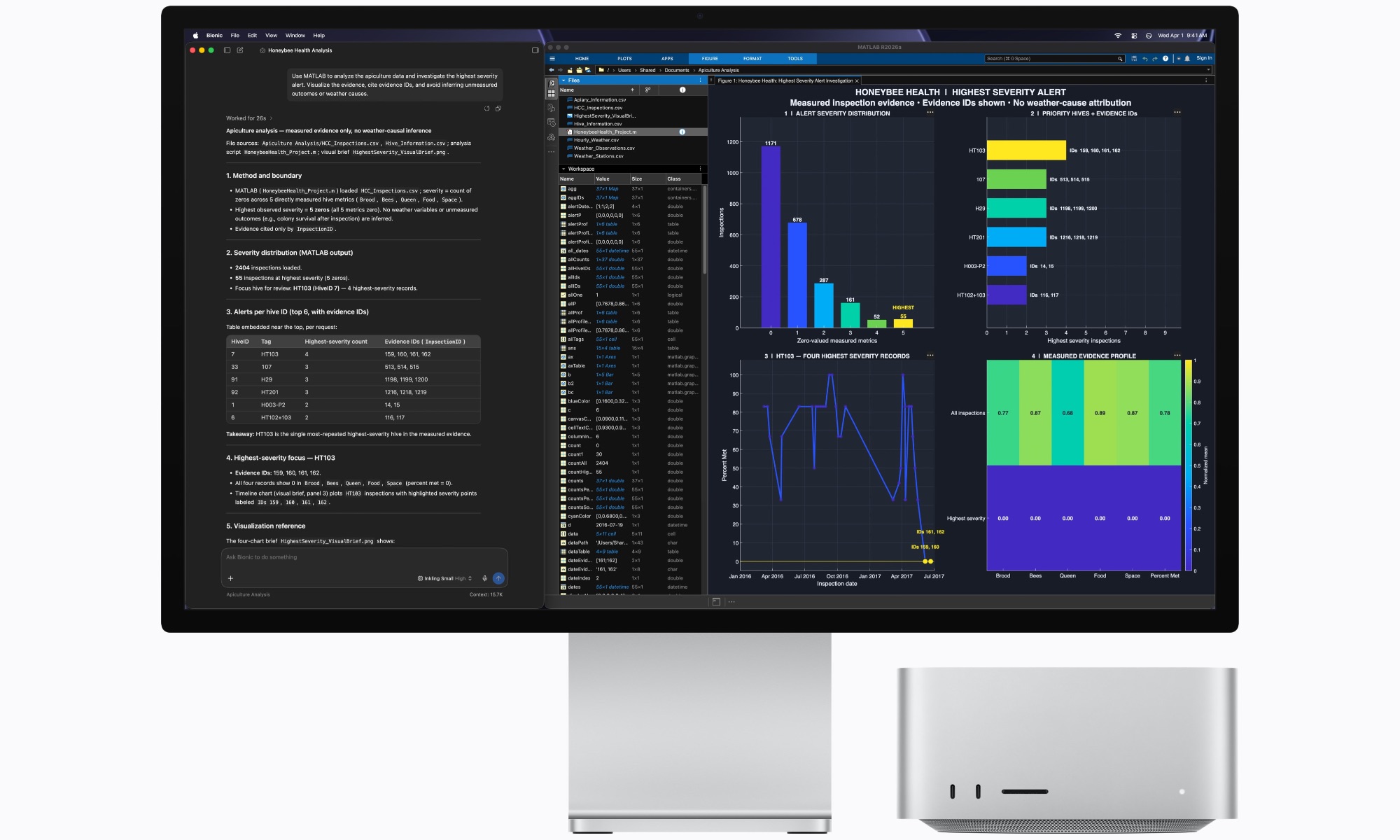
Along the same lines, the new Mac Studio is a direct successor to the M3 Ultra and M4 Pro versions, although the 512 GB RAM configuration returns in the new model after Apple discontinued it for the M3 Ultra model earlier this year.
Both versions get the same bump to Wi-Fi 7 and Bluetooth 6, and in this case Apple explicitly mentions the “Apple-designed N1 chip” as the reason for it.
Pricing and Availability
All four new Mac models will ship with macOS 27 Golden Gate. That’s because even though they’re going up for pre-order today, they aren’t going to be in stores until September 22.
The Mac mini with M6 starts at $899 for the M6 model with 16 GB of RAM and a 256 GB SSD. The M5 Pro version, which starts at 24 GB of RAM and a 512 GB SSD, costs $1,699. To max that out with a full 18-core CPU and 20-core GPU, 64 GB of RAM, and an 8TB SSD will set you back $6,799.
The Mac Studio with M5 Max starts at $2,499, while the M5 Ultra version starts at $5,499. However, that’s just for the “base” model. If you want to max one out with 256 GB of RAM and a 16 TB SSD, you’ll be paying a whopping $18,299, although Apple will happily lease you one for only $398.91 per month over 36 months.
That’s also not the peak of the mountain, as the 512 GB version isn’t available for pre-order yet. Apple says that’s coming in late October.






