Apple Drops the M6 into the 14-Inch MacBook Pro
Toggle Dark Mode
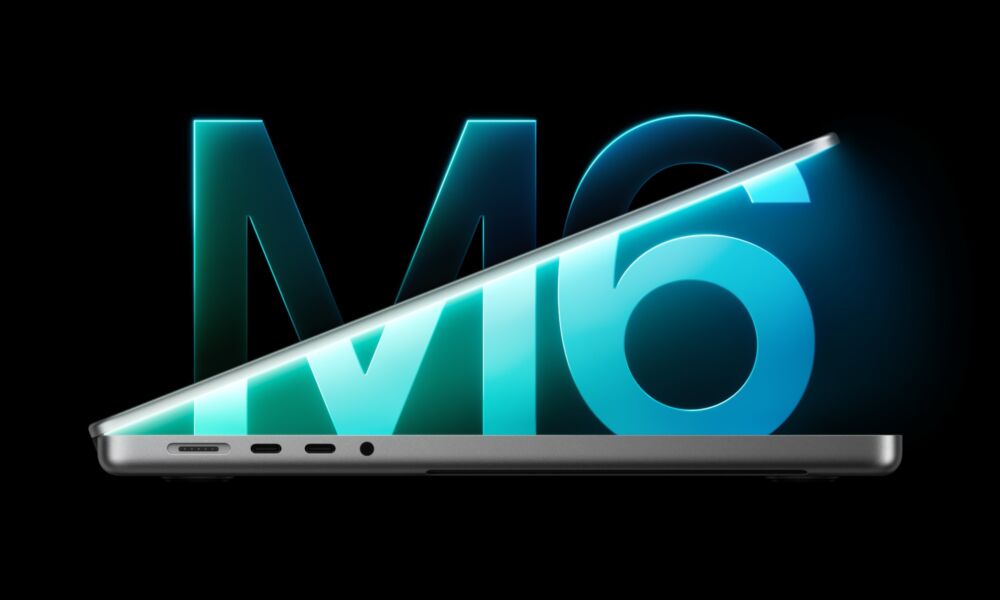
Alongside the new M6 iMac that Apple unveiled this morning, Apple is also bringing its latest silicon to the 14-inch MacBook Pro, offering “next-level AI capabilities” on its entry-level Pro laptop.
While we’re expecting Apple to show us the flagship MacBook Pro models tomorrow — complete with an OLED touchscreen if all the rumors are accurate — there’s every reason to believe those will be sticking with the M5 Pro and M5 Max chips, in much the same way the M6 Mac mini that debuted in August is using an M5 Pro for its higher-end configuration.

That’s because Apple is reportedly focusing on developing the Pro, Max, and Ultra chips for the M7 series, which is going to leave the M6 in a class by itself.
To that end, the M6 MacBook Pro will be sitting alone among its silicon generation, and it’s also not too surprising that this is purely a chip refresh — and arguably even less of one than we saw with the 24-inch iMac.
After all, that skipped last year’s M5 refresh, whereas today’s M6 MacBook Pro is the successor to the M5 MacBook Pro, which was the Mac that ushered in the M5 series last year (alongside the M5 iPad Pro and M5 Vision Pro).
There are no meaningful design or specification changes beyond the two new chips inside: the M6 and Apple’s in-house N1 wireless chip.
The M6 is the same chip found in Apple’s M6 Mac mini and 24-inch iMac, although Apple has tossed us an interesting curveball with this one. While all 14-inch MacBook Pro models will include the full number of cores — 12 CPU cores and 12 GPU cores — and the dual 16-core Neural Engine, the base 16 GB model actually only offers 153 GB/s of memory bandwidth. That’s equivalent to last year’s M5 MacBook Pro — and the 16 GB version of the M6 Mac mini, to be fair — but falls a bit shy of the 170 GB/s in the 24-inch iMac and the 24 GB and 32 GB MacBook Pro configurations.
Is that something anyone in the market for a base MacBook Pro is likely to notice? We’re going to say probably not, but it’s an interesting distinction that suggests Apple may be using a slightly different “binned” class of chip for this one. It’s also a notable contrast to the M6 iMac, where the base two-port model has two fewer CPU and GPU cores, but offers the same 170 GB/s memory bandwidth as the higher-end model.

“The 14-inch MacBook Pro is the pro laptop of choice for a wide range of users — from college students, to business professionals across every industry, to multidisciplinary creators doing it all on one device,” said Shelly Goldberg, Apple’s vice president of Hardware Engineering. “With the powerful M6 chip, we’re taking performance to the next level, with a boost in CPU speed and graphics and even more powerful capabilities for on-device AI. With its amazing battery life, remarkable Liquid Retina XDR display, and even faster connectivity, the new 14-inch MacBook Pro with M6 delivers a fantastic combination of performance, capability, and value.”
As usual, Apple is drawing comparisons to the original M1 MacBook Pro and Intel-based models, which shows precisely who it’s targeting with these upgrades. That’s fair, since there’s really zero point in moving from even an M4 MacBook Pro to the M6 model, much less last year’s M5.
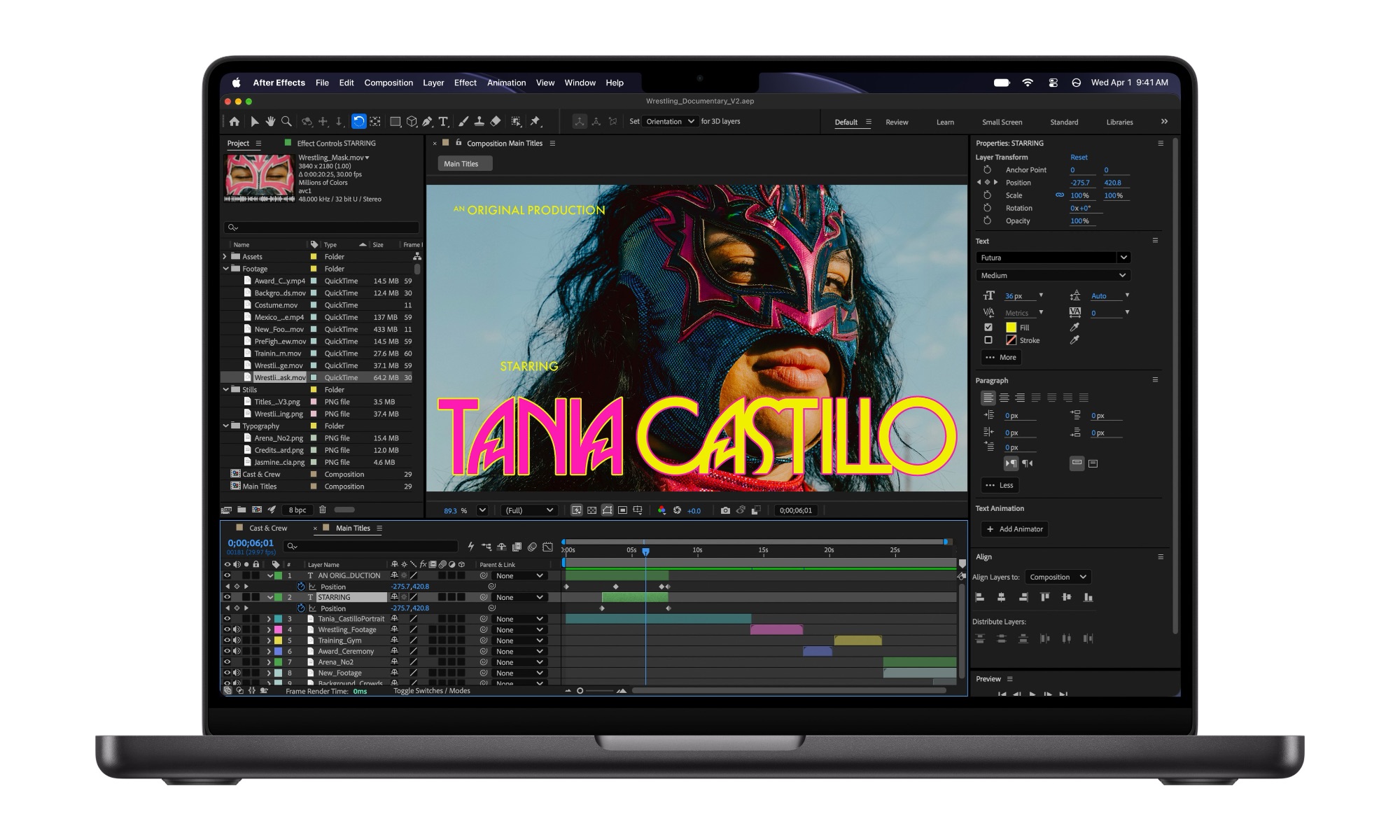
However, if you’re still toting an M1 MacBook Pro — the one that used the older 13-inch design — the M6 might convince you it’s finally time to pull the trigger. According to Apple, you can expect four more hours of battery life compared to the M1, and a staggering fourteen hours if you’re still holding on to an Intel MacBook Pro. You’ll also get 16 GB of memory to start with, which is much better for folks who realized far too late that 8 GB wasn’t quite enough.
Plus, if you’re coming from anything older than an M3 MacBook Pro, the other hardware upgrades are well worth it. The M1 and M2 generations of the entry-level model used the old 13-inch MacBook Pro design from the Intel days.
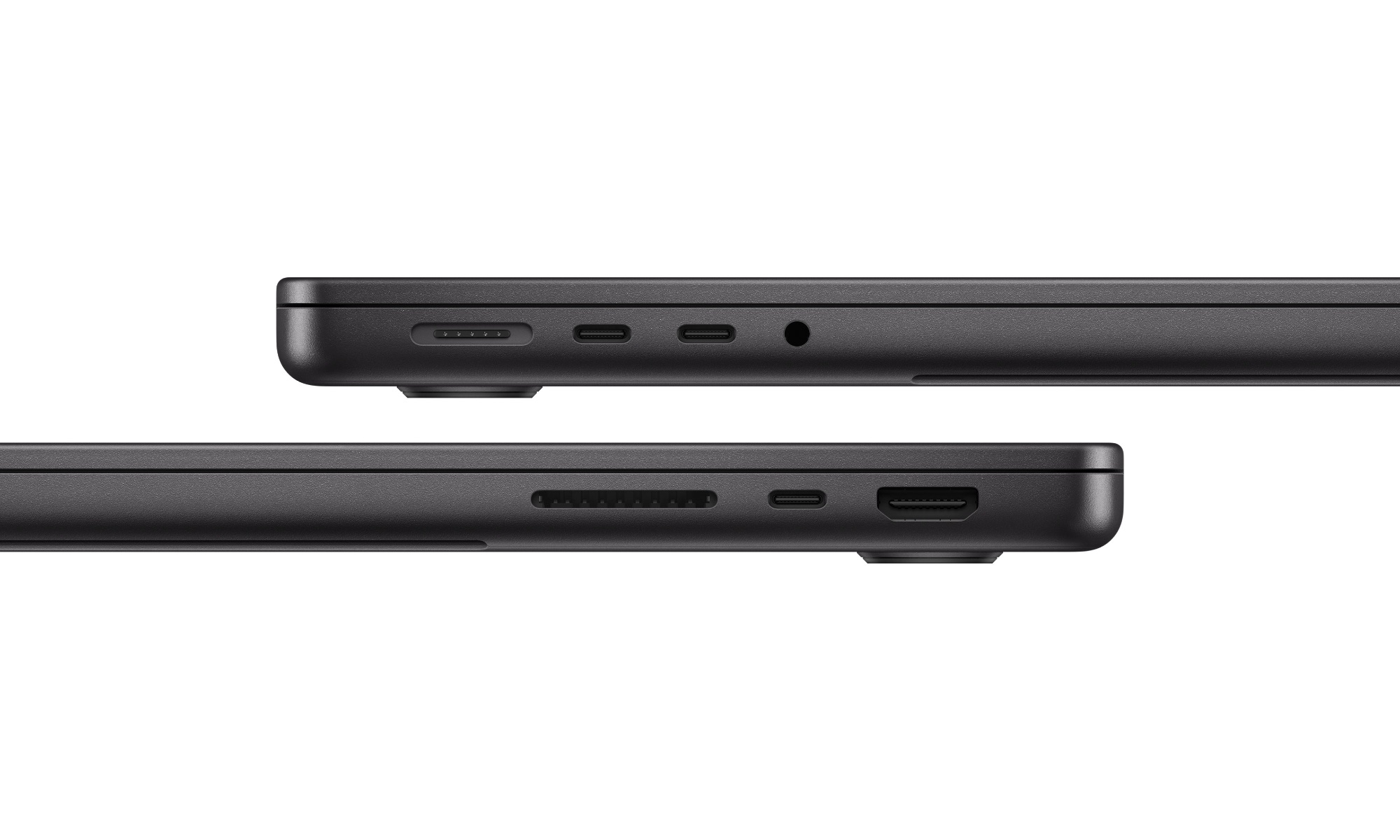
It wasn’t until late 2023 when Apple finally brought its new flagship design to the base M-series MacBook Pro, giving it a 14-inch Liquid Retina XDR display, more physical ports, and a row of hardware function keys (which makes it a tiny bit ironic that today is the 10th anniversary of the Touch Bar).
The new N1 wireless chip also delivers another upgrade that some folks have been waiting for, bringing Wi-Fi 7, Bluetooth 6, and Thread support to the entry-level MacBook Pro. While the N1 chip debuted in Apple’s iPhone 17 lineup last year, it oddly skipped the M5 MacBook Pro, despite coming to the M5 iPad Pro that was released the very same day. Apple has rectified that in this year’s model.
The 14-inch MacBook Pro starts at $1,999 for the 16 GB model with 1 TB of storage, and will be up for preorder tomorrow in 35 countries and regions. It’s slated to arrive in Apple Stores on Friday, November 6.