Apple Replacing iPhone 18 Pro Max Units Broken by AT&T Cellular Bug
Toggle Dark Mode
Last week, we shared reports that a number of iPhone 18 Pro Max users were encountering serious connectivity issues on AT&T. Now, it turns out that the problem is indeed a hardware issue — and it’s a weird one.
Not long after MacRumors received word from an AT&T spokesperson that it was “working with Apple” to resolve any remaining issues, Apple itself reached out to 9to5Mac with its own statement, confirming that a combination of iOS 27.0.1 and a carrier settings update is intended to proactively protect against the issue, while adding that they won’t fix it for anyone who has already lost connectivity.
We have identified an issue affecting a small number of iPhone 18 Pro Max users on the AT&T network that may cause a device to lose service and be unable to make calls. We released iOS 27.0.1 earlier this week and strongly encourage all iPhone 18 Pro Max users to update now, and are also issuing a carrier settings update today. These updates together are meant to help prevent this issue from occurring.
Apple, in a statement to 9to5Mac
That aligns with some insider info a Redditor shared in r/iphone18pro from a family member who is a “director level” AT&T employee. An internal email had reportedly acknowledged the issue, while noting that the iOS 27.0.1 update wasn’t intended for those experiencing connectivity problems, but rather to “help mitigate future impacts” for those who “have not experienced any issues.”
As Chance Miller notes at 9to5Mac, the software updates will not restore service for those devices that have already lost it:
Apple says that iPhone 18 Pro Max users who have already lost service will need a hardware replacement. Those users should contact Apple Support or AT&T, or visit an Apple Store or AT&T location.
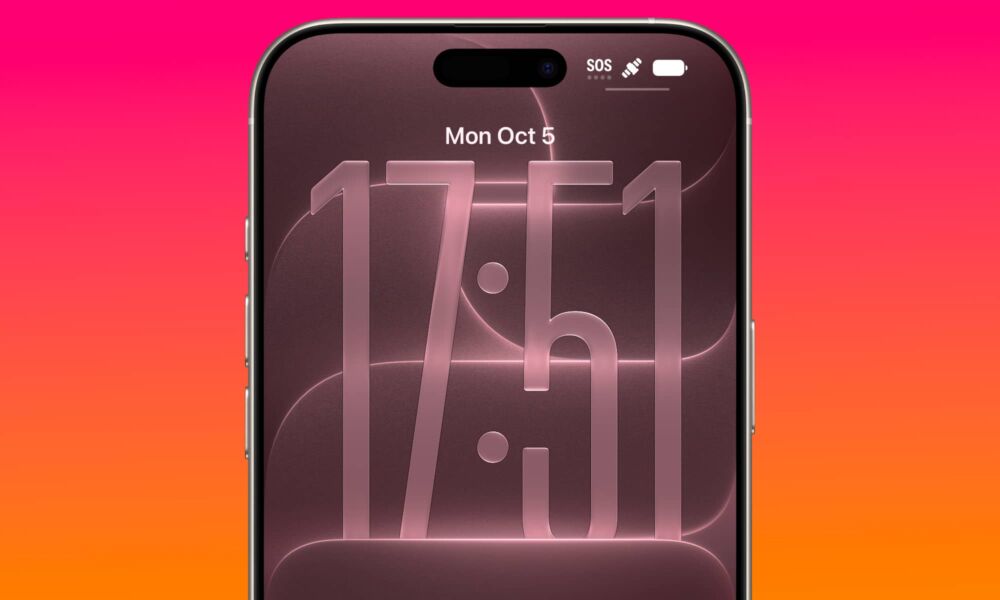
The problem doesn’t appear to just cause intermittent connectivity issues on AT&T, but rather results in a scenario where users can’t connect to the carrier’s network at all for calls, texts, or data. The users instead see “SOS” in their status bar — an indicator that’s typically shown when an iPhone has a cellular signal on one or more carriers where it hasn’t been provisioned.
This most commonly occurs when you’re in range of networks belonging to other carriers (e.g., an AT&T user outside of the range of an AT&T tower but within range of T-Mobile or Verizon towers). The extent of overlapping cellular coverage in the United States makes an “SOS” indicator pretty rare, although it has happened during major outages.

The SOS status is intended to indicate that emergency calls (e.g., to 911) can still be made, as per FCC regulations, which require 911 to be accessible even on devices with no plan at all. That appears to be the situation some AT&T users have effectively found themselves in with their new iPhone 18 Pro Max. Many folks report that it’s not provisioning an eSIM in the first place, although that might be part of the broader connectivity issue. Either way, the affected devices aren’t properly authenticating with the AT&T network.
Why this is happening is something only Apple and AT&T know for certain. While it’s exceedingly odd that the issue is isolated to the iPhone 18 Pro Max (and absent from the standard iPhone 18 Pro), it’s also not a universal problem. The singling out of the iPhone 18 Pro Max suggests a bug tied to the Qualcomm X85 modem, which is used exclusively in the US model. The iPhone 18 Pro — and both models sold internationally — rely on Apple’s in-house C2 modem.
What’s more fascinating is that the iOS 27.0.1 fix and carrier settings update will supposedly prevent the problem from becoming more widespread, but can’t do anything to fix the iPhone models where it’s already happened. As little more than an educated guess, this would seem to indicate that something is corrupting the eSIM provisioning in a way that can’t be easily undone — at least not through standard software updates.
Whether Apple has a software-level way of fixing this in its own diagnostic labs is another question, but it doesn’t change the fact that the official answer is to bring the affected devices back to Apple to get the hardware replaced. While that doesn’t seem to have fixed the problem for users who already reported doing so early last week, this was also before iOS 27.0.1 arrived, so it’s possible the solution is the combination of a replacement iPhone and the proper software patch.
As John Gruber points out, there’s also no word on whether this problem explicitly applies to direct AT&T customers, or if customers of MVNOs who use AT&T’s network will also be impacted. We’ve seen no reports of the latter yet, and if the problem is related to eSIM provisioning, it’s entirely possible it could be isolated to AT&T, but that’s just speculation at this point. We’ll keep you posted on any future developments.