Hell Freezes Over: Walmart Is Finally Accepting Apple Pay
Toggle Dark Mode
The last fortress against Apple Pay has finally crumbled. After holding out for more than a decade, Walmart finally announced today that it plans to embrace Apple Pay and other contactless payment platforms.
It’s been a long time coming, and it’s all the more bizarre when you consider that Walmart Canada got with the program five years ago. Granted, it was still one of the most absurd holdouts in the entire Great White North — a country that was already eagerly embracing contactless payments when Steve Jobs launched the original iPhone — and it took the COVID-19 pandemic to force its hand.
Still, the Canadian rollout had many hoping the US would soon follow, but the Walmart mothership continued to stubbornly eschew contactless payments in any form.
Now, nearly twelve years after Apple Pay launched, Walmart has finally seen the light:
We want customers and members to have choice in how they pay, so they can check out in the way that works best for them. Now, beginning Aug. 24, we will be adding Tap to Pay to our payment options at select Walmart stores and Sam’s Club locations, with plans to roll it out to all U.S. stores and clubs by the end of 2026 and to fuel stations by mid-2027.
To be fair, many retailers were wary of the technology in 2015. Apple CEO Tim Cook proclaimed that it would “be the year of Apple Pay,” claiming that half of the top 100 merchants planned to accept the new technology that very year. However, when Reuters conducted its own straw poll, it found a lot more skepticism than Apple wanted anyone to believe.
Unlike Canada and most of Europe, the US banking system had been glacially slow to adopt new payment technologies. Contactless payments were in their infancy even for physical cards. Apple Pay became the tail that wagged the dog.
By contrast, when Apple Pay finally launched in Canada in late 2015 (with Amex) and early 2016 (for Visa, Mastercard, and Interac), over 90 percent of retailers were already equipped to handle it. In fact, US credit and debit cards worked via Apple Pay in Canada long before it officially launched. Ironically, the limitation in Canada wasn’t the technology, it was the perception — I once had a cashier accuse me of trying to “hack her payment terminal” when I held my iPhone up to it, insisting on calling her manager to “verify” the transaction before letting me leave.
However, Walmart’s problem wasn’t mere caution. It was its desire to chart its own course. Eighteen of the top 100 US retailers on Apple’s list explicitly wanted nothing to do with Apple Pay because they believed they had a better idea.
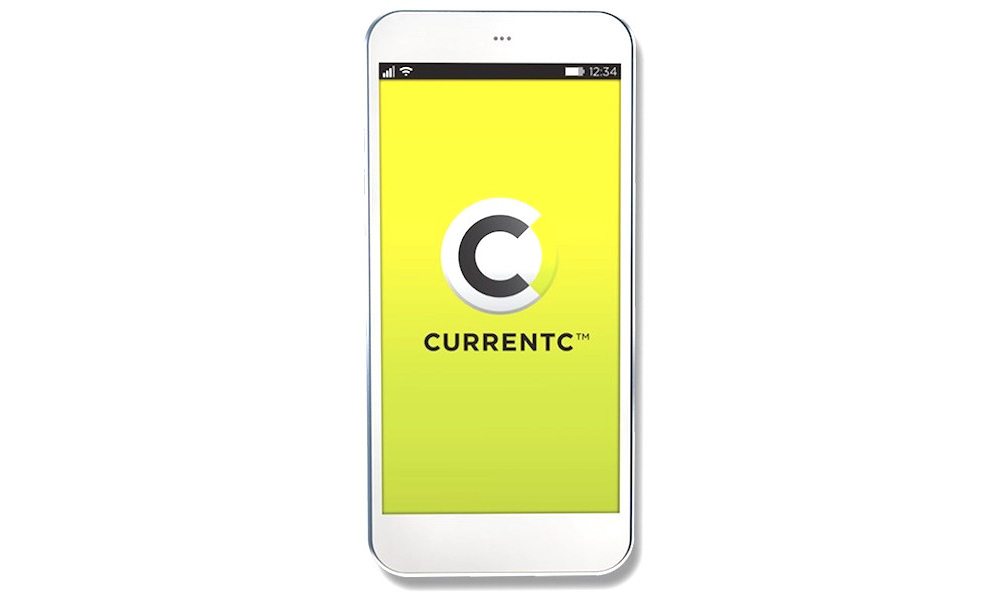
Dubbed “CurrentC,” it was a pet project of a consortium of retailers known as the Merchant Consumer Exchange (MCX), led by big names such as Walmart, Rite Aid, CVS, Best Buy, and Gap. CurrentC was designed to use QR codes rather than NFC, eliminating the need for complicated new payment terminals, as it could be made compatible with the same scanners already used in most stores.
Sadly, that wasn’t the only area in which it was starkly different from Apple Pay. While Apple’s solution effectively just replicated your credit or debit card on your iPhone or Apple Watch, making the entire transaction between you and your bank, CurrentC required you to link your bank account to the MCX consortium’s back-end systems, which would in turn handle the payment processing.
In case it’s not obvious, this was really just a naked attempt to hoover up as much customer data as they possibly could. CurrentC would allow all of the member companies to track purchasing habits, so Walmart would know what you bought at Best Buy, CVS, Gap, and elsewhere.
Some folks understandably balked at the privacy issues, but the vast majority simply couldn’t be bothered dealing with another app, not to mention the security risk of handing over their checking account details to a retail consortium.
While CurrentC ultimately failed and most of the MCX members jumped ship to embrace Apple Pay, Walmart stuck to its guns. Out of those ashes came Walmart Pay, which was basically the same idea, just 100 percent controlled by Walmart. It was also baked into the app that its loyal customers already used, which gave it some success among that demographic.
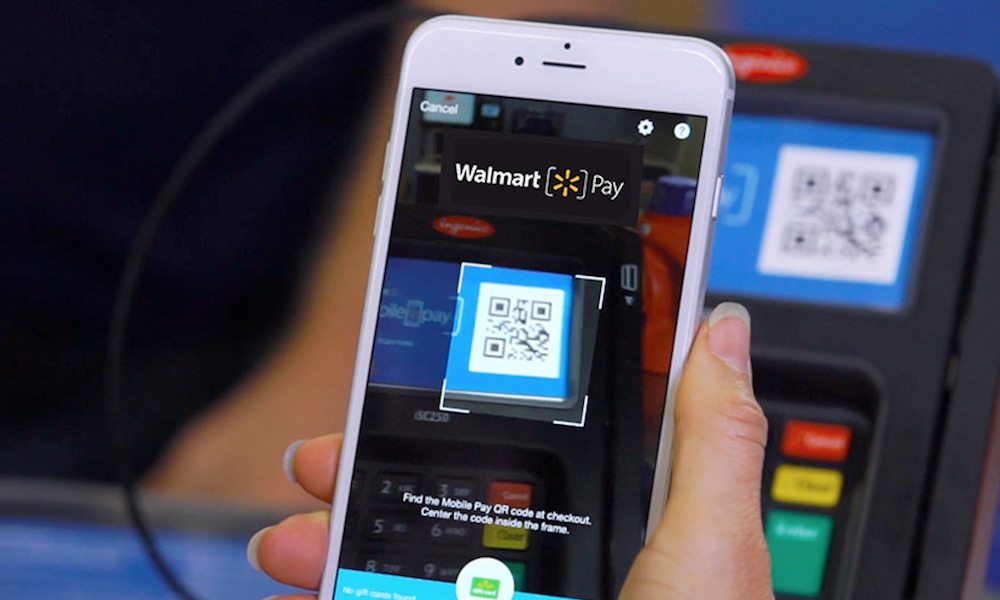
Walmart Pay never expanded beyond the US, which might explain why it was more willing to cave five years ago in its Canadian stores. After all, that was simply a technology upgrade, not the deprecation of a system that allowed it to track people’s spending habits. Still, replacing thousands of terminals across hundreds of stores is no small investment, so it took the pressure of the pandemic to get the retail giant to finally move — and it was probably time to start upgrading its aging terminals anyway.
To be clear, Walmart isn’t eliminating Walmart Pay. Today’s press release explicitly says Apple Pay and other contactless payments are “a great addition to the other payment options already offered like cash, credit card or Walmart Pay.” It presumably hopes the benefits of its own payment system — using the Walmart app to “to pay, view purchases and receipts, as well as access Walmart+ fuel savings” — will be enough to convince folks to continue using it. But it’s likely realized that its own payment platform has reached critical mass, and surrendered to the idea that it’s time to let the rest of its customers into the current decade.