Police License Plate Readers Might Soon Track Your AirPods, Too
Toggle Dark Mode
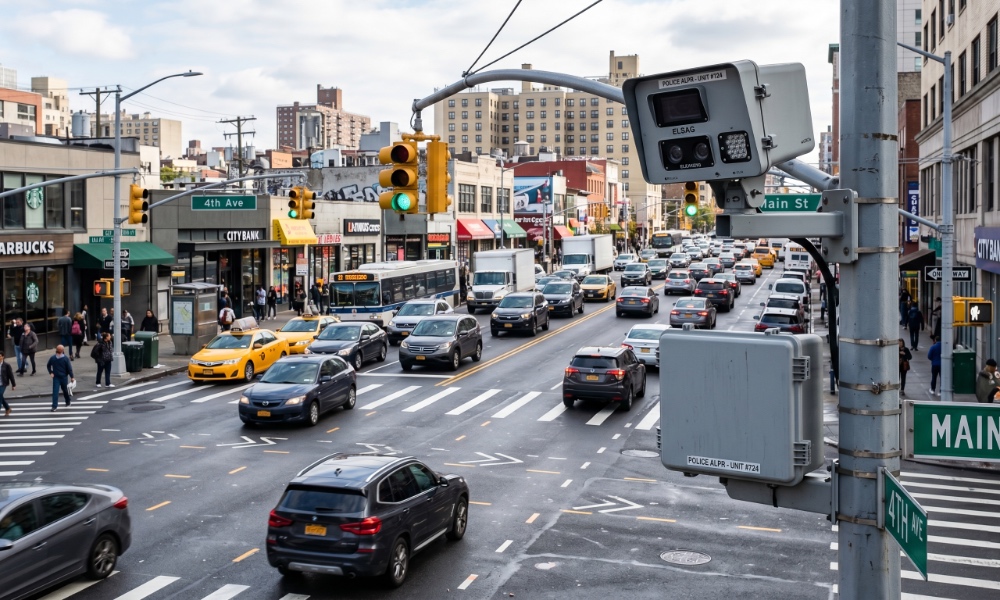
You’ve likely seen them numerous times while going to and from your job or during trips to the supermarket: those automatic license plate readers that seem to be at every intersection you pass through. According to a recent report, those readers may soon be used to wirelessly identify your Bluetooth-capable devices — like your iPhone, Apple Watch, or even your AirPods — allowing law enforcement to build a database of your movements.
Automatic License Plate Recognition (ALPR) systems are already commonly used around the globe. The license plate data collected by the systems are used by law enforcement to build databases that contain loads of information about you and your vehicle. As we reported early last year, Australian police even use a CarPlay app to identify nearby vehicles.
Motorola developed the technology that allowed the Western Australia Police Force to update its PSCore mobile app to assist with automatic number plate recognition (ANPR). Australian police vehicles fitted with this system can display information about nearby vehicles, supplying a police officer with the vehicle’s history and ownership.

Now, 404 Media reports that Leonardo US Cyber and Security Solutions is marketing technology it calls “SignalTrace,” which takes recognition technology to the next level. In the words of the company, SignalTrace “is designed to help law enforcement identify people of interest by the signals emitted from their electronic devices they travel with, such as fitness trackers, smartwatches, RFID tags, and local signals from their mobile phones.”
SignalTrace sensors collect data from passing Bluetooth and Wi-Fi signals, as well as RFID tags. The signals are categorized by device and are then linked to the data collected by ALPR cameras.
By collecting all of this data, the company’s technology can be used to not only track individuals, but also groups of people, all of whom may be in different vehicles but headed to the same destination. The system’s software tracks trends, allowing cops to determine if two iPhones (and their owners) are often spotted either traveling together or in the same location, say at a protest.
In November 2025, the Electronic Frontier Foundation claimed that over 50 federal, state, and local agencies tracked protest activities using previous license plate systems. Imagine what they could do with the information from SignalTrace.
This “can lead to the discovery of convoys and other movement and travel patterns,” according Leonardo’s official site. Leonardo also claims that SignalTrace is “designed to ensure it does not infringe on the rights of individuals. It captures device signals but does not decrypt or read the contents of the devices or their communications. In the same way, license plate readers capture plate numbers from vehicles, not driver information.”
The firm stresses that this data will only be used when requested by law enforcement. However, the site contains no mention of Leonardo requiring warrants before turning over any collected data. After all, they work for the cops.
Sure, no driver information is collected, other than the license plate of your car that is captured at the same time you passed through the intersection with your iPhone in your pocket. That license plate number can’t be used for much, right? Only to obtain your vehicle’s VIN (Vehicle Identification Number), your name and address, whether or not your vehicle is insured, and whether or not an electronic device was in use when you passed. I’m sure there’s plenty of info that can be harvested that slipped my mind.
While it’s true that there can be no expectation of privacy when you’re in a public place, this is not law enforcement collecting this data — it’s a private company collecting data about you.
I’m not trying to scare anyone, but that could be sold further down the line to advertisers or anyone else with an insatiable appetite for personal identification. Companies like Leonardo are also popular targets for hackers, leading to a data breach, and your information being sold on the dark web.
Now, the big question here is this: Do you have enough aluminum foil to wrap your entire vehicle?