Apple’s Claris Is Testing an App That Links Macs Into a Local AI Supercluster
 Adobe Stock
Toggle Dark Mode
Apple subsidiary Claris is currently testing an app called Harbor, which can easily turn one or more Apple silicon Macs into a private AI server that runs entirely on the local cluster.
While Harbor can work with a single Apple silicon Mac, it also supports using multiple Macs connected via Thunderbolt 5, allowing it to pool unified memory for larger models. Apple added RDMA over Thunderbolt 5 with the release of macOS Tahoe 26.2, which greatly sped up clustering.
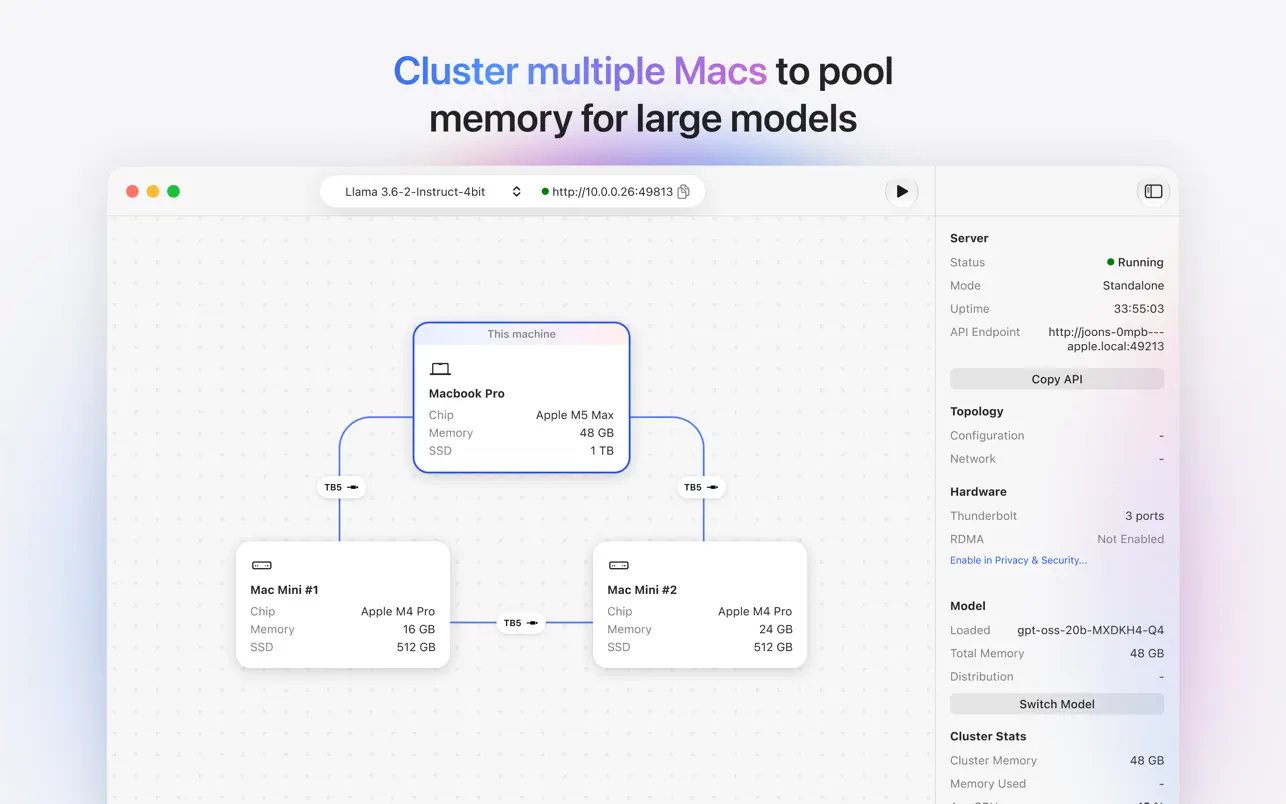
Harbor, formerly known as Fabric, is an app that creates a private AI inference server on a Mac, according to Aaronp613 on X. It’s capable of running open-weight models on the Mac itself, is said to be extremely user-friendly, and can be set up in minutes.
As noted by Mactrast, Claris’s preview page highlights how quickly a cluster can be spun up:
Harbor turns your Mac into a private AI inference server. Run open-weight models locally on Apple silicon — your data never leaves your hardware, and nothing reaches the cloud. Connect multiple Mac computers over Thunderbolt 5 to pool unified memory, enabling large models and higher concurrency than a single computer can handle alone.
Harbor automatically detects your devices over Thunderbolt 5 to form a cluster. Plug in, start, and you’re running — no manual configuration, no command line, no infrastructure expertise required.
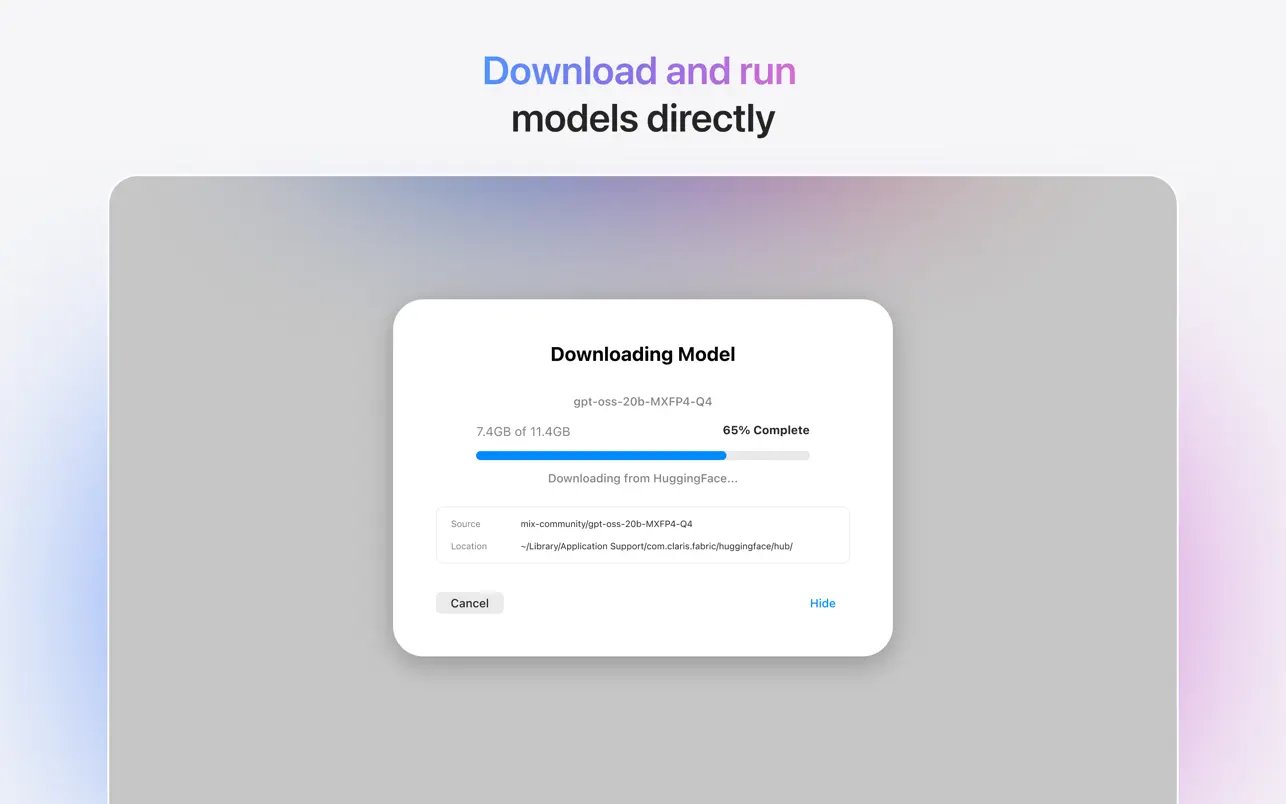
Open-weight models can be browsed, downloaded, and run directly from within the app, which handles model management so users can focus on their work rather than getting everything set up.
Harbor can be clustered for scale. By connecting two or more Thunderbolt 5-capable Mac computers, Harbor creates a single inference resource by pooling the Macs’ unified memory. This lets users run models that exceed any single computer’s capacity or serve more concurrent requests across a cluster.
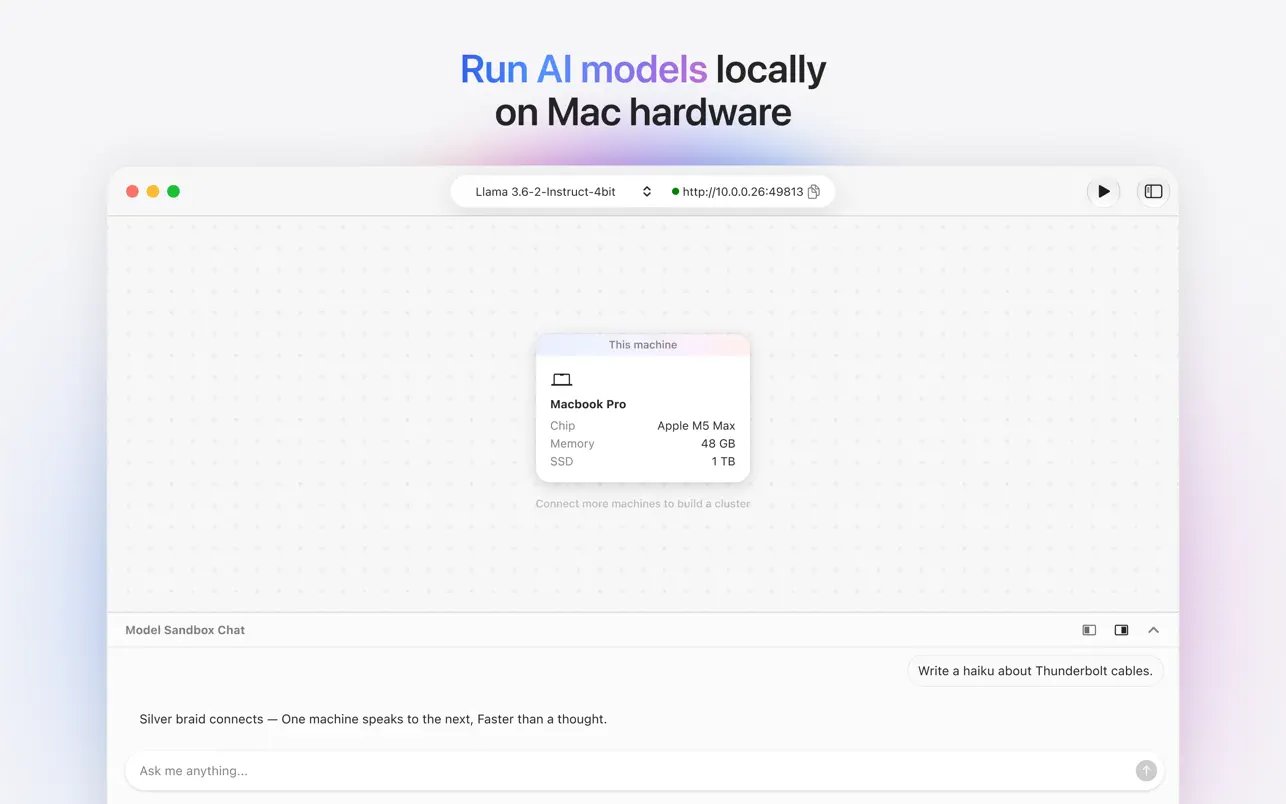
Harbor appears to be focused on improving the process of getting things set up and running, rather than on improving AI performance. While it may not make queries run faster, it’s a change that should make the entire system much easier to get going in the first place.
The new app should make it easier for developers looking to get into working with AI. And some developers simply do not want to deal with cloud-based services, nor do they want to hand over their data to OpenAI or Anthropic in exchange for using their services.
While a local LLM server eliminates that, it comes at the high financial cost of new hardware. Being able to daisy-chain Apple silicon Macs, while not cheap by any means, is still more economical than most AI hardware setups.
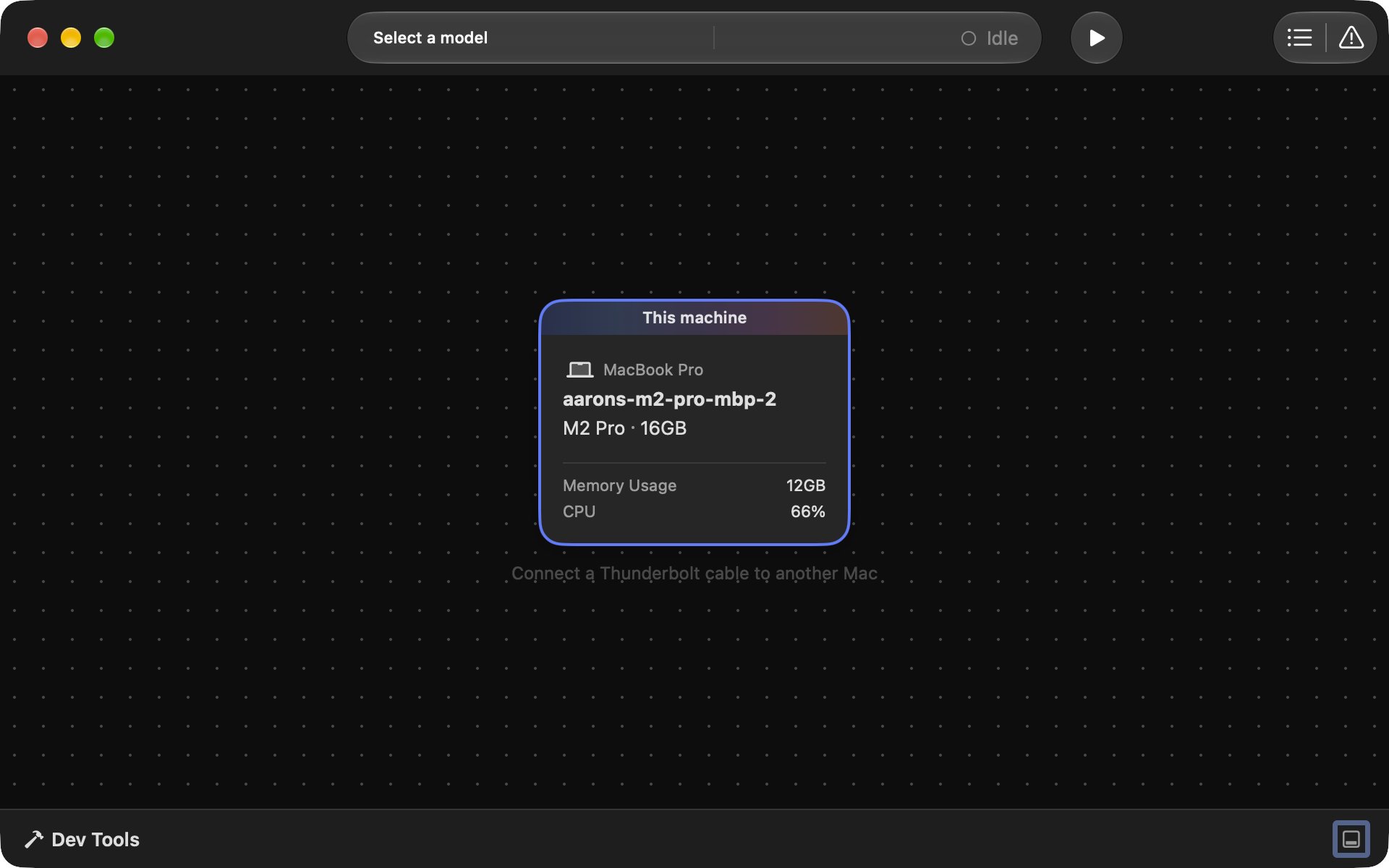
End users shouldn’t expect to have access to Harbor anytime soon, as it is currently in “private preview” under Apple’s Claris brand. While there had previously been an App Store listing, that listing has now been removed.
Apple’s Claris subsidiary, arguably best known for its database platform FileMaker, generally targets the business sector, so it isn’t clear how the Harbor app will be marketed and at what price. The sign-up page for Harbor asks for a company name, indicating a business focus.