Touch Comes to the MacBook Pro (And the Glowing Logo Is Back!)

Toggle Dark Mode
As expected, Apple has unveiled the first-ever touchscreen Mac in the form of a new “MacBook Pro with PROLED XDR Display” — and we’re not kidding about the name.
We’d never put much stake in the rumors of a “MacBook Ultra,” mostly because Apple already uses that name for its highest-end piece of silicon — a chip that remains exclusive to the Mac Studio and is almost certainly ill-suited for a laptop.

However, speculation on “MacBook Studio” got us thinking this morning, as it would have been either a good way to differentiate the traditional higher-end models from the entry-level MacBook Pro or a way to add another higher tier if Apple planned to keep the full MacBook Pro family around.
Well, it turns out that Apple has done something a bit stranger. Today’s new MacBook Pro models aren’t technically successors to the M5 Pro and M5 Max MacBook Pro that Apple released in March. Instead, they’re a cut above in price, with a more awkward name to match.
As of today, Apple still sells its full lineup of “MacBook Pro” models, offering a 14-inch MacBook Pro with an M6, and 14-inch and 16-inch models with the M5 Pro or M5 Max. These have not changed in any way, and they remain available just as they were two hours ago.
The new model is the “MacBook Pro with PROLED XDR Display,” which starts at a higher $2,899 price tag (versus $2,499 for the standard model in an equivalent configuration). As the name suggests, the difference is an OLED touchscreen — and that screen is pretty much the only thing that sets it apart.
That’s not to say this isn’t a massive upgrade, and the switch to the new screen addresses the other theory about this morning’s teaser — the glowing Apple logo has returned for the first time in a decade, alongside a redesigned thermal system that keeps warm air away from the display.
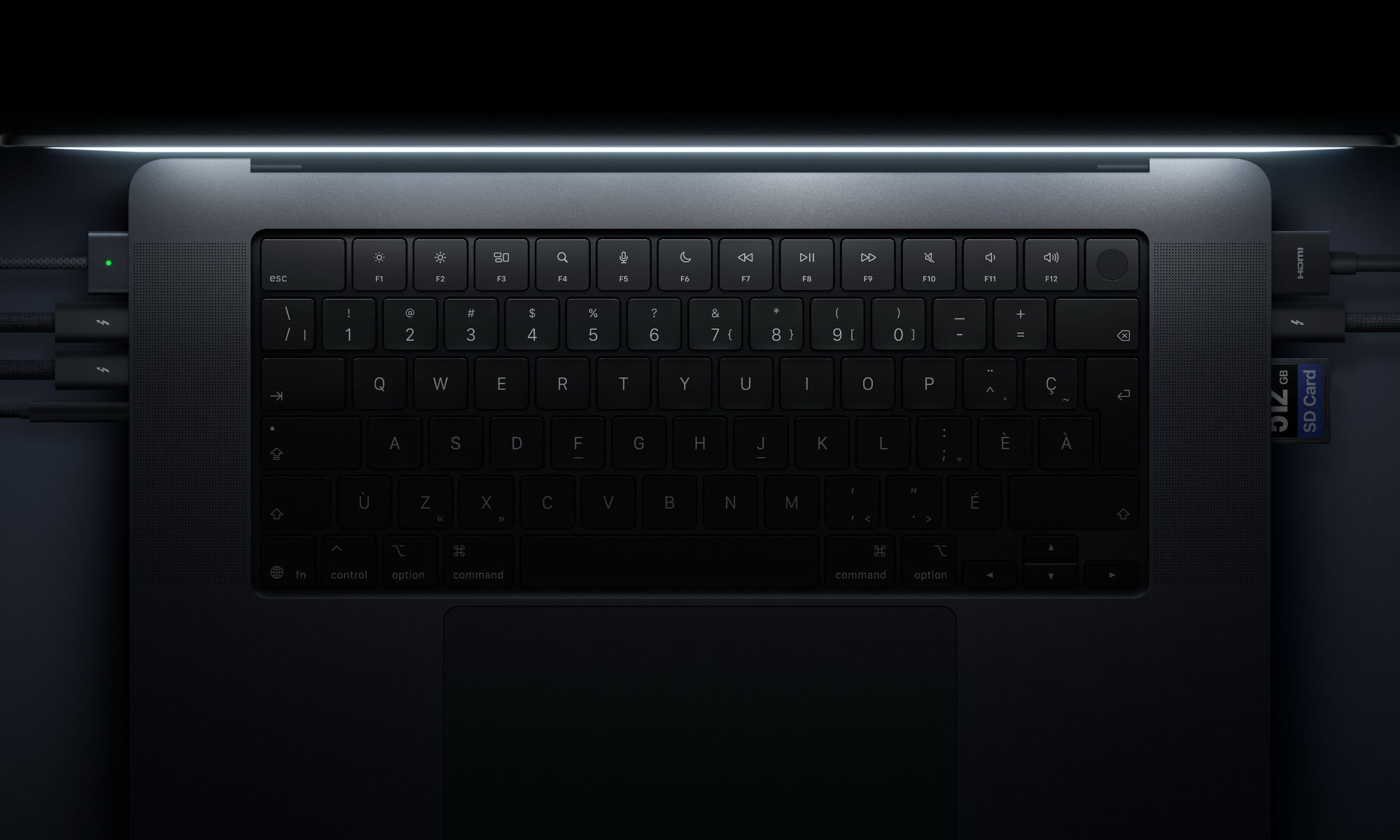
However, the new MacBook Pro models are nearly identical to their non-touch counterparts in nearly every other specification other than size and weight. The 14-inch MacBook Pro has shed half a pound, while the 16-inch model goes down by 0.7 pounds. Both have also slimmed down by about half a millimeter, and shaved 1–5 mm off their footprint in width and depth.
Reports have already suggested that Apple planned to skip the Pro and Max chips for the M6 generation, and today’s release proves it, as the new MacBook Pro models feature the same M5 Pro and M5 Max chips as those released in March, which means they also sport the same RAM and storage configuration options, although the M5 Max models are now configurable with a 16 TB SSD (for those who are willing to pay an extra $7,000).
The PROLED XDR Display
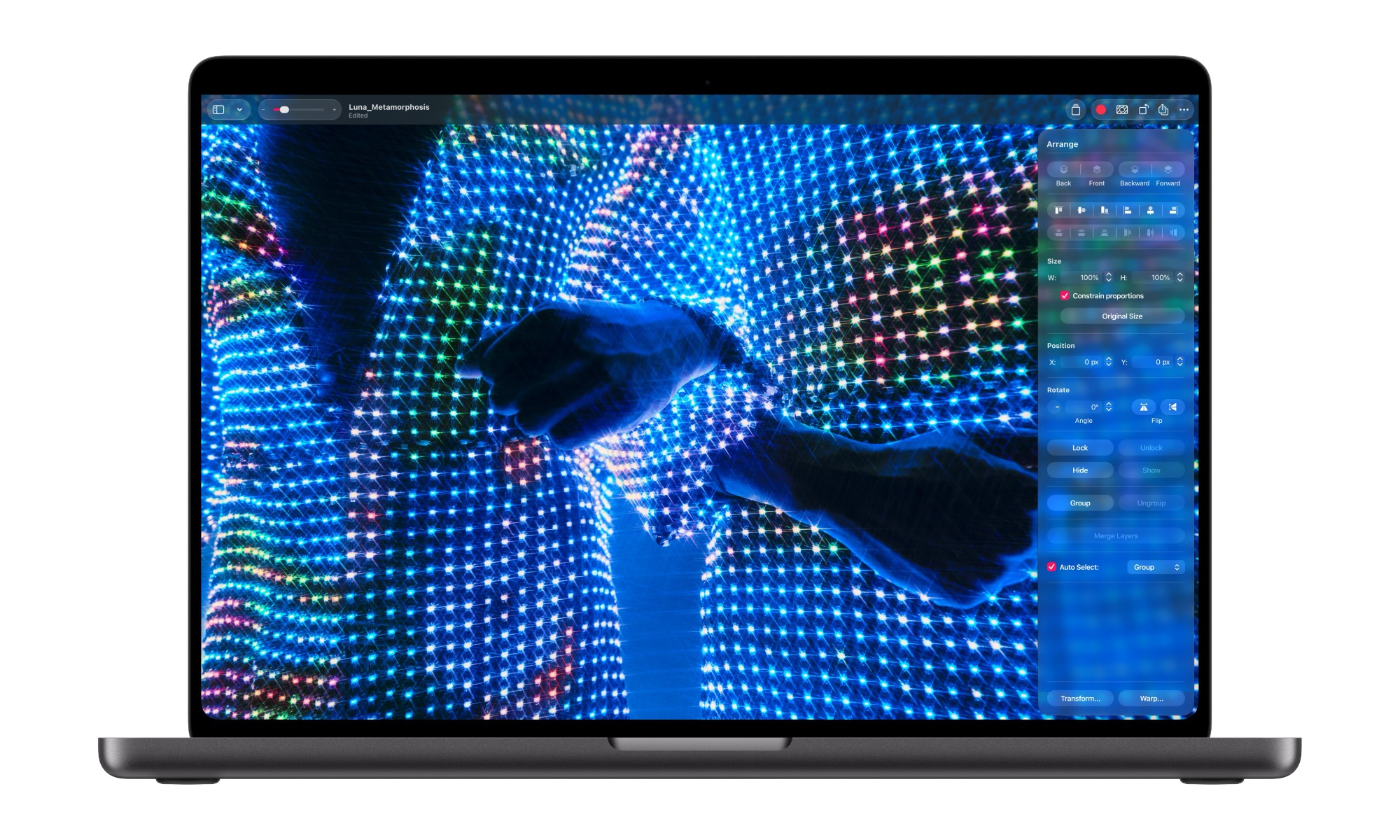
Nevertheless, the new display is a massive leap forward — in more ways than one.
Not only does this finally bring OLED to the MacBook family, but it’s the best OLED panel Apple has ever made, leveraging the tandem technology it debuted on the M4 iPad Pro two years ago. That means exceptional color reproduction and top-notch brightness and contrast.
On that note, the notch is also gone. Following in the footsteps of the iPhone, Apple has ditched the cutout that first came to the MacBook Pro in 2021 and replaced it with a Dynamic Island. There’s not much to say about this except that it works pretty much just like you’d expect, especially since it’s now paired with a full touchscreen.
That means you can tap on the Dynamic Island to access Spotlight or Siri AI, or expand any Live Activities that are showing up there. On reflection, it’s sort of understandable why Apple didn’t want to add the Dynamic Island before now; without a touchscreen, it would feel out of place.
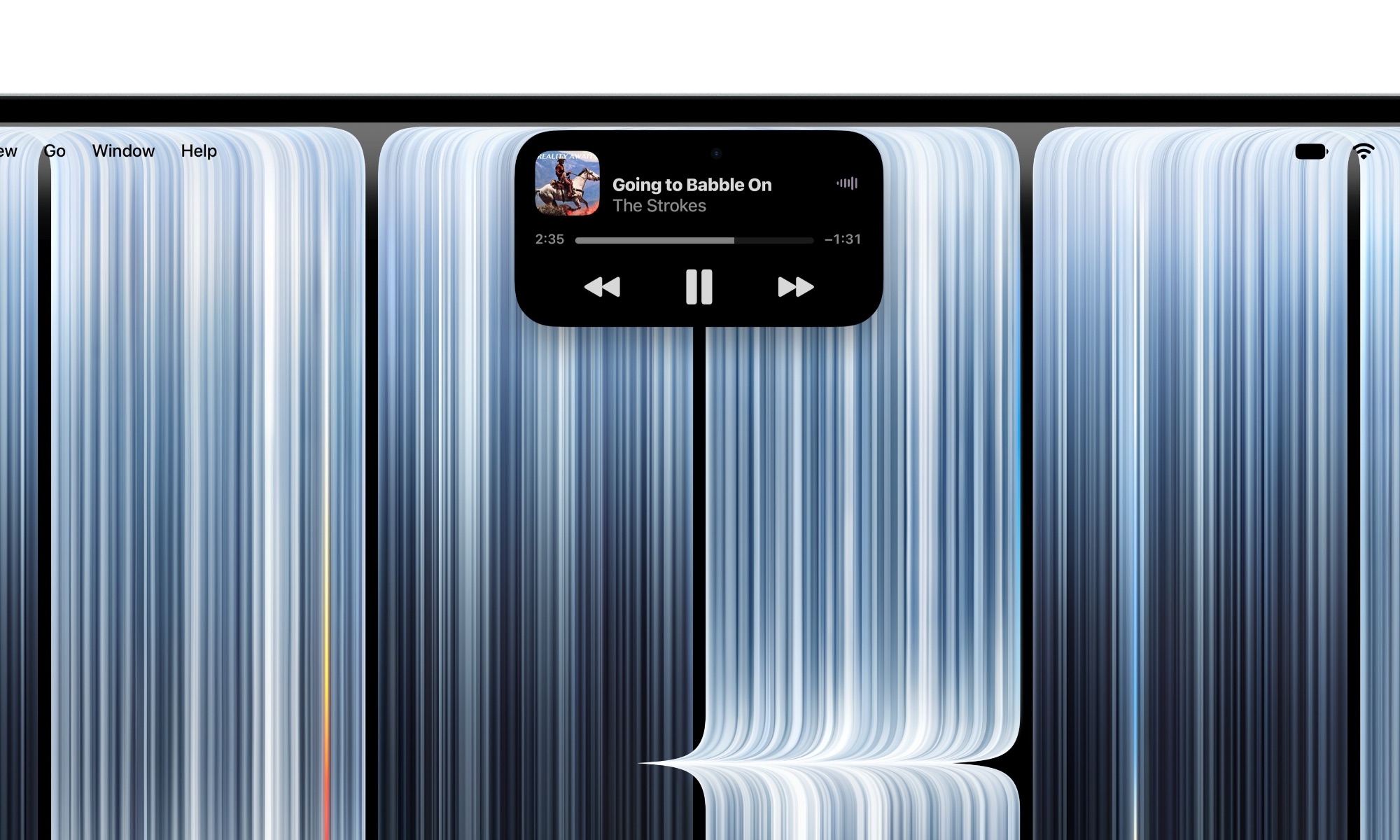
On the iPhone, the notch was just dead space. The Dynamic Island is something users expect to be able to interact with. Still, don’t expect the Dynamic Island to be accompanied by Face ID; like the iPhone Duo, Apple still uses Touch ID for authentication on the MacBook Pro.
“The new MacBook Pro with PROLED XDR Display is a monumental step forward for the Mac,” said Johny Srouji, Apple’s chief hardware officer. “PROLED XDR is the world’s best laptop display. It pairs state-of-the-art tandem OLED technology with advanced algorithms in our display engine to deliver the kind of visual fidelity pros have been dreaming of. And with the magic of Touch coming to MacBook Pro, combined with the game-changing performance of M5 Pro and M5 Max, we’ve created a whole new way for pros to interact with their content, taking their workflows to a completely new level. The new MacBook Pro is the result of the deep integration between Apple silicon, hardware, and software, and there’s simply nothing else like it.”
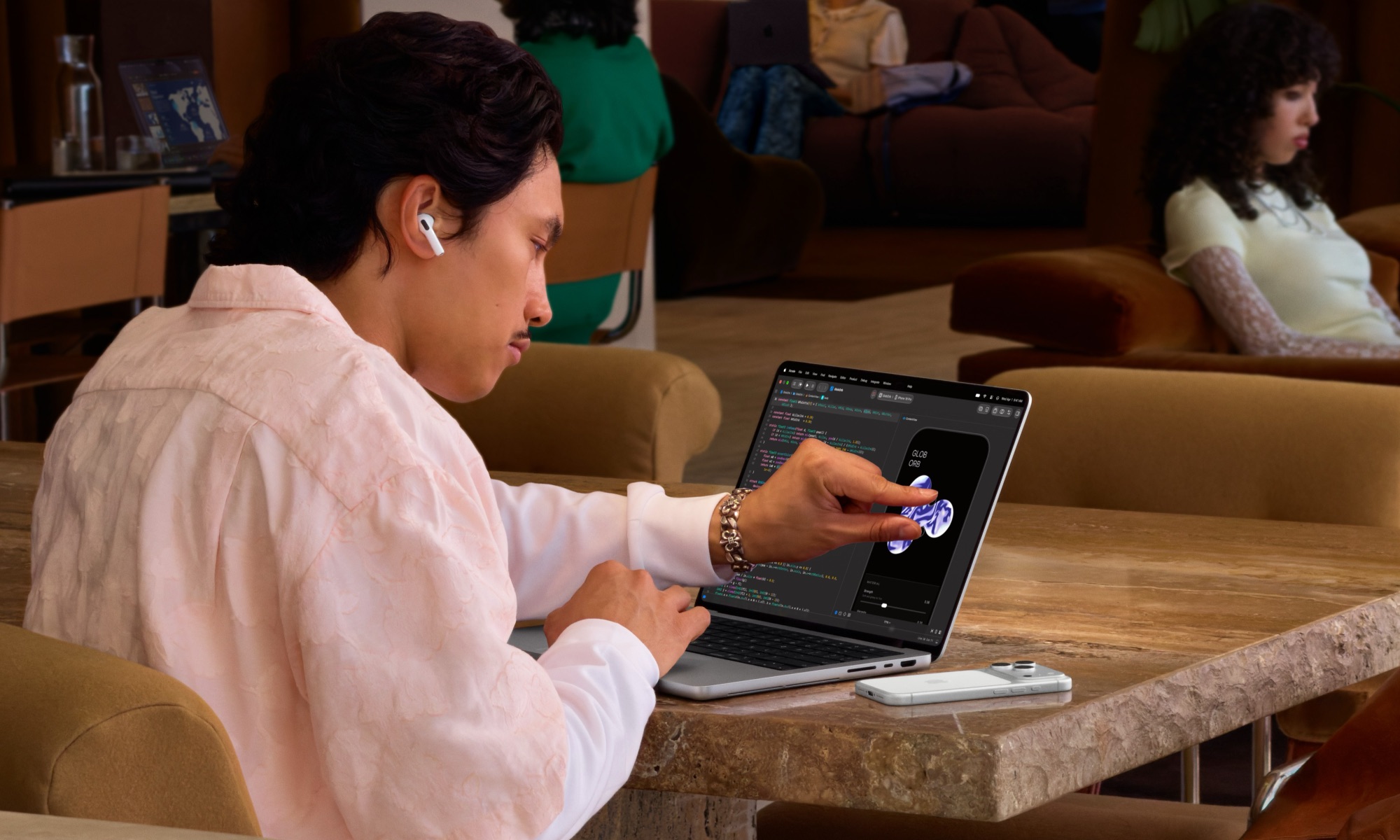
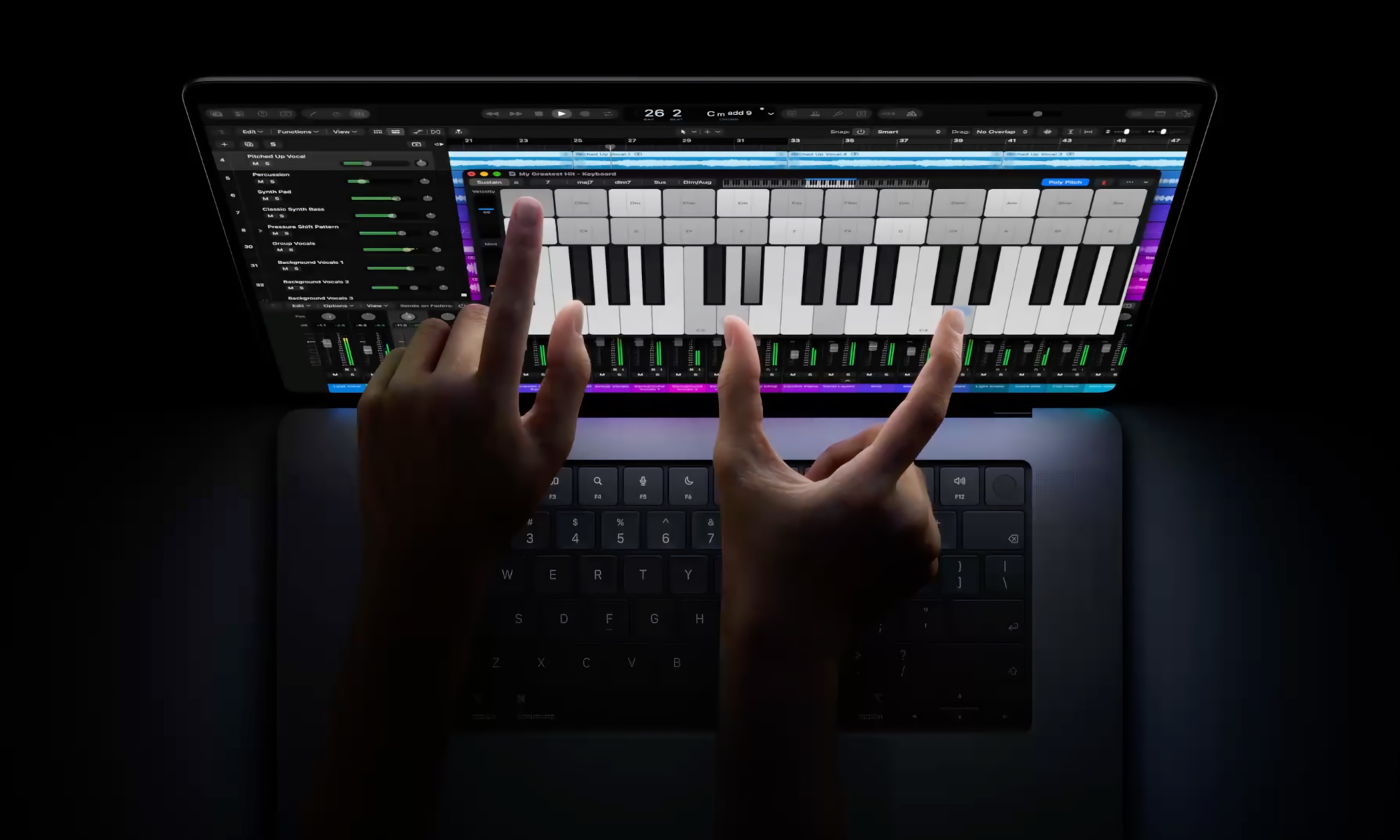
An OLED screen would have been a bonus by itself, especially the one Apple has put in here. But adding touchscreen capabilities really does bring the MacBook Pro to a whole new level. It may take a while for every third-party app to get on board with the notion, but Apple says it’s already optimized its Apple Creator Studio suite of apps for Touch, letting Pixelmator Pro users draw, paint, and select directly on the screen, or allowing musicians to play virtual software instruments in Logic Pro.
Unsurprisingly, that illustrates another key point of this display. It’s fully Multi-Touch, just like an iPad or iPhone. That works in multiple apps, but Logic Pro probably illustrates it best, where several fingers can be used to intuitively play a virtual keyboard or drum pad.
As one would expect from an OLED panel, the PROLED XDR display has a significantly higher contrast ratio and also boasts up to 2,000 nits of peak outdoor brightness for SDR and for HDR content. The wide color gamut also supports Adobe RGB in addition to P3, and Apple appears to have added “Advanced video stabilization” to the front camera, although it’s otherwise the same 12 MP Center Stage camera as before.
Despite the new display, battery life and charging speeds also appear to remain unchanged. Depending on whether you opt for an M5 Pro or an M5 Max (the latter of which clearly consumes more power), the 14-inch model gets up to 13 or 14 hours of wireless web surfing and up to 20 or 22 hours of video streaming, while the 16-inch MacBook Pro hits 16–17 hours of wireless web and 22–24 hours of video streaming.
Price and Availability
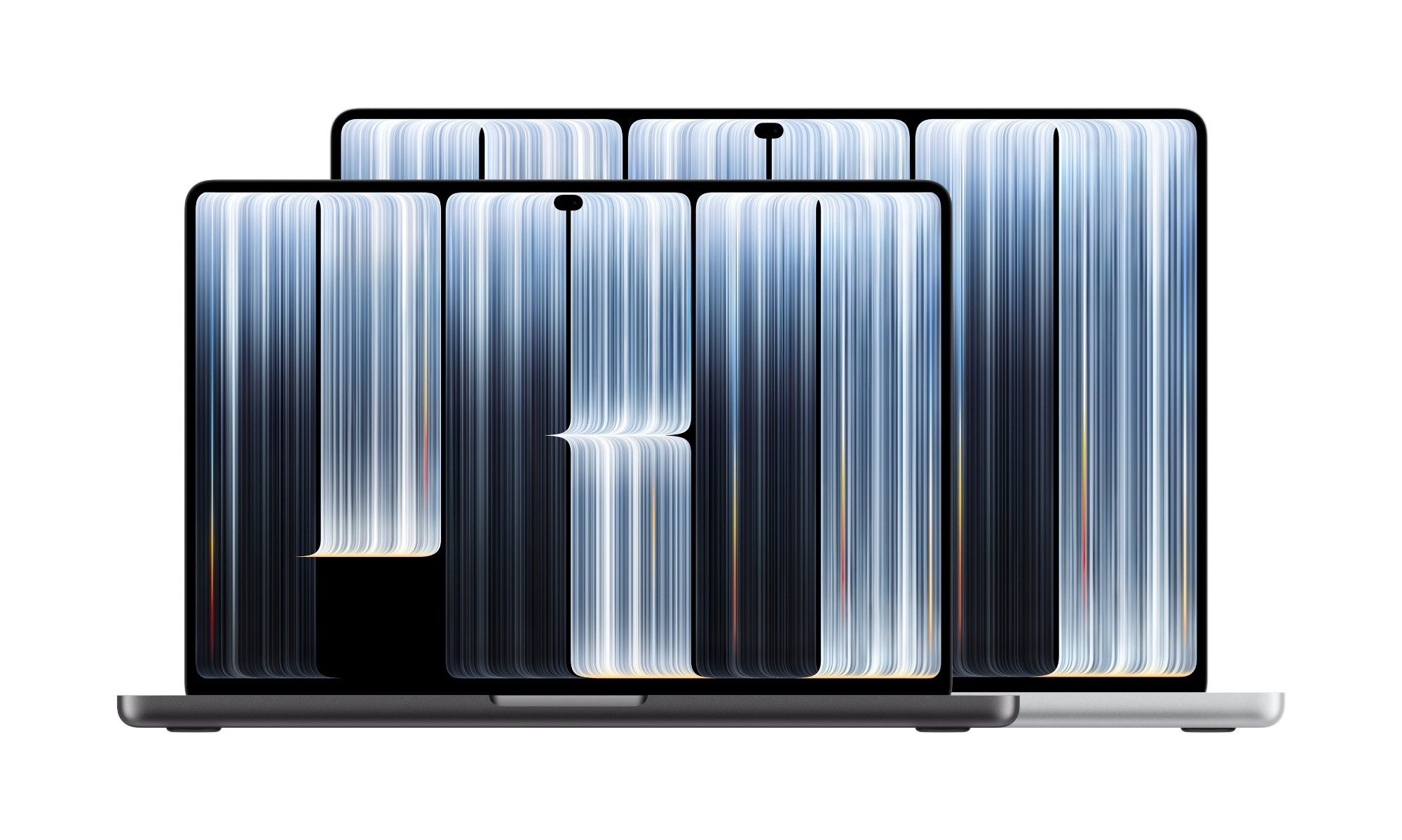
All of this comes with an even heftier price tag. Apple already hiked the prices of all of its Macs in June, adding $300 to the starting price of the MacBook Pro. While those remain static if you’re willing to stick with the non-OLED configurations (almost certainly the reason Apple is still selling those), the new MacBook Pro with PROLED XDR Display adds $400 more to that base price.
That puts the base 14-inch model at $2,899 for an M5 Pro configuration with 24 GB of RAM and a 1 TB SSD, or $3,399 for the same specs in a 16-inch model. If money is no object — or you have the kind of job that demands a top-of-the-line MacBook — then you can pay $14,549 for a maxed-out 16-inch MacBook Pro with PROLED XDR Display, which will give you an M5 Max with an 18-core CPU and 40-core GPU, 128 GB of RAM, and a 16 TB SSD.
The MacBook Pro with PROLED XDR Display is available for pre-order today and should begin arriving in customers’ hands — and on store shelves — on Friday, November 6.