Apple Hit with Record $5.7 Billion Verdict Over Taptic Engine
Toggle Dark Mode
Apple has just been ordered to pay $5.7 billion in damages to a San Diego-based firm after a jury found the Taptic Engine that’s long been used in the Apple Watch and iPhone infringed two of its patents.
The plaintiff in this case is Taction Technology, which develops technology behind premium headphones such as the Corsair HS60 Haptic stereo gaming headset, using what it dubs the “Taction Transporter” to deliver “bass that you can feel.”
In the process of developing this, Taction filed two patents, U.S. Patent No. 10,659,885 and 10,820,117, both of which describe “systems and methods for generating damped electromagnetically actuated planar motion for audio-frequency vibrations.”
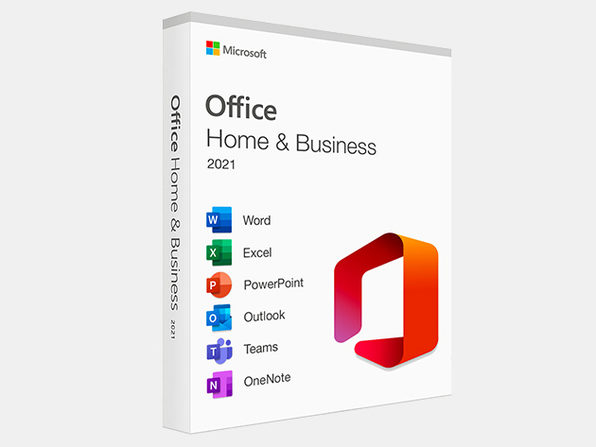
What’s interesting is that Apple started developing its own Taptic Engine long before Taction Technology even existed (the company was founded in 2017 by Dr. Silmon James Biggs, who developed the technology and has quite a few scholarly articles to his name). Needless to say, Taction doesn’t appear to be your run-of-the-mill patent troll.
In fact, it’s notable that while the seven jurors in the trial deliberated for two days before coming to their decision, they did not find that Apple willfully infringed Taction’s patents. Instead, what appears to have happened is that when Apple redesigned its Taptic Engine, it perhaps inadvertently developed technologies that were similar enough to Taction’s to be deemed an infringement.
It’s one of the less understood nuances of patent law that it’s entirely possible to infringe a patent entirely by accident. So many cases we hear about involve deliberate and willful infringement — and sometimes even accusations of trade secret theft — that it’s easy to forget that sometimes two teams of engineers can simply come up with the same ideas. When that happens, the spoils belong to whoever patents them first.
Of course, that’s the charitable interpretation. In its lawsuit, Taction claimed Apple very much willfully infringed its patents by reverse-engineering the technology from two of its now-defunct Kannon headsets, supplying order and shipping receipts as evidence.
Taction is obviously thrilled with the outcome, with its lead counsel, Lance Yang, telling CNBC that “we’re happy the jury found for Taction and vindicated its patent rights,” adding that it “was a long time coming” after five years of making its way through the courts.
However, Apple unsurprisingly disagrees with the ruling, telling CNBC it plans to appeal.
While we thank the jury for their consideration, we strongly disagree with today’s verdict and the damages awarded, which are entirely unsupported by the facts. Apple’s Taptic Engine is fundamentally different from Taction’s technology, which Taction’s own testing of Apple’s products confirmed during trial. Apple does not use Taction’s technology, and we will appeal.
Apple, in a statement to CNBC
While the $5.7 billion verdict could be the largest amount Apple is ever forced to pay — dwarfing its $4.5 billion Qualcomm settlement — it’s almost certain this number will go down once the dust settles. Even if Apple doesn’t fully prevail on appeal, the amounts could be reduced, or the two companies could reach a more modest out-of-court settlement.