Big in Japan: Apple Finally Opens the Walled Garden
 Toma Areno
Toggle Dark Mode
While things have been tense for Apple in Europe, the company is hoping for a much smoother performance in the East. As foreshadowed in the first iOS 26.2 betas last month, Apple has now opened up the iPhone to third-party app marketplaces in Japan, with some subtle but important differences from its earlier EU set list.
The doors didn’t stay open for long before someone walked through; AltStore PAL has already officially launched its Japanese marketplace, signaling that developers have been waiting in the wings for this release.

While the changes were inevitable thanks to Japan’s Mobile Software Competition Act (MSCA) that was already scheduled to go into effect today, what’s more interesting is that Apple has officially announced the changes with a press release highlighting the “new options for developers” while at the same time throwing some shade on the new Japanese legislation for the “privacy and security risks” the company says it creates.
Apple’s position isn’t much different from what it said when it announced the rollout of big changes to the App Store in Europe in January 2024. Apple has always promoted its own App Store as a safe and trusted place since it controls all the pieces. While it’s not entirely wrong about that, it also sometimes overemphasizes the dangers that exist outside of its walled garden.
The MSCA’s requirements for alternative app marketplaces and app payments open new avenues for malware, fraud and scams, and privacy and security risks. Apple has worked with Japanese regulators to introduce protections from new threats — including important safeguards for younger users. These protections include Notarization for iOS apps, an authorization process for app marketplaces, and requirements that help protect children from inappropriate content and scams.
Apple
Reading between the lines, it’s notable that Apple emphasizes how it’s “worked with Japanese regulators” to mitigate these risks. That’s undoubtedly an oblique swipe at the European Commission, which Apple has often accused of being intransigent.
Notarization Continues in Japan
Key to this is that it seems that iPhone apps on third-party app marketplaces in Japan will still face the same vetting by Apple as they do in the EU. When the company was effectively forced to allow app distribution outside of the App Store, it cooked up a new set of “notarization” requirements whereby apps would still need to pass inspection by Apple’s review team before being allowed on the company’s devices.
This notarization system is made possible because iPhones won’t run apps that haven’t been “signed,” and Apple holds all keys to the vaults where those signatures are stored (metaphorically speaking). Officially, Apple says this notarization is only to ensure that apps are free of viruses and malware, aren’t egregiously fraudulent, and don’t break any actual laws. Apple’s App Review Guidelines clearly indicate which sections apply to apps on all marketplaces (“Notarization Review Guidelines”) and which apply solely to apps distributed on the official App Store.
The broad distinctions here are reasonably clear: Apple has said it won’t play nanny for third-party app marketplaces, with App Store czar and Apple Fellow Phil Schiller noting “It will not be our decision whether those other marketplaces have the same terms and limitations” for what’s safe or appropriate. If a company wants to run an entire app marketplace dedicated to porn apps, Apple won’t stop it — and arguably can’t under the new rules in the EU and Japan.
However, those lines have become blurred in the past, and Apple’s frequent silence when rejecting or removing apps can sometimes leave folks wondering if the guidelines are truly being applied transparently.
Japan Leads the EU From Behind
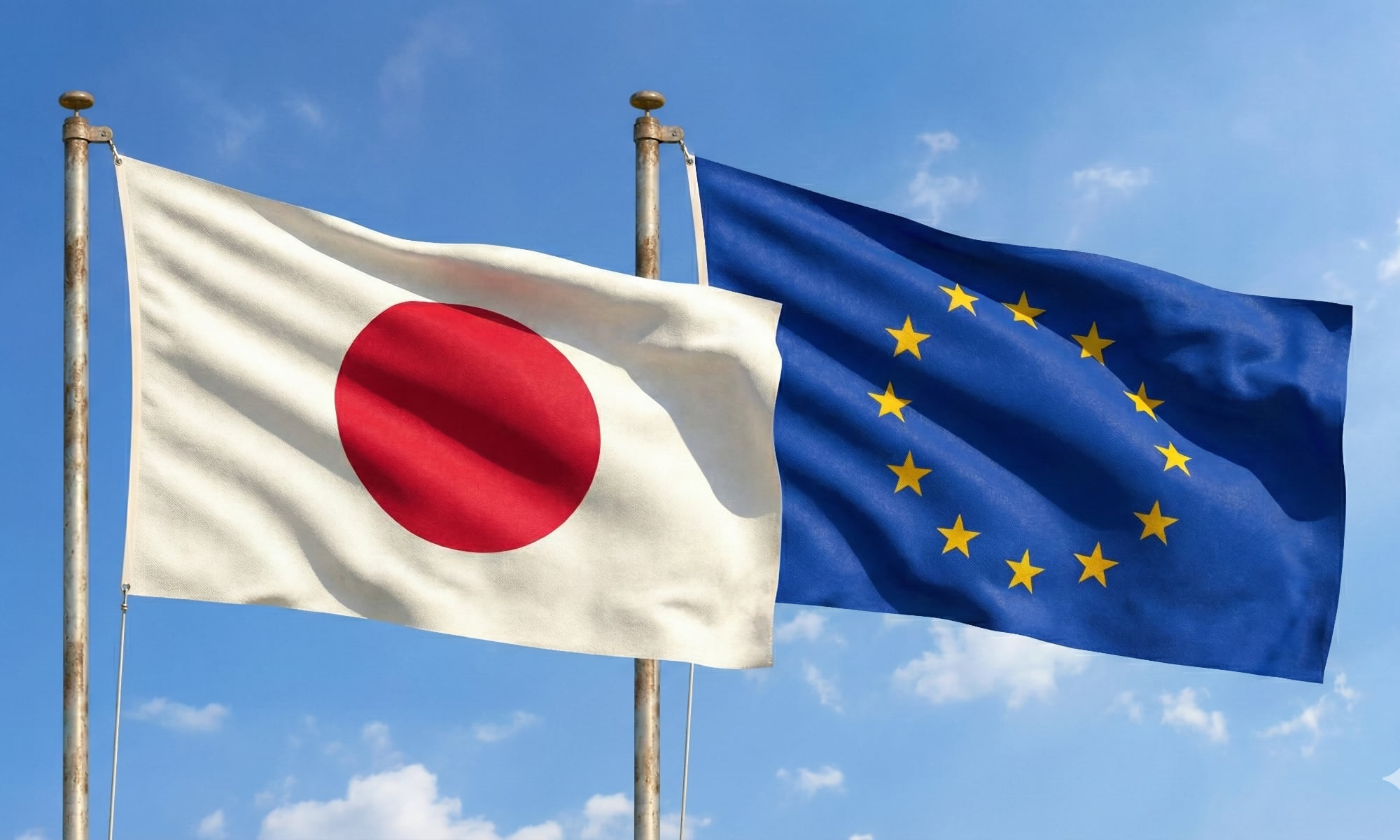
If the EU’s Digital Markets Act was a blunt instrument, Japan’s MSCA is a scalpel. By letting Europe take the first swing, Japanese regulators were able to craft a law that avoids the EU’s biggest pitfalls while still winning concessions Apple hasn’t granted anywhere else.
While the changes in Japan mirror the ones Apple made under the EU’s Digital Markets Act in spirit, there are some subtle differences in how they’re being implemented. Since Apple still disagrees with third-party app marketplaces in principle, it’s doing what regulators are requiring of it, but not much more.
For instance, apps in Japan can still only be distributed through alternative app marketplaces authorized by Apple. That’s how things began in Europe, but the DMA requirements ultimately forced Apple to move closer to true sideloading by letting developers offer apps for direct download from their websites. That’s still not quite as open as being able to download an app from just anywhere — developers can only offer their own apps on their own websites — but it’s still more freedom than iPhone users will have in Japan, which doesn’t mandate Web Distribution.
On the flip side, iOS 26.2 in Japan allows users to actually set a third-party marketplace as their system default, where they won’t feel like a second-class citizen.
The commission structures are also different, although this could also be the result of some hard-earned lessons on Apple’s part. When it launched its changes in the EU, Apple charged a Core Technology Fee (CTF) of 0.50 Euros for each first annual install of an app after the one millionth. That turned out to be untenable, especially since it also applied to free apps where developers could quickly go bankrupt if their app went viral.
Apple is now transitioning to a 5% Core Technology Commission in the EU on the sale of digital goods and services rather than a flat fee, so it’s not too surprising that Japan essentially skipped the EU’s homework phase. The percentages are slightly higher in Japan (21% vs 17% in the EU), but the underlying logic remains the same.
Perhaps the most significant difference in the Japanese MSCA is that Apple is allowed to require that developers keep its in-app purchasing (IAP) system available as a payment option. Users can’t be forced to use Apple’s IAP, but it must be offered alongside whatever third-party payment system developers implement — and it must be shown at least as prominently as the third-party option. Developers in the EU can opt out of this entirely.
Apple notes that the Japanese laws also allow for better child safety controls, which has left room for Apple to ban external payment links for kids apps and users under 13 years old. No such provisions exist in the DMA.
Japan’s MSCA also doesn’t extend as far beyond app distribution as the EU’s DMA, which requires total interoperability with third-party platforms and has prevented the rollout of several new features in the EU. By comparison, Japan only pushed Apple to swap out Siri for another voice assistant, but that’s pretty huge in its own way. For the first time, Japanese users will be able to hold down their iPhone’s side button and see ChatGPT or Gemini pop up instead of Siri. Those developers will need to update their apps to plug into the new framework, but it’s still a hardware-level concession Apple has yet to grant anywhere else.