Apple Lines Up Heavy AI Push for WWDC 2026 and CVPR
Toggle Dark Mode
Apple plans to focus on highlighting its on-device AI capabilities at next month’s Worldwide Developers Conference (WWDC 2026), presenting them as a competitive advantage. The company is also scheduled to present 14 AI research papers at the 2026 IEEE/CVF Conference on Computer Vision and Pattern Recognition in Denver next week, just ahead of its own conference.
WWDC 2026
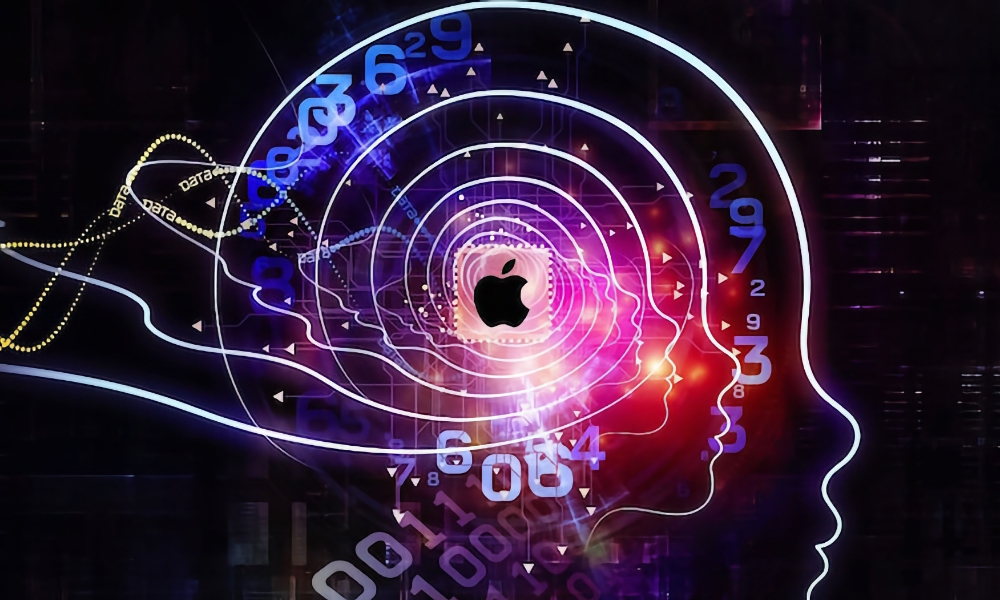
The Information reports that insiders are telling it the Cupertino company is planning to showcase how the Apple silicon chips used in the iPhone, iPad, Apple Watch, and Mac give it an edge by processing users’ AI queries directly on the devices. While Apple will admittedly use cloud-based processing for the most complex AI queries, the company will continue to position its on-device processing methods as a privacy win for users and a way to save costs over using massive data centers.
Apple will reportedly use a larger version of Google’s Gemini model to train a smaller version that will be capable of running locally on a user’s device. To assist it in its model-shrinking process, Apple is also said to be looking for acquisitions of AI startups, including Liquid AI, a Massachusetts startup focused on running AI locally on devices.
For queries requiring cloud processing, Apple has reportedly approved the use of Nvidia’s confidential compute technology within Google Cloud. This will allow it to ensure that data and AI models are encrypted during processing, which, while putting a modest hit on performance, will help ensure that users’ privacy remains protected.
When Apple announced Apple Intelligence at WWDC 2024, the company emphasized that all cloud queries would be processed only on Apple’s Private Cloud Compute (PCC) infrastructure, powered by Apple silicon. However, Apple has apparently run into issues getting Google’s full Gemini model to run on its own PCC servers. Nevertheless, The Information believes Apple is still planning to retain the “Private Cloud Compute” branding, despite the change in how cloud computing would be handled.
2026 IEEE/CVF Conference on Computer Vision and Pattern Recognition
Apple will also present 14 AI research papers during next week’s 2026 IEEE/CVF Conference on Computer Vision and Pattern Recognition in Denver, reports AppleInsider. The research papers will cover subjects ranging from spatial understanding to image generation to multimodal reasoning.
According to Apple’s published schedule, the company’s Colin Lea will kick things off with a June 3 keynote presentation titled “Generative AI for Sign Language (GenSign) Workshop.” This will be followed by four invited talks given by other Apple researchers and engineers over the first two days.
Apple employees Hsin-Ping (Cindy) Huang and Maggie Xiao will represent the company at the WiCV Mentorship Dinner on June 4 followed by multiple poster presentations at Apple’s CVPR booth, number 231, from June 5 through June 7.
The following Apple studies will be presented at the conference:
- AMUSE: Audio-Visual Benchmark and Alignment Framework for Agentic Multi-Speaker Understanding
- AToken: A Unified Tokenizer for Vision
- Bootstrapping Sign Language Annotations with Sign Language Models
- DSO: Direct Steering Optimization for Bias Mitigation
- From Where Things Are to What They’re For: Benchmarking Spatial-Functional Intelligence for Multimodal LLMs
- Learning Long-Term Motion Embeddings for Efficient Kinematics Generation
- Pico-Banana-400K: A Large-Scale Dataset for Text-Guided Image Editing
- SO-Bench: A Structural Output Evaluation of Multimodal LLMs
- STARFlow-V: End-to-End Video Generative Modeling with Normalizing Flows
- TrajTok: Learning Trajectory Tokens enables better Video Understanding
- UniGen-1.5: Enhancing Image Generation and Editing through Reward Unification in Reinforcement Learning
- Velox: Learning Representations of 4D Geometry and Appearance
- VSAS-Bench: Real-Time Evaluation of Visual Streaming Assistant Models
- What Matters in Practical Learned Image Compression
Exhibition hours run from 10 a.m. to 6 p.m. MDT on June 5 and June 6, and wrap up early on June 7 at 3 p.m. MDT.