Amazon’s Making a $9 Billion Satellite Bid — But Apple Still Holds the Keys
 Gorodenkoff / Adobe Stock
Toggle Dark Mode
Amazon is reportedly in talks to buy Globalstar in a deal that puts the value of the satellite telecommunications firm at somewhere around $9 billion, says the Financial Times.
Why is this Apple-related news? Well, Globalstar is the company behind Apple’s satellite features on the iPhone and Apple Watch. Oh, and Apple paid $1.5 billion for a 20% share of Globalstar in 2024, making its ownership stake a complicating factor in the acquisition talks.
Your next question is probably, “why would Amazon want a satellite communications firm?” There’s a good reason for the retail giant’s interest in the firm. It’s a part of a broader push to compete with SpaceX’s Starlink. Amazon is building out its its own satellite internet service, Amazon Leo (previously known as Project Kuiper).
Okay, so why isn’t Apple leaping at the opportunity to own its own satellite company? Wouldn’t that make it easier to control its SOS via Satellite service, and any other satellite-based features or devices they may release in the future?
While that all seems well and good, and while Apple did flirt with the idea a few years back, it likely doesn’t want to assume the burden of owning a satellite firm, which would involve taking on a whole new set of employees, technology, and other responsibilities.
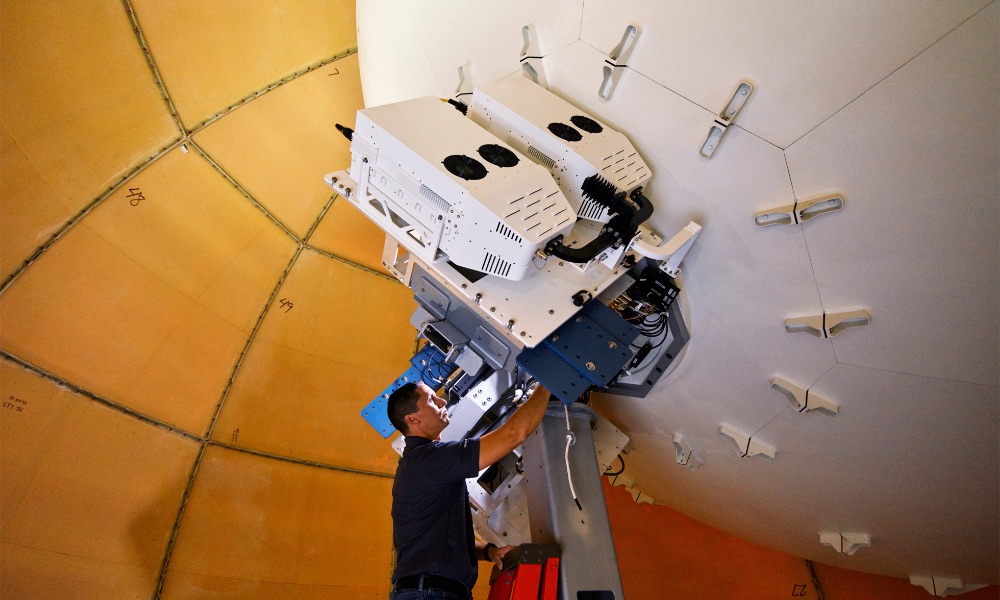
Apple’s $1.5 billion investment in Globalstar came in the form of paying up to $1.1 billion to finance the construction and launch of Globalstar’s satellites and other expenses. Apple also agreed to take a 20% passive equity interest in Globalstar at a cost of $400 million.
Apple’s investment means it will have a voice in any negotiations for Globalstar. Apple currently has access to 85% of the firm’s satellite network capacity for its iPhone features, including Emergency SOS via satellite, Messages via satellite, and Roadside Assistance via satellite. It’s unclear how an Amazon acquisition would affect that arrangement, and Apple would likely put the kibosh on any agreement that would change things.
![Person establishing satellite connection on Apple Watch Ultra 3 [Apple]](https://www.idropnews.com/wp-content/uploads/2025/09/Sept-2025-Awe-Dropping-Apple-Watch-Ultra-3-7.jpeg)
Plus, Apple is reportedly working on several new satellite-related features for its devices, many of which will likely require upgrades to the Globalstar infrastructure. The new features are said to include satellite over 5G, satellite weather, Apple Maps via satellite, sending photos in Messages while connected via Satellite, a satellite API for third-party developers, and more.
Amazon has been moving forward with its own satellite infrastructure build out, dubbed internally as Leo. Amazon currently has over 180 satellites in orbit through its program, which sounds like a lot, until you compare it to SpaceX’s current fleet of more than 10,000 active satellites.
Amazon in February requested a two-year extension to a July deadline by the Federal Communications Commission for the launch of 1,600 satellites. While Amazon has plans to put approximately 700 satellites in orbit during 2026, it is running into launch capacity issues, according to the regulatory filing.
If Amazon does acquire Globalstar, there are reasons why the acquisition could be of benefit to Apple. First, Apple already relies on Amazon for cloud storage. Second, Amazon’s purchase will likely bring additional investment in the company’s satellite infrastructure, which be beneficial to Apple, as long as it holds on to its access.