1Password Got Hacked, but Your Passwords Are Still Completely Fine
Toggle Dark Mode
While data breaches seem to be a dime a dozen these days, it’s always a bit disconcerting when they hit a provider that stores really sensitive information. Such is the case with 1Password, which announced a security incident today where an attacker gained access to some of its backend systems.
By its very name, it’s pretty clear that 1Password is not the sort of service you want to see getting hacked — especially if you’re a customer who stores your passwords with them. However, unlike the 2022 LastPass data breach, which was truly horrific, 1Password has taken some steps to build a system that’s actually as secure as possible by design — at least as far as your passwords are concerned.
The breach in this case was limited strictly to customer account information — names and email addresses — and it didn’t affect everyone. As 1Password notes:
An attacker gained access to some of our backend systems and copied a limited amount of customer account information from a subset of our customers, including the names and email addresses that customers use to sign into 1Password.
However, the company also emphasizes that actual customer vault data was not affected for one very simple reason: 1Password does not have access to your password or secret keys.
In an era of high-tech spy thrillers that show savant cyber hackers magically walking through government and bank encryption in minutes (or even seconds), it’s easy to fall into the trap of thinking that any system can be fully breached. While that’s always true in theory — no system is 100% unhackable — the nature of end-to-end encryption is such that, barring an algorithmic flaw, it’s effectively impossible to crack without having the required keys — at least in anyone’s lifetime.
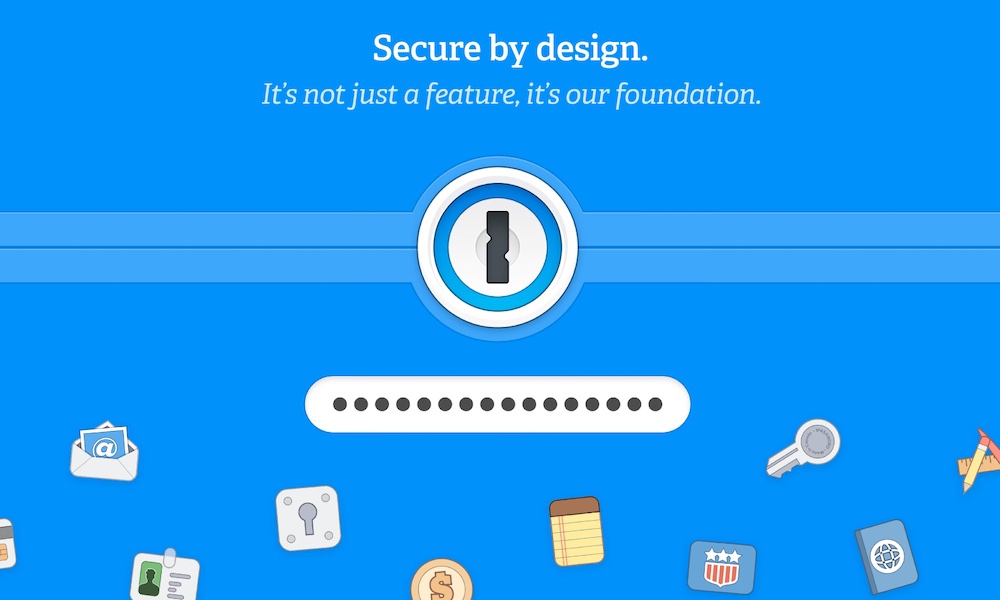
In the case of 1Password, that key is a customer’s master password and a separate Secret Key. That master password only exists in the customer’s head — or wherever they choose to record it — and the Secret Key is used when signing in via the browser or setting up 1Password on a new device. Hackers could get a complete dump of the 1Password database and wouldn’t realistically be any closer to reading users’ passwords than they are without that data. Encrypted means encrypted, and end-to-end encryption in this context means nobody holds the keys except the person who owns the data.
That said, the hackers, who gained access by compromising an employee’s corporate GitHub account and pushing malicious code into 1Password’s backend services, did get a bit more than names and email addresses, although it’s still nothing to be too concerned about.
The list includes account creation and last sign-in times, public keys, tokens in emailed links used for invitations, provisioning, and account recovery, and non-secret data related to 1Password’s infrastructure, which includes internal architecture and source code — but none of which provides any access to customer data or user secrets.
1Password has battened down the digital hatches for its infrastructure, revoked any tokens that may have been exposed for things like password resets (which couldn’t be used by hackers anyway unless they’d also compromised the user’s email account), and brought in “independent cybersecurity experts” to confirm its response.
The most critical risk in this latest exposure isn’t that attackers have gained access to any highly personal information — it’s that they now have a list of at least a few email addresses belonging to known 1Password customers that could in turn be used to launch targeted phishing attacks.
1Password is reminding customers that it will never ask for their password or Secret Key, and they should therefore be wary of any emails that show up trying to collect this information.
This is also why Apple’s Advanced Data Protection is such a huge win. While Apple has encrypted nearly everything on its iCloud servers at rest for years, it’s always held the keys to most of that data, which means somebody who compromises Apple’s servers could potentially get both pieces — the data and the keys.

By contrast, Advanced Data Protection means the keys only exist on your iPhone, iPad, Mac, and other Apple devices. That’s why when you turn on Advanced Data Protection and try to log into iCloud on the web, you need to authenticate with an Apple device so it can send the keys to the session (that does mean those keys exist ephemerally in volatile RAM on Apple’s servers for a limited time to unlock the iCloud session, but they’re handled securely and not retained).
As great as end-to-end encryption is for security, there’s still one important caveat that’s implied in the name: the endpoint. All bets are off once an attacker has physical access to your computer, whether that’s sitting in front of it or targeting it with malware. Encrypted data has to be decrypted for you to be able to access it, and malicious software running in the background can read that data every bit as easily as you can. That’s why it’s crucial to practice good security hygiene on your Mac, Windows PC, and even your iPhone, as these are always the most vulnerable points of any data transaction.