The Apple Watch Series 12 Is Slightly Easier to Fix (But Just as Hard to Open)
 iFixit
Toggle Dark Mode
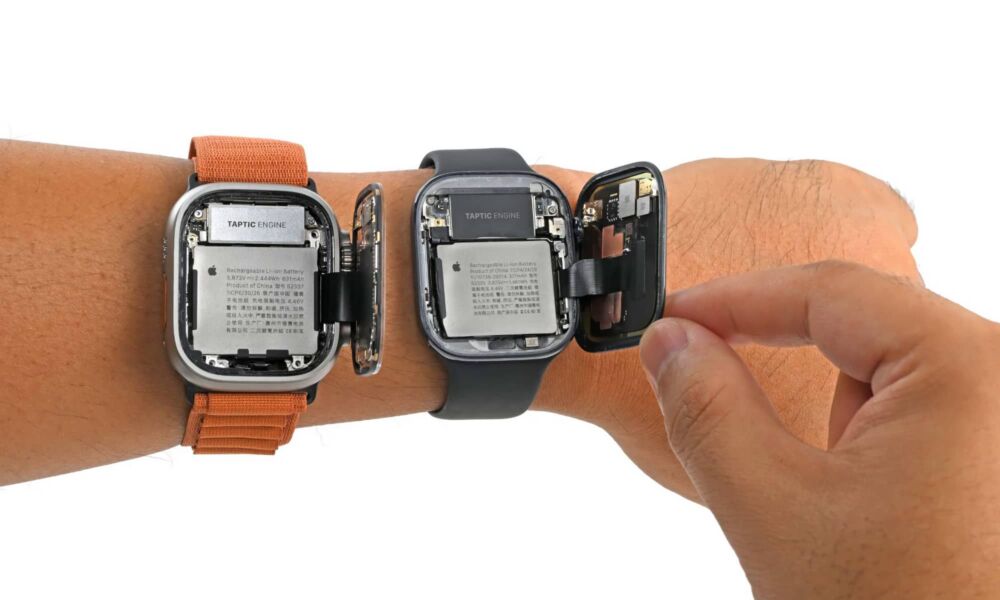
Now that the Apple Watch Series 12 and Ultra 4 have been out in the wild for a few weeks, the folks at iFixit have done their usual teardowns, finding that while this year’s models are more of the same, the new Series 12 does have one small bonus for those hoping to make it a longer-term investment: easier repairability.
To be clear, this isn’t a huge boost. The Apple Watch Series 12 moves up by a single point in iFixit’s repairability score, but 4 out of 10 isn’t exactly a laudable accomplishment. In fact, it puts the Series 12 on par with the Ultra 4, which gets the same score as its predecessor.

That’s because the larger, titanium-encased Apple Watch model is easier to get into, with more forgiving tolerances that make it less likely to damage the screen when trying to pry it open. The Apple Watch Series 12 doesn’t fix this — if anything, it’s even worse this year — but it contains a few other exclusive changes that make up for it.
The most notable of these is a battery pull tab that allows you to safely and easily pull the battery free. Since that’s the one component most likely to need a replacement, being able to get it out without the need to pry at it with a spudger makes a huge difference.
Apple has also replaced the somewhat awkward ZIF connector and tape used to attach the display in older models. The Series 12 has a new display press connector that’s simple to disconnect and reconnect.
Those are both enough to earn the Apple Watch Series 12 an extra point, but the fact that you’ll still risk breaking the display on the way in makes self-repair something that isn’t for the faint of heart.
We opened the Series 12 screen-first too, working with even tighter tolerances than the Ultra. We got the pick in, but the force required made us worry about the display.
iFixit
It’s probably telling that the Apple Watch remains conspicuously absent from Apple’s Self Service Repair program. While Apple is happy to sell you the parts and tools needed to fix your own iPhone, iPad, or Mac, it’s decided the Apple Watch is still better left to be fixed by professionals.
As iFixit notes, Apple seems to be getting away with this because the push for Right to Repair laws in various places doesn’t seem to spend a lot of time focusing on wearables. Still, it believes the Apple Watch is out of compliance in at least ten states: California, Colorado, Connecticut, Maryland, Minnesota, Nevada, New York, Oregon, Texas, and Washington.
There’s also some confusion around whether the Apple Watch should be considered a “medical device,” and therefore exempt from Right to Repair laws. Neither Apple nor the FDA tries to make that claim, with the latter labeling the Apple Watch as a “general purpose computing platform” that runs the FDA-cleared hypertension notification feature.
Imagine the battery giving out while you are traveling, far from an Apple Store. Mailing the watch away may be an option, but it still means time without the device. A nearby independent shop could help. An experienced owner who relies on the medical features of their device might want to carry a spare replacement battery and the tools to install it. Apple should help make that option practical.
iFixit
iFixit makes the point that the rival Google Pixel Watch 5 offers many of the same health features as the Apple Watch, and yet it manages to earn a 9 out of 10 on the repairability scale, letting you swap out a display with “just two Torx screws and a gasket” or replace the battery with “just a few more screws.”
As of right now, the only realistic option for most Apple Watch owners who have a broken screen or a failing battery is to visit an Apple Store or Apple Authorized Service Provider. Without AppleCare+, those repairs will run you $99 for a battery replacement, or $599 for any other damage. AppleCare+, which costs $4.99 monthly or $49.99 per year for the Series 12, or $5.99 and $59.99 for the Ultra 4, reduces those costs to $0 for battery service and $69 for accidental damage, with theft and loss replacements carrying a $119 fee.