
Hell Freezes Over Again: Hobby Lobby Finally Rolls Out Apple Pay
Toggle Dark Mode
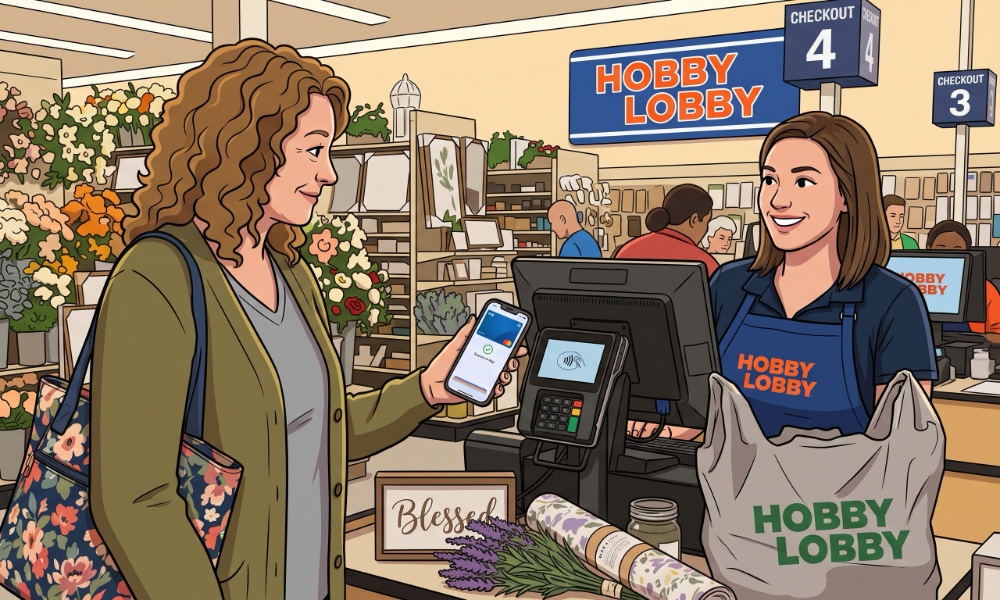
Grab your ice skates, as another part of hell has gotten very chilly. This week, popular arts, crafts, and holiday decorations retailer Hobby Lobby has begun rolling out Apple Pay to its stores.
The rollout covers the usual assortment of NFC-based tap-to-pay options beyond Apple Pay, including Google Pay, Samsung Pay, and physical credit and debit cards.

While Hobby Lobby has yet to make an official announcement about the rollout, several reports have rolled in on social networks such as Facebook, Instagram, and X over the last week or so. Dmiyah Johnson posted to Facebook to announce that her local Hobby Lobby currently offers support for tap-to-pay at checkout. Instagram user Shanyn Nicole also posted a reel confirming that her local Hobby Lobby supports it as well.
AppleInsider reached out to several Hobby Lobby stores only to find out that the tap-to-pay rollout is a gradual one, meaning it’s not yet available at all locations. Support for Apple Pay and other tap-to-pay methods requires the installation of new payment terminals at the checkouts. Hobby Lobby expects to have tap-to-pay available in all of its stores before the end of the year. (But will it make it in time for the all-important holiday shopping season? Only time will tell.)
Hobby Lobby joins another long-time tap-to-pay holdout, Walmart, in finally accepting Apple Pay and other tap-related payment methods long after most merchants large and small began accepting it. Both recent converts to the church of Apple Pay likely received years of pressure from customers to take payment using the more secure tap-to-pay method.
The U.S. Sun reports Hobby Lobby customers had taken to social media to pressure the chain to finally accept Apple Pay and other tap-to-pay systems.
One disgruntled Hobby Lobby shopper took to X to complain that Hobby Lobby needs to get with the times and start taking Apple Pay, writing:
“@HobbyLobby get Apple Pay! It’s 2024 damn near 2025 get it together! Sincerely, I shopped for one hour, waited in a long line; walked out with nothing because you’re still in 1989.”
“I had the most beautiful beads and chord at hobby lobby!” another posted on the social media platform. “Get to the register and BOOM…..they don’t take Apple Pay!!!”
A third shopper added: “Forgot my wallet & have a whole cart full of stuff at Hobby Lobby…. just to find out they don’t take Apple Pay.”
While Hobby Lobby did not accept Apple Pay at its checkouts, it did accept the payment method in its online store. On its FAQ page, the retailer wrote: “We currently accept Visa, MasterCard, Discover, American Express and Hobby Lobby Gift Cards in-store and online. We also accept PayPal and Apple Pay online only.”
On August 24, fellow holdout Walmart began its own staggered rollout of tap-to-pay in the US, nearly six years after Walmart Canada embraced the technology (which was also about a decade late to the tap-to-pay party in the Great White North).

While Walmart and other holdouts like Kroger all had their reasons for avoiding Apple Pay, for many it simply came down to convincing shoppers to use their own in-house payment methods.
Walmart and Kroger both used QR code-based systems that required users to install the store’s app on their smartphone, attach a credit or debit card to the account, and then use a QR code displayed on their device to pay in line.
They seemed to think this was a good idea despite the fact that QR codes are more prone to being hacked than tap-to-pay methods like Apple Pay, which uses NFC to connect to a payment terminal, then uses a one-time token to complete the transaction, never exposing the actual number printed on the attached card. But, let’s face it, their agenda was showing: merchants can collect more personal information about your spending habits using their own systems in place of Apple Pay, which protects users’ identities and habits to a large extent.
Of course, existing payment options like Walmart Pay and Kroger Pay remain available, and both retailers have loyal enough customer bases that they’ll likely continue to get some traction. For everyone else, there’s Apple Pay.






