Unfolding the Future: Early Testers Praise Apple’s Foldable iPhone
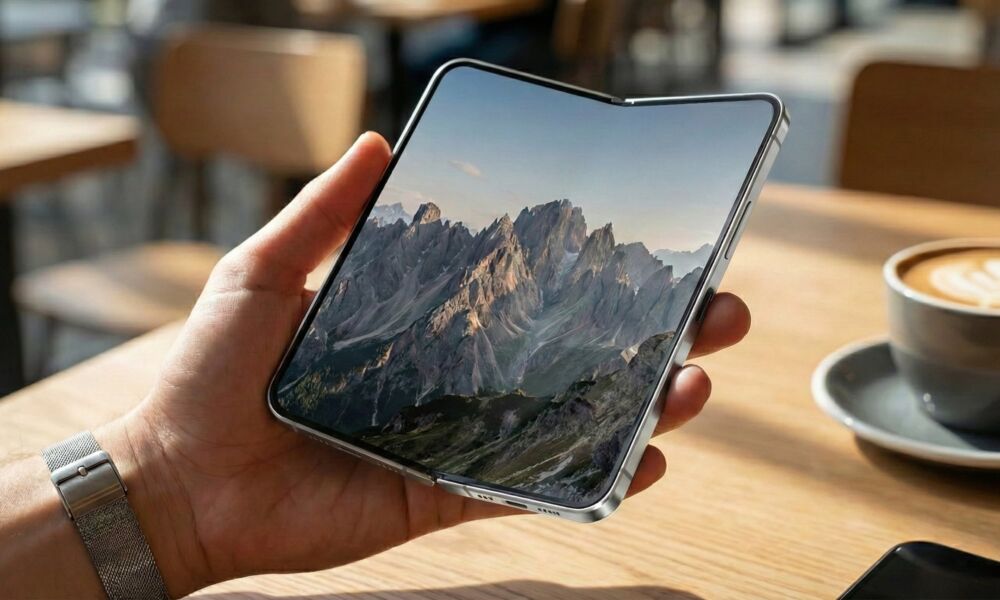 AI-generated concept image of a foldable iPhone [iDrop News / AI]
Toggle Dark Mode
While Android fans will surely scoff at how late Apple is to the party, Apple’s foldable iPhone is generating a lot of excitement for those in the Apple ecosystem, and by all accounts it’s on track to be unveiled in less than three weeks.
That doesn’t mean you’ll necessarily be able to get your hands on one right away. The jury is still out on when Apple will open pre-orders, and even if that happens on the same schedule as the iPhone 18 Pro lineup, limited initial stock levels could leave many waiting until October or even November before theirs arrive. There have also been reports it could be US-exclusive at launch.
Still, at least we won’t have to wait much longer for the culmination of months — or even years — of rumors leading up to this moment. Of course, those rumors also mean that we already have a pretty good idea of what to expect from the hardware at this point.
In fact, the only real surprise might be the name. For the longest time, “iPhone Fold” seemed to be the popular moniker, although most folks accepted this was likely just a placeholder. However, earlier this year, “iPhone Ultra” took root, and while a recent report suggests even Apple’s own employees are calling it that, there are plenty of reasons to doubt it as the final name — not the least of which is the fact that Apple would end up looking like it’s copying Samsung in more ways than one.
Whatever it’s actually called, it’s going to be a fascinating new entry into the iPhone lineup. Sadly, it’s also fair to say that Apple probably isn’t going to break any radically innovative new ground.
In this week’s Power On newsletter, Bloomberg’s Mark Gurman shared some feedback he’s received from Apple’s foldable based on people he’s spoken to who have actually used it, adding he “couldn’t be more excited” about it.
People who have tried the Apple model like how it fits in a pocket, the feel and durability of the advanced hinge mechanism, and the new iPad-like app layouts that take advantage of the larger internal display. It’s going to be an ultra-premium device that provides a halo for the full Apple lineup and will be a marketing engine to get people into the company’s retail stores.
Mark Gurman
Still, while it sounds like Apple will get quite a few things right on the core engineering and design side — a crease-free screen, a well-designed hinge, and a great display — it will still occupy the same traditional “foldable” space as its Android rivals, where it remains overshadowed by the company’s traditional iPhone Pro models in several key ways.
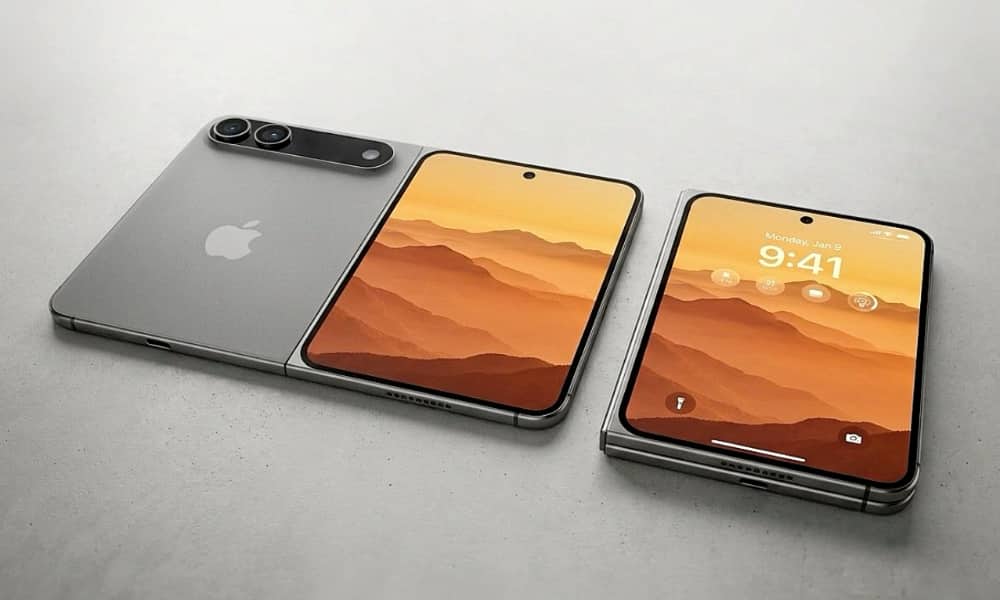
Perhaps the most significant of these is in the camera department. As we’ve long suspected, the foldable iPhone will lack a telephoto camera. Most reports have suggested a dual-camera array similar to what’s used on the iPhone 17 (and will likely find its way into the so-called “iPhone Air 2” early next year).
That’s long been the norm for other foldables; for years, Samsung’s Galaxy Z Fold devices also sported dual-camera systems, placing the Galaxy S Ultra phones as the true photographic powerhouses. That only changed this year with the Galaxy Z Fold 8 Ultra — a higher-end foldable that offers a third telephoto camera (and gives us another reason to doubt Apple would call its foldable the “iPhone Ultra.”)
As Gurman notes, that will make this new iPhone a tough sell:
This phone will top $2,000, and the Venn diagram of people willing to spend top dollar on an early-adopter product and those who appreciate advanced camera capabilities — including deeper zoom — is probably pretty close to a circle.
Mark Gurman
It’s a safe bet that it will sell better than the Vision Pro, but whether it will eclipse the iPhone Air is another matter. Analysts report that Apple is asking its suppliers to produce 10 million units by the end of 2026, but that’s a fraction of the 250 million iPhones the company sells every year.
Gurman also confirms that the foldable will indeed rely on Touch ID. However, while that might feel like a step backward, it’s not entirely inappropriate for a device that will open up into a miniature iPad. It also means Apple doesn’t have to spend the money — or find the space — to put in two Face ID sensors.
Still, despite the maturity of the iPhone in general, there’s little doubt the foldable iPhone is going to be a classic first-generation Apple product. A solid device that nails all the basics, but gives the company plenty of runway to iterate in future versions. Early adopters and Apple fans with deep pockets will undoubtedly want to jump right in, but most will probably be better served by seeing what a second-generation model has to offer in 2027.
[The information provided in this article has NOT been confirmed by Apple and may be speculation. Provided details may not be factual. Take all rumors, tech or otherwise, with a grain of salt.]