iPhone 18 Pro Production Costs Are Skyrocketing
 Concept render of a burgundy/red iPhone 18 Pro [FrontPageTech / YouTube]
Toggle Dark Mode
Considering the current memory crunch, it shouldn’t come as a surprise that this year’s iPhone 18 Pro models are going to cost Apple more to produce, but now a new supply chain report is putting some numbers on precisely how much more it believes Apple’s costs will rise.
Following massive price hikes in June on nearly everything but the iPhone, the consensus has been that Apple is merely waiting for September’s iPhone 18 Pro launch to drop the next big pricing bomb. However, while everyone agrees an increase is coming, reports are mixed on how much more we can expect to pay.

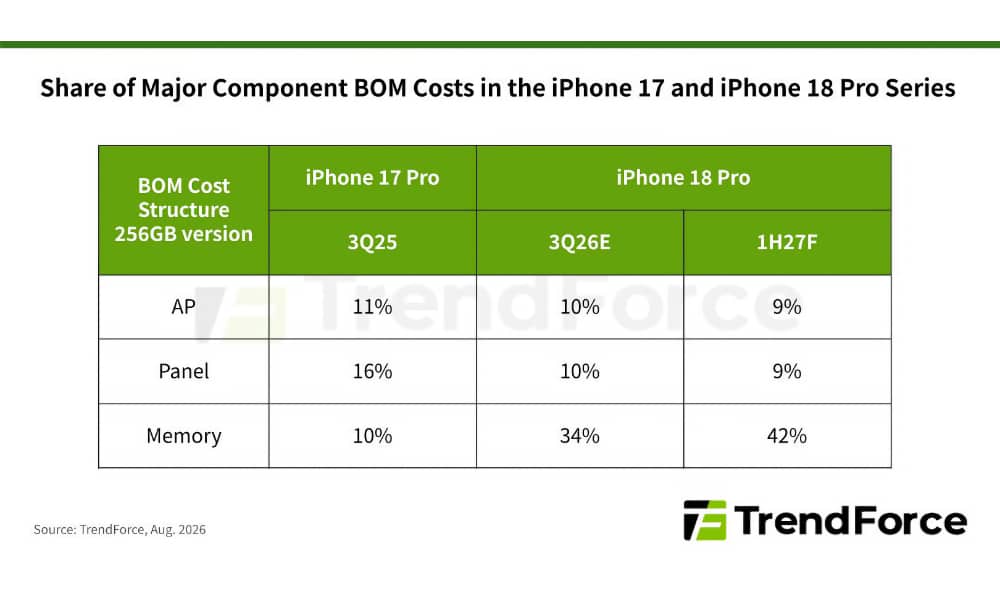
A new report from TrendForce is giving us a hint. While it doesn’t pretend to know what Apple might sell the new models for, it claims that the base 256 GB iPhone 18 Pro model is expected to cost Apple 38 percent more to manufacture than last year’s iPhone 17 Pro — and that’s all thanks to higher memory prices.
An analysis of the 256 GB iPhone Pro models over the past two generations shows that memory’s share of total BOM cost has risen dramatically — from around 10% a year ago to approximately 34% in 3Q26, and is expected to exceed 40% in 1H27. This marks a fundamental shift, where the application processor (AP) and display were once the dominant cost drivers.
TrendForce
To make matters worse, Apple’s costs could increase even further in 2027, raising the possibility that it might need to increase the price of the iPhone 18 Pro and iPhone 18 Pro Max even more to hedge against that. Apple is loath to increase its prices at all, which means it will do everything it can to avoid a mid-cycle price bump.
Similarly, Apple is likely to try to eat as much of this increase as it realistically can while still remaining profitable. That means a 38 percent bump in costs won’t necessarily translate to a $1,500 iPhone 18 Pro — at least let’s hope not.
TrendForce believes Apple might also choose to offset costs by increasing the selling prices of older iPhone models, although it’s unclear how much room it has to do that. Demand for the iPhone 17 and iPhone 17e — both of which will almost certainly remain on sale after September — has been high enough that Apple isn’t just selling through existing inventory; it’s still actively manufacturing them, which means they’ll face the same rising tide as the new iPhone 18 Pro models.
Scarcity May Be the Real Problem
Meanwhile, supply chain analyst Ming-Chi Kuo confirmed other recent rumors that the iPhone 18 Pro and iPhone 18 Pro Max may be in short supply, although he disagrees with the specifics.
Last week, Tim Culpan reported that memory shortages were causing a pile-up of unfinished A20 Pro wafers at TSMC, which in turn was slowing down production for this fall’s iPhone models.
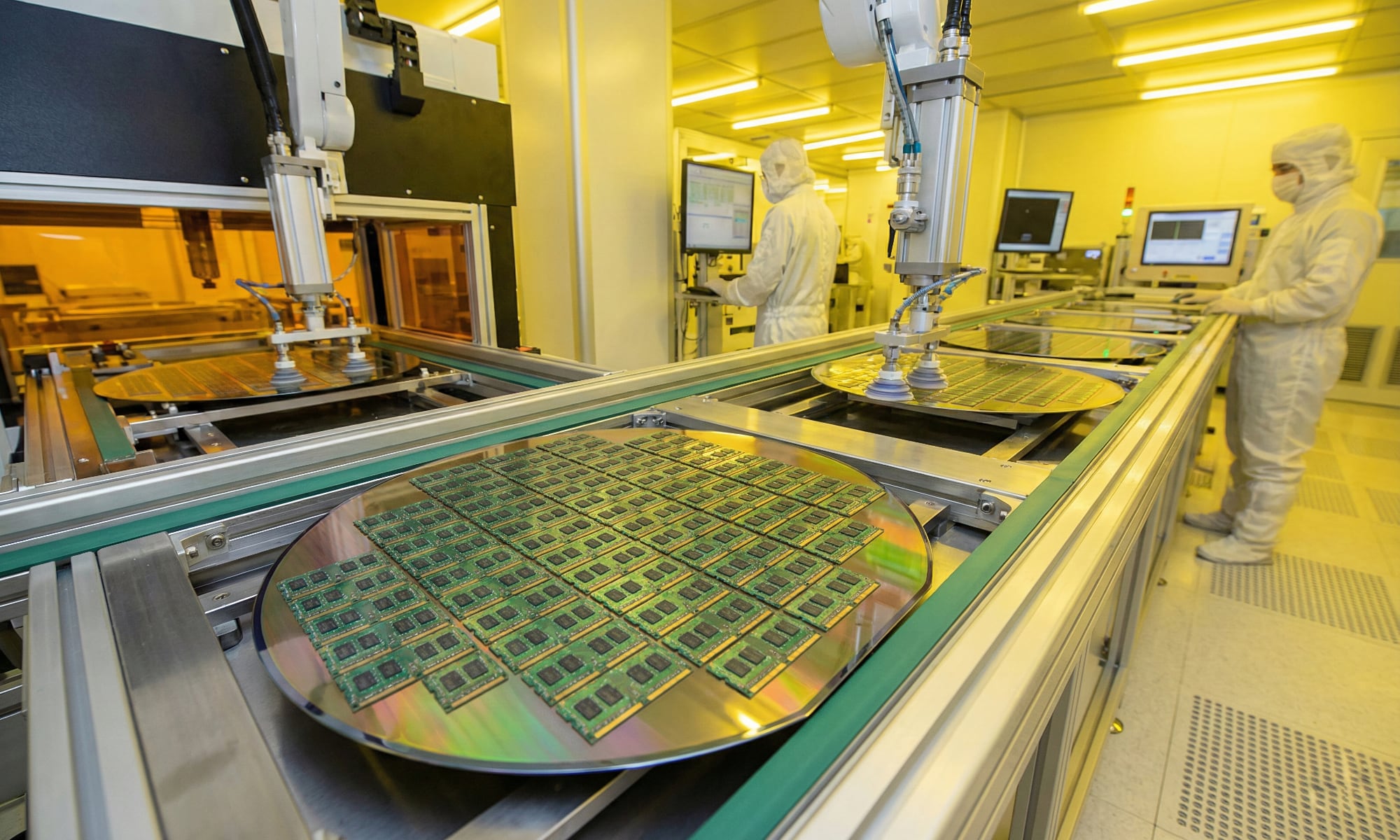
Kuo disputes this analysis, acknowledging that while Apple is having problems sourcing memory, TSMC and Apple have a tight enough logistical relationship that there’s no way they’d accumulate a billion dollars in wafer inventory.
In other words, tight memory supply is real. But my understanding is that there has been no dramatic scenario in which TSMC first built up US$1 billion of WIP and then had to wait for memory to arrive before packaging could proceed. TSMC and Apple are both known for world-class execution, and such a dramatic development would be unusual given how closely the two companies coordinate their supply chains.
Of course, it doesn’t much matter where the bottleneck is if it means that Apple won’t be able to produce enough iPhone models to keep up with demand this fall. Arguably, the fact that TSMC doesn’t have the A20 Pro wafers ready for the memory to arrive could create an additional delay in the supply chain link, but while Kuo acknowledges that “Apple has indeed scaled back its hardware shipment plans this year due to memory shortages,” it’s unclear how far that’s been scaled back. We can only hope it’s far less than the billion dollars in unfinished A20 Pro chips claimed in last week’s report.