Lease is More? ‘Apple Upgrade’ Could Make Your Next iPhone More Affordable
Toggle Dark Mode
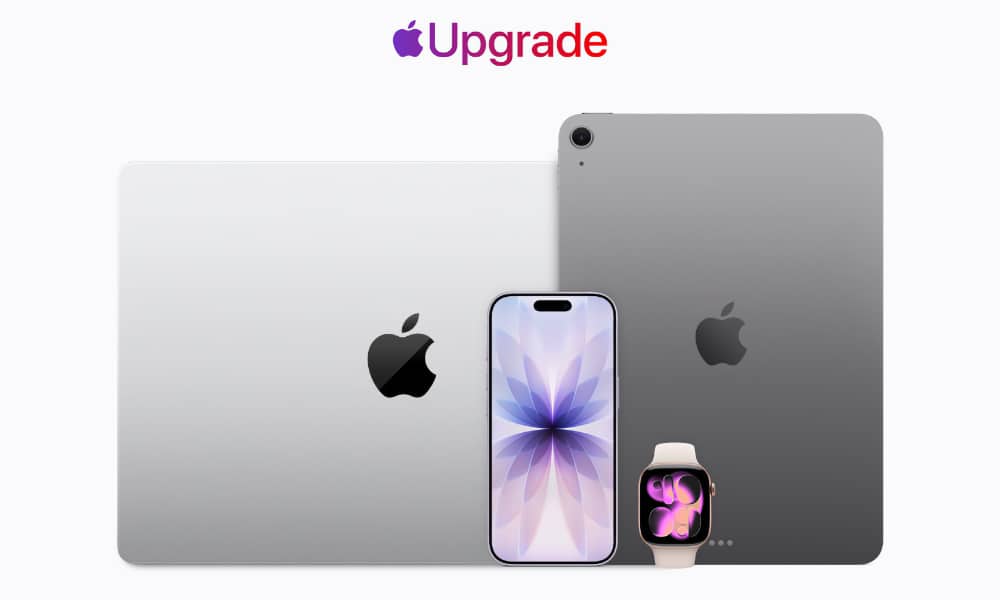
It seems that last week’s report of a new Apple hardware leasing program was spot on. Apple officially announced “Apple Upgrade” this morning, a new leasing program backed by Klarna that provides set monthly payment plans for a variety of Apple devices.
As expected, Apple Upgrade is launching exclusively in the United States, with no word on when — or if — it will come to any other countries. The overall texture of the program closely reflects what Bloomberg’s Mark Gurman shared last week, although Apple’s official launch lays out some specifics that go beyond Gurman’s predictions.
For example, while Gurman pointed to 24-month lease terms for iPhones and Apple Watches and 36 months for Macs and iPads, Apple is also offering shorter options for both of those: 12 months for iPhone and Apple Watch and 24 months for Mac and iPad.
Apple lists the starting leasing prices at $17.99 per month for the iPhone 17e, $11.99 for Apple Watch Series 11, $24.99 for MacBook Air, and $11.99 for iPad mini (A17 Pro), based on maximum 24-month and 36-month leasing terms.
The prices naturally go up from there if you want more storage, a more expensive device, or even simply a shorter leasing term. For example, here’s a quick breakdown of how iPhone prices shape up under the new program, all for the base 256 GB models.
| Model | 12 Months | 24 Months |
|---|---|---|
| iPhone 17 Pro Max | $49.99 | $34.99 |
| iPhone 17 Pro | $45.99 | $31.99 |
| iPhone Air | $41.99 | $28.99 |
| iPhone 17 | $32.99 | $22.99 |
| iPhone 17e | $24.99 | $17.99 |
As you’ll see from a bit of quick math, the 12-month terms require higher monthly payments, but you outlay less cash overall because these are leases. At the end of your term, you can buy out your iPhone or simply return it, either upgrading to a newer model or simply walking away. The same applies for an Apple Watch, Mac, or iPad leased under the new program.
The iPhone 16, Apple Watch SE, MacBook Neo, Mac mini, and iPad (A16) aren’t included in the program, nor are Apple’s Studio Displays or other products like the Vision Pro, AirPods, Apple TV, or HomePod.
“At Apple, we put the customer at the center of everything we do,” said Karen Rasmussen, Apple’s vice president of the Apple Store online, “and we’re thrilled that Apple Upgrade offers our customers, both online and in-store, a more flexible way to pay for the products they love.”
As predicted, Apple Upgrade also marks the end of the old iPhone Upgrade Program. Customers who are already in that program can continue in it until the end of their current term, at which point they’ll have to lease a new device with Apple Upgrade for the closest equivalent.
The partnership with Klarna makes the new Apple Upgrade program fundamentally different from the iPhone Upgrade Program as it’s essentially little more than a tighter partnership between Apple and the financing company with an end-of-lease buyback built in. Customers will still apply through Klarna, and be subject to a soft credit inquiry. Once approved, the leasing arrangement will be managed entirely through the Klarna app.
Further, Apple Upgrade won’t include AppleCare. Customers can add that separately, and Apple hints that this can also double as a sort of lease-end protection plan, noting that it will make “the return of their current device and upgrade to a new one even easier.”
It also doesn’t look like you’ll be able to lease a new iPhone without selecting a carrier. While all leased iPhones will still be sold unlocked, Apple notes that “you must select an eligible carrier (AT&T, T-Mobile, or Verizon)” and “cannot use a prepaid carrier plan.”
Apple will no longer be offering any other in-store financing options, but Apple Card holders can still finance an iPhone with monthly installments. Carrier financing also remains an option, of course, as do third-party credit card installment plans.
One thing Apple doesn’t mention in today’s press release is how it plans to handle customers who miss payments or try to abscond with their leased iPhone. Code discovered in the iOS 27 beta last week hints that Apple is working on a digital repo man that could allow it or other financing partners to partially lock down an iPhone when payments are missed. However, there’s been no evidence of this framework in iOS 26.6 yet, which suggests Apple is merely laying the groundwork to debut this capability somewhere down the road.