Image Playground Grows Up with Photorealistic AI in iOS 27
Toggle Dark Mode
If you’ve grown bored of the rather cartoony generative AI that is Apple’s Image Playground, iOS 27 and the gang are bringing some welcome news. While Siri AI was the standout during today’s Worldwide Developers Conference (WWDC) keynote, Apple had several other Apple Intelligence improvements to share, and it looks like Image Playground is growing up alongside Siri to become a fully formed generative AI tool.
From what Leslie Ikemoto, Apple’s Director of Input Experience, had to say, it appears the playground has been paved over and rebuilt from the ground up. This year’s platform updates — iOS 27, iPadOS 27, and macOS 27 — are packing an entirely new version of Image Playground that incorporates far more powerful image models that will generate higher-quality images in “any style” the user wants.

This includes photorealistic images, which is a first for Apple Intelligence. When Image Playground debuted two years ago in iOS 18.2, it defaulted to making images that looked more like Pixar animations than anything else. Other style options included illustration, with sketch arriving in iOS 18.4. Additional ChatGPT-backed styles came in iOS 26, but those were hardly much better — or much different from just opening the ChatGPT app and talking to it directly.
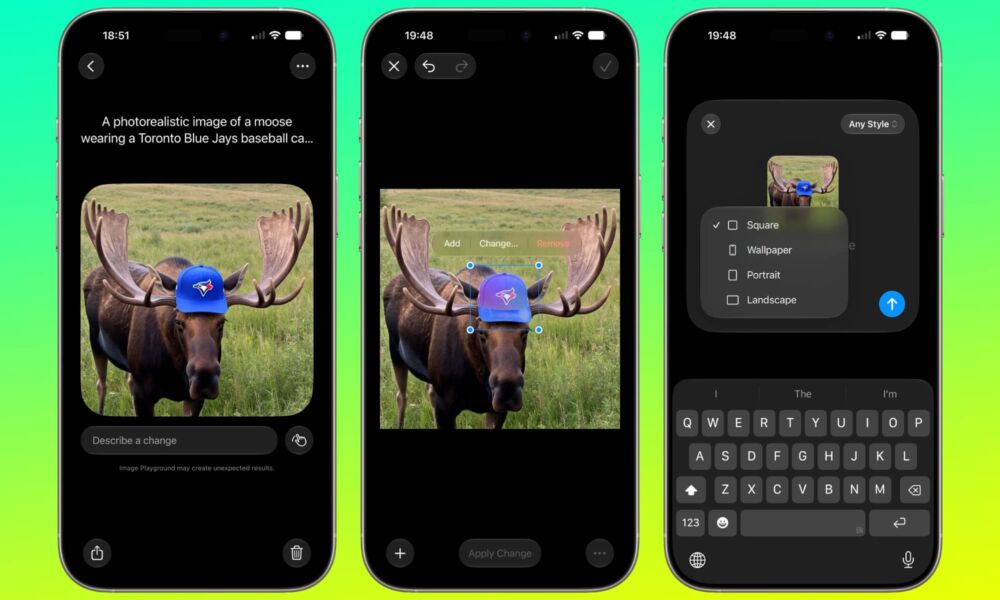
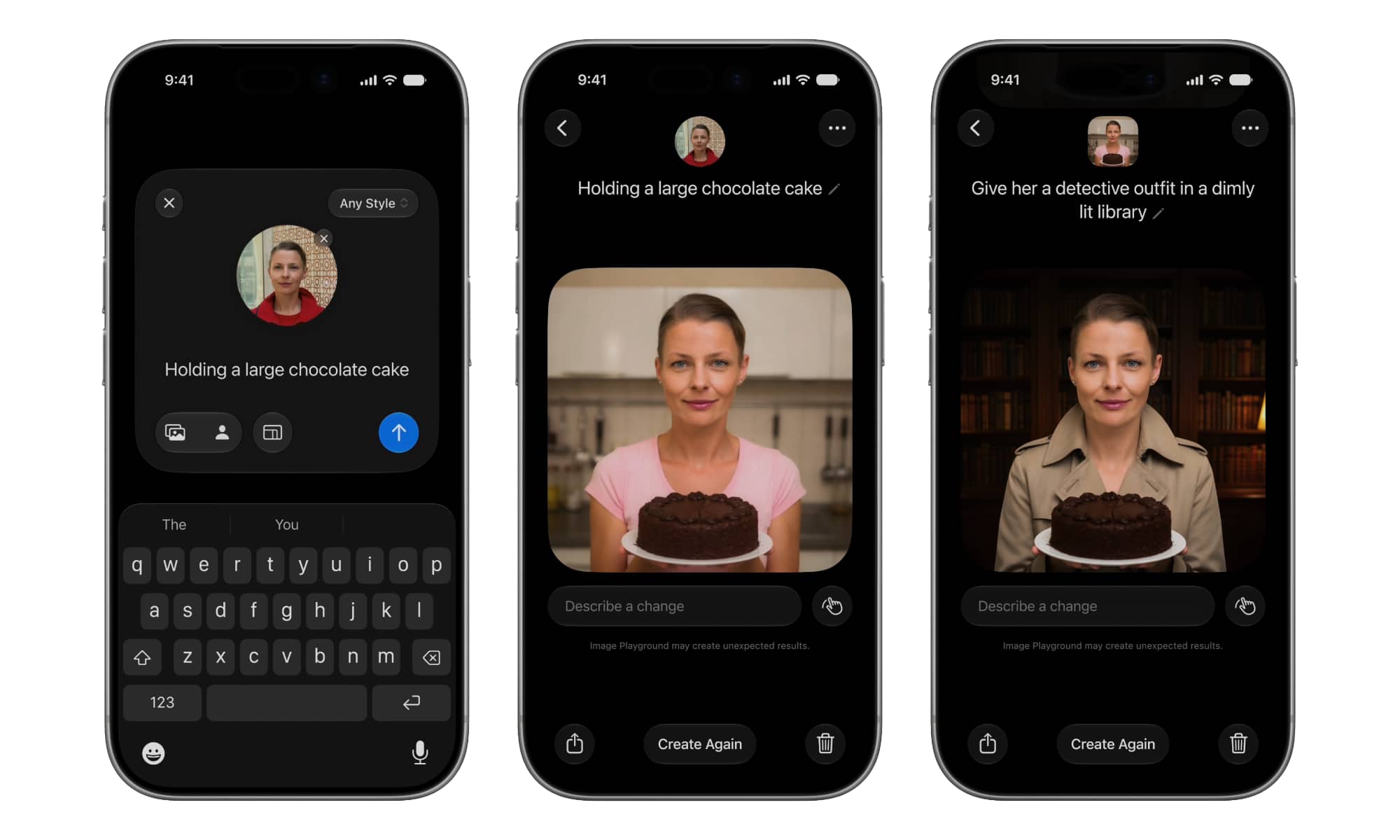
In iOS 27, iPadOS 27, and macOS 27, the new Image Playground app will now be able to generate pretty much anything you ask, in any style you want. This will include transforming existing photos into whatever you can imagine by using natural language to describe your changes, either by voice or typing in your request.
The new Image Playground app also has a few other tricks up its sleeve. For one, you’ll be able to select a portion of an image by touch to apply your prompt to only that selection, letting you visually zero in on an item or subject and avoiding unintended changes to the rest of the image. You can also specify whether you want to add, change, or remove the selected item, and you can even drag the handles of the box to manually resize it, saving you the guesswork involved with prompt-based modifications.
A simple pop-up will also let you easily specify a format and aspect ratio for your generated image — and change it on the fly. Image Playground can also provide automatic suggestions based on the content you feed it, and the new generative model is fully open to developers to implement in their own apps via the Image Playground API.
Apple’s AI Edge: Privacy
Of course, Apple is well behind the curve here; Google’s Nano Banana 2 and ChatGPT’s Images models have been able to create impressive photorealistic images for years. However, Apple is sticking with its main selling point: what you do in Image Playground remains your own business.
That doesn’t mean the new Image Playground will be running entirely on your device. That’s just too big of an ask, even for Apple silicon. Instead, the requests will go to a new generative model on Apple’s Private Cloud Compute (PCC) infrastructure.
As we explained last week, it’s not clear exactly what these cloud servers will be. Apple has reportedly pivoted away from its original PCC strategy, which involved specially designed and hardened servers. However, it seems to be satisfied with Nvidia’s Confidential Computing platform for its new PCC platform, which keeps prompts hardware-level encrypted at all times. Apple is also being transparent, noting that the whole system will be open to auditing and verification by independent experts.
Many speculated that Apple’s decision to stick with animated and illustrated generative AI two years ago was motivated by a desire to steer clear of AI deepfake controversy. That may have been partially true, although its AI models likely weren’t ready for that kind of heavy lifting either. However, now that Image Playground can generate photorealistic images, Apple is ensuring it keeps folks honest by adding a hidden SynthID watermark that will identify them as AI-generated.